
Navigating the world of display technology can be daunting, with a sea of acronyms and technical specifications to decipher. Among the most common points of confusion is the debate over 1080p vs 4K. You've seen these terms on TVs, monitors, cameras, and gaming consoles, but what do they really mean for your viewing experience? Is the leap to 4K worth the extra cost, or is the tried-and-true 1080p still sufficient for your needs? This decision impacts everything from your movie nights and gaming sessions to your professional creative work.
Choosing the right resolution is about balancing quality, cost, and practicality. As 4K technology becomes more mainstream and affordable in 2026, the question of whether to upgrade is more relevant than ever. This guide is designed to demystify the technical jargon, break down the key differences, and provide clear, actionable advice to help you make an informed decision that aligns with your budget and lifestyle.
In this article, we will cover:
- A clear definition of 1080p (Full HD) and 4K (Ultra HD).
- A quick side-by-side comparison of the two resolutions.
- A detailed breakdown of differences in image quality, cost, and performance.
- Specific use cases to help you decide which resolution is better for you.
- A step-by-step guide on how to upscale 1080p videos to 4K.
Part 1. What is 1080p? What is 4K?
Before we can compare these two resolutions, it's essential to understand what they are. The terms "1080p" and "4K" refer to the number of pixels that make up the image on a screen. A pixel is a tiny dot of light, and millions of them work together to create the picture you see. The more pixels, the sharper and more detailed the image.
What is 1080p (Full HD)?
1080p, also known as Full High Definition (FHD), has a resolution of 1920 pixels horizontally by 1080 pixels vertically. This totals approximately 2.1 million pixels. For over a decade, 1080p has been the industry standard for a wide range of media, including Blu-ray discs, digital television broadcasting, and online streaming services.
Its widespread adoption means that a vast library of content is available in this format, and most modern devices, from smartphones to laptops and TVs, fully support it. It offers a significant step up in clarity from its predecessor, 720p (Standard HD), and remains a highly practical and cost-effective choice for many applications today.
What is 4K (Ultra HD)?
4K, also known as Ultra High Definition (UHD), has a resolution of 3840 pixels horizontally by 2160 pixels vertically. This results in a total of about 8.3 million pixels. As the math suggests, 4K contains four times the number of pixels as 1080p. This massive increase in pixel count allows for a much sharper, more detailed, and lifelike image.
The term "4K" comes from the nearly 4,000 horizontal pixels. This higher pixel density means you can sit closer to a large screen without seeing the individual pixels, creating a more immersive experience. While it was once a premium, high-end feature, 4K has rapidly become the new standard for modern TVs, monitors, and content production.
Part 2. Quick Comparison Table
To get a quick overview of the key differences, here is a side-by-side comparison of 1080p and 4K resolutions.
| Feature | 1080p (Full HD) | 4K (Ultra HD) |
| Pixel Count | 1920 x 1080 (approx. 2.1 million pixels) | 3840 x 2160 (approx. 8.3 million pixels) |
| Common Names | FHD, Full HD | UHD, Ultra HD, 2160p |
| Price | More affordable and budget-friendly | More expensive, though prices are dropping |
| Hardware Requirements | Low; supported by most modern devices | High; requires powerful GPUs and CPUs for gaming and editing |
| Ideal Use Cases | Small screens (<27"), budget setups, competitive gaming | Large screens (>27"), home theaters, professional content creation |
Part 3. 1080p vs 4K: Which One Is Better?
Deciding which resolution is "better" isn't a simple answer—it depends on a variety of factors. Let's break down the comparison across four critical areas: image quality, cost, hardware requirements, and content availability.
Image Quality and Detail
The most significant advantage of 4K over 1080p is its superior image quality. With four times the pixels packed into the same screen area, 4K delivers a much higher pixel density (measured in Pixels Per Inch, or PPI). This results in a noticeably sharper, clearer, and more detailed picture. Fine textures in clothing, individual leaves on a tree, and distant objects in a landscape all appear more distinct and realistic.
This difference is most apparent on larger screens (27 inches and above) and when you are sitting closer to the display. On a 55-inch TV, for example, a native 4K image will look incredibly crisp, whereas a 1080p image might start to appear slightly soft or "pixelated" upon closer inspection. For visual purists and those building a home theater, the enhanced fidelity of 4K provides a more immersive and cinematic experience.
Cost and Value
Historically, the price gap between 1080p and 4K devices was substantial, making 4K a luxury item. However, as of 2026, the market has shifted dramatically. 4K TVs and monitors are now widely available and much more affordable, often only costing slightly more than their 1080p counterparts, especially at larger screen sizes.
That said, 1080p remains the king of the budget category. For smaller monitors, secondary displays, or anyone on a tight budget, 1080p offers excellent value. The question of value comes down to your specific use case. If you primarily watch cable TV (which is often broadcast in 1080i/720p) on a smaller screen, the extra cost of a 4K display may not provide a proportional benefit. However, if you are investing in a large screen for movies and gaming, the relatively small price increase for 4K is almost certainly worth it for the significant jump in quality.
Hardware Requirements and Performance
This is where the practical differences become very clear, especially for PC gamers and content creators. Rendering four times the pixels requires significantly more processing power.
For gaming, running a modern title at 4K with a smooth frame rate (60 FPS or higher) demands a high-end graphics card (GPU) and a capable processor (CPU). Attempting to run a game in 4K on mid-range or older hardware will likely result in low frame rates, stuttering, and a poor overall experience. In contrast, 1080p is far less demanding, allowing even budget-friendly gaming PCs to achieve high frame rates. This is why many competitive gamers prefer 1080p, as it allows them to prioritize performance and responsiveness over visual fidelity.
Similarly, for video editing, working with 4K footage requires a powerful computer with a fast CPU, plenty of RAM, and speedy storage to handle the massive file sizes and ensure smooth playback and rendering.
Content Availability
A few years ago, a common argument against 4K was the lack of native 4K content. That is no longer the case in 2026. 4K has become the new standard for content production and distribution.
- Streaming Services: Major platforms like Netflix, Amazon Prime Video, Disney+, and YouTube offer extensive libraries of movies and TV shows in 4K, often with HDR (High Dynamic Range) for even better color and contrast.
- Physical Media: 4K Ultra HD Blu-ray discs provide the highest possible quality for movie enthusiasts, surpassing the compressed quality of streaming.
- Gaming: The latest consoles, like the PlayStation 5 and Xbox Series X, are designed with 4K gaming as a primary feature, and a vast number of PC games support 4K resolution.
While 1080p content is still ubiquitous and will be for years to come, almost all new premium content is being produced and released in 4K. Investing in a 4K display is a way to future-proof your setup and enjoy content in the format it was intended to be seen.
Part 4. Use Cases for 1080p and 4K
So, which resolution is the right choice for you? It all comes down to how you plan to use your display.
When You Should Stick with 1080p
Despite the rise of 4K, 1080p remains an excellent and highly practical choice in several scenarios:
- For Budget-Conscious Buyers: If your primary concern is price, 1080p monitors and TVs offer unbeatable value. You can get a high-quality display without breaking the bank.
- For Smaller Screen Sizes: On screens under 27 inches, the difference in pixel density between 1080p and 4K is much less noticeable, especially from a normal viewing distance. A 24-inch 1080p monitor, for example, still looks very sharp.
- For Competitive Gamers: If you play fast-paced competitive games like first-person shooters, prioritizing a high refresh rate (144Hz or higher) and maximum frame rates (FPS) is more important than resolution. 1080p is far less demanding on your GPU, allowing you to achieve the ultra-smooth performance needed for a competitive edge.
- For Users with Limited Internet Bandwidth: Streaming 4K content requires a fast and stable internet connection (at least 25 Mbps recommended). If your internet is slow or you have a data cap, sticking with 1080p streaming will prevent buffering and excessive data usage.
When You Should Upgrade to 4K
Upgrading to 4K is a smart investment if you fall into one of these categories:
- For Large-Screen TVs and Monitors: If you are buying a display that is 27 inches or larger, 4K is a must. The higher pixel density is crucial for maintaining a sharp, clear image on a big screen, providing a more immersive and detailed picture.
- For a Cinematic Movie-Watching Experience: For film lovers building a home theater, a 4K TV combined with 4K Blu-rays or streaming offers a viewing experience that comes close to a commercial cinema in terms of detail and clarity.
- For Professional Photo and Video Editing: Content creators who work with high-resolution photos and videos will benefit immensely from a 4K monitor. The extra screen real estate and pixel detail allow for more precise editing, color grading, and a true representation of the final product.
- For Future-Proofing Your Setup: Since 4K is the new standard for content, buying a 4K display today ensures your setup will remain relevant for years to come. It prepares you for the next generation of games, movies, and applications.
Part 5. Step-by-Step Guide to Convert 1080p to 4K Using UniConverter
If you have 1080p videos that you want to look better on a 4K screen, you can upscale them. Upscaling uses algorithms to intelligently increase the resolution of a video, adding detail to make it look sharper on a higher-resolution display. Wondershare UniConverter is an excellent tool that can intelligently upscale your videos from 1080p to 4K. It is a comprehensive video toolbox that stands out for its ease of use and powerful conversion engine.
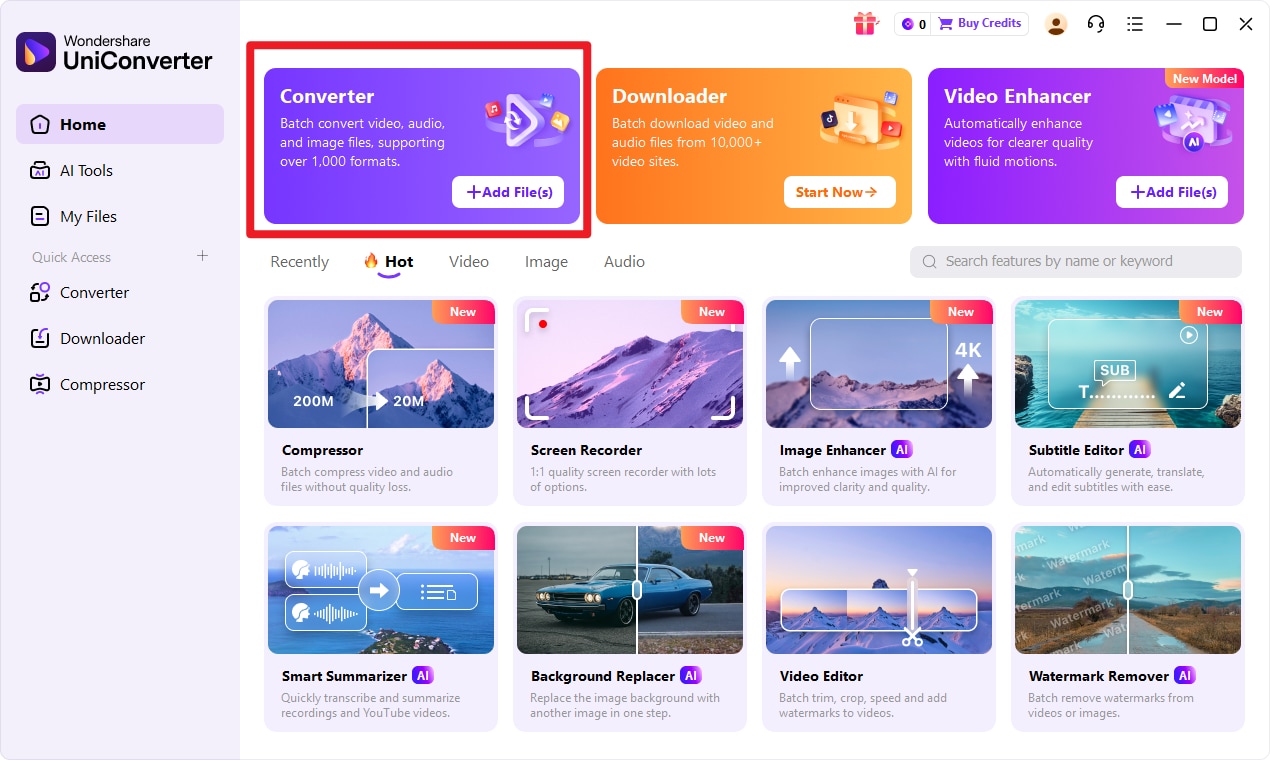
Step 1. Choose Converter in UniConverter
Launch Wondershare UniConverter on your computer. On the main screen, select the Converter tab from the left-side menu.
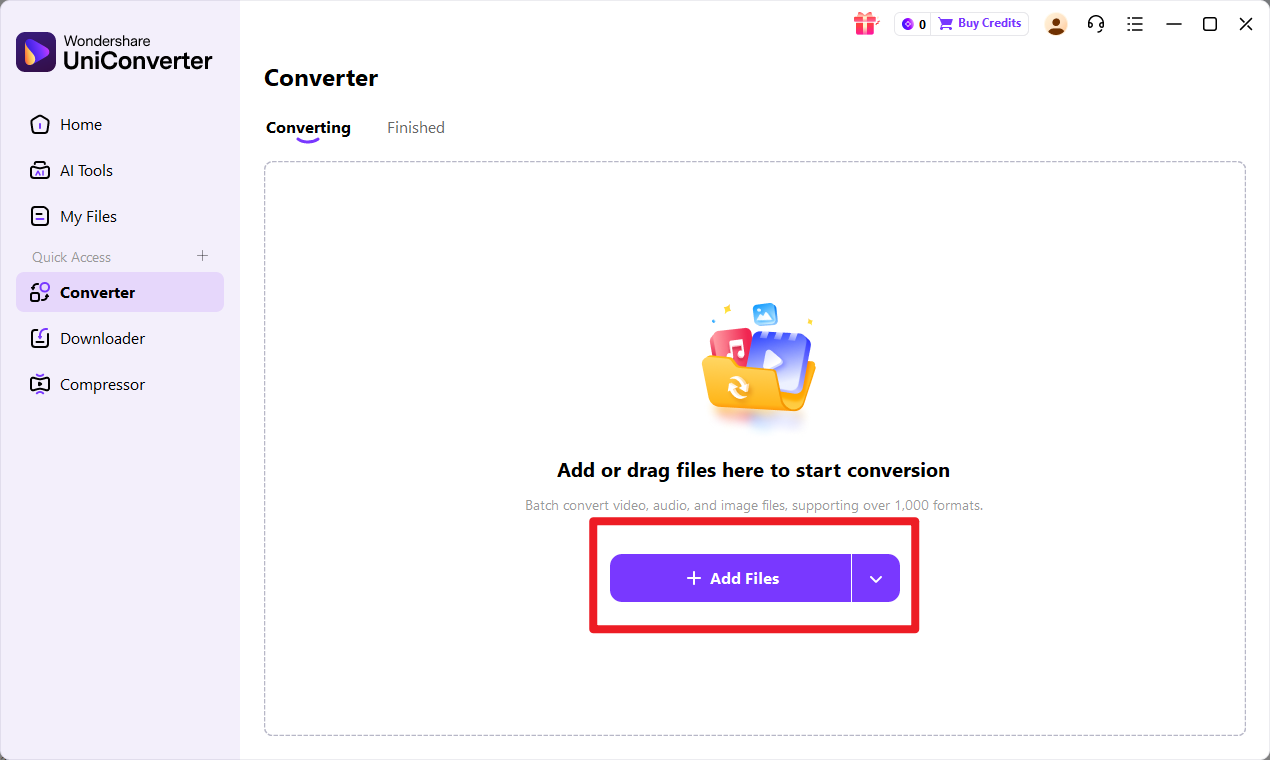
Step 2. Add Files to UniConverter
Click the Add Files icon or simply drag and drop your input format video file directly into the main window.
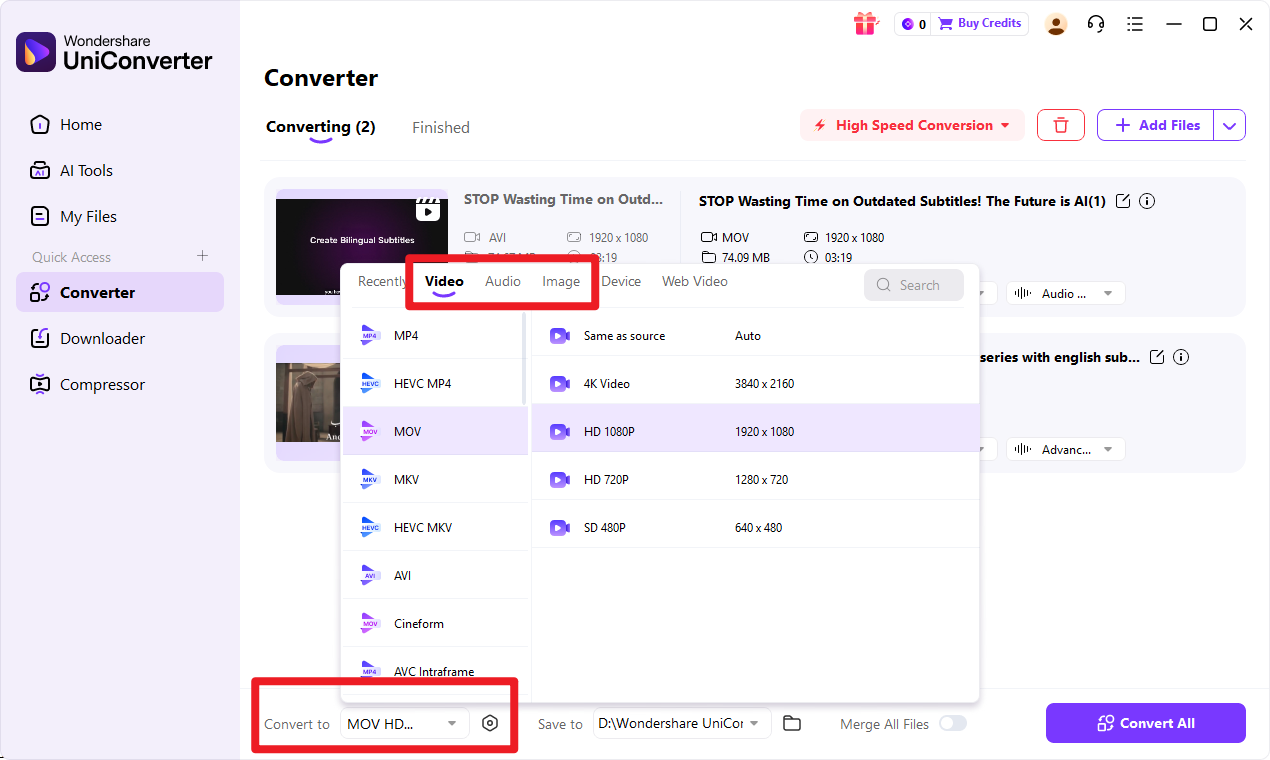
Step 3. Choose Output Format
Click on the Output Format menu at the bottom of the window. Navigate to the Video tab, select a target format from the list on the left, and then choose the 4K resolution option on the right.
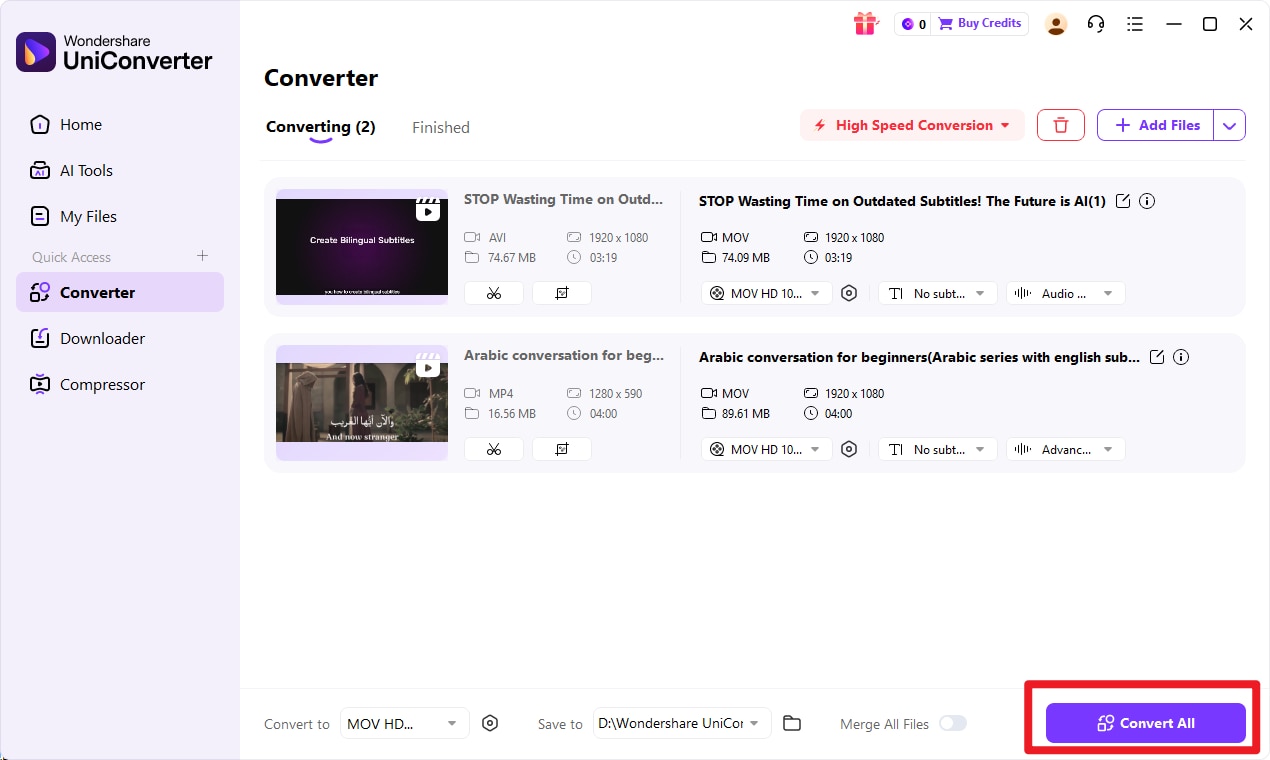
Step 4. Start the Conversion
Select a destination folder by clicking the File Location menu. Finally, click the Start All button to begin the 1080p to 4K upscaling process.

Go Beyond Simple Video Upscaling
Conclusion
The debate of 1080p vs 4K ultimately comes down to a personal choice based on your specific needs, priorities, and budget. 4K undeniably offers a superior visual experience with four times the pixels, resulting in sharper, more detailed, and more immersive images. It has become the new standard for large-screen entertainment and professional creative work. However, this enhanced quality comes at a higher cost, not just for the display itself but also in the form of more demanding hardware requirements for gaming and editing.
On the other hand, 1080p remains a perfectly viable and highly practical resolution. It is affordable, less demanding on hardware, and provides excellent quality, especially on smaller screens. For competitive gamers who prioritize frame rates or for users on a tight budget, 1080p continues to be a smart and economical choice. Before you make a purchase, carefully assess your primary use case, your existing hardware, your screen size preference, and your budget. This will ensure you choose the resolution that is truly right for you in 2026.
FAQs
-
1. Is the difference between 1080p and 4K really noticeable?
Yes, the difference is definitely noticeable, especially on larger screens (over 27 inches) and when you are sitting closer to the display. The higher pixel density of 4K results in a much sharper and more detailed image. On smaller screens or when viewed from a greater distance, the difference may be less apparent to the casual observer. -
2. Can a 1080p monitor play 4K video?
Yes, a 1080p monitor can play 4K video content. However, the display hardware will automatically downscale the video to fit its native 1080p resolution. This means you will not see the full detail and sharpness of the native 4K image, but the picture may still look slightly better than a native 1080p video due to the higher quality source. -
3. Does streaming in 4K use a lot more data than 1080p?
Yes, absolutely. Streaming 4K content consumes significantly more data than 1080p because of the massive increase in visual information. On average, streaming 4K video uses around 7-10 GB of data per hour, whereas 1080p streaming uses about 2-3 GB per hour. This requires a faster, more stable internet connection (at least 25 Mbps is recommended for 4K) and can be a concern for users with data caps. -
4. Can I upscale my 1080p video to 4K?
Yes, you can use video software to upscale 1080p videos to 4K resolution. This process uses algorithms to create new pixels and sharpen the image, which can help the video look better when played on a 4K display. Tools like Wondershare UniConverter offer user-friendly features to upscale videos, enhancing their quality for modern high-resolution screens.
