
Comparing APE vs AU is often about solving a practical question: which format better fits your audio quality requirements, storage constraints, playback environment, or editing workflow? Though both are audio file formats, they were developed for distinctly different purposes. APE excels at lossless compression and efficient archival storage, while AU is more associated with older or system-specific audio environments. Understanding these differences helps you select the right format and avoid compatibility issues later.
In this article
Part 1. What Is APE? What Is AU?
What Is APE?
APE stands for Monkey's Audio, a format best known for lossless audio compression. "Lossless" means the audio data can be compressed to reduce file size without permanently removing sound information. When decoded, the audio returns to its original quality, making APE attractive to users who care about fidelity.
This format is commonly used by music collectors, audiophiles, and anyone building a digital archive who wants to preserve the original recording while using less storage than fully uncompressed audio. In other words, APE aims to balance high-quality preservation with better storage efficiency.
The main drawback is compatibility. Compared with more mainstream audio formats, APE is not universally supported across devices, apps, and editing platforms. That means users often keep APE for storage purposes but convert it when they need broader playback or workflow flexibility.
What Is AU?
AU is an older audio file format historically associated with Sun Microsystems and Unix-like environments. It uses a relatively simple structure and appeared in earlier system audio workflows, software environments, and technical applications.
Unlike APE, AU is not mainly known for advanced compression efficiency or modern consumer audio distribution. Instead, it is more often encountered in legacy systems, niche software, or specific technical situations where AU is still accepted or required.
In 2026, AU is far less common in everyday media use than mainstream audio formats. Still, it has not disappeared completely. Users may come across AU files in older archives, software projects, institutional systems, or specialized playback and development settings.
Why Users Compare APE and AU
Most users are not comparing APE and AU out of curiosity alone. They usually have a real-world need: to play a file on a device, import it into an editor, share it with someone else, or match a format required by a certain platform.
That is why this comparison matters. Users want to know:
- Which one preserves audio quality better
- Which one takes less storage space
- Which one works more easily across devices and software
- Which one is better for editing or sharing
- Whether converting from APE to AU makes sense for their workflow
In short, the comparison is usually driven by usability. If one format fits your current system and the other does not, the "better" format is often the one that works where you need it.
Part 2. Quick Comparison Table
APE vs AU Comparison Table
| Feature | APE | AU |
| Full name | Monkey's Audio | AU Audio Format |
| Compression type | Lossless compressed | Can be simple/uncompressed or basic encoded audio in legacy workflows |
| Audio quality | Preserves original audio quality | Depends on source and implementation; not primarily chosen for lossless archival efficiency |
| File size | Smaller than uncompressed audio | Often less storage-efficient in practical use |
| Compatibility | Limited compared with modern mainstream formats | Limited in consumer use, but may work in legacy or system-specific environments |
| Editing friendliness | Not always ideal for direct editing in all tools | May be accepted in certain older or niche applications |
| Best use case | Lossless music archiving and high-fidelity storage | Legacy systems, older software, specialized technical workflows |
| Typical user group | Audiophiles, collectors, archive-focused users | Legacy system users, developers, niche workflow users |
| Conversion demand | Often converted for better compatibility | Often converted when moving to modern platforms |
Key Takeaway from the Table
The table shows a clear pattern. APE is generally the stronger choice for users who want lossless compression and efficient storage without sacrificing audio fidelity. AU is more relevant when an older system, software tool, or niche environment specifically expects that format.
For many users, the real issue is not which format is theoretically better, but which one fits the next step in their workflow. That is where conversion becomes important. If your platform supports AU but not APE, converting the file is often the simplest solution.
Part 3. APE vs AU: Which One Is Better?
Which Is Better for Audio Quality?
If your top priority is preserving the original audio as accurately as possible, APE usually has the advantage. It is designed for lossless compression, so the original sound information remains intact after decoding. This makes it a strong option for music libraries, archival collections, and users who do not want quality compromise.
AU is not typically chosen because it offers superior sound preservation. Its value is more about structure, legacy support, or environment-specific usability. In some cases, an AU file may contain good-quality audio, but AU itself is not usually the preferred format for modern lossless preservation.
So, for pure fidelity preservation, APE is generally better. But if your workflow depends on an AU-compatible system, usability may matter more than format theory.
Which Is Better for File Size and Storage?
APE is usually more storage-efficient than uncompressed audio because it reduces file size while retaining the full original content. That makes it useful for large music libraries or long-term archives where storage space matters.
AU, depending on how it is used, can be less efficient in terms of file size. In practical terms, that means AU is not usually the first choice when you want to save space across a large collection.
If you are building a personal archive, keeping many albums, or managing a growing sound library, APE is often the more efficient option. If you only need a file to function inside a legacy system, AU may still be the necessary choice even if it is less storage-friendly.
Which Is Better for Compatibility?
For many users, compatibility is the deciding factor. A file format can be excellent in theory, but if your software or device does not support it, that advantage disappears.
APE has a more specialized reputation. Some players and editors support it, but many consumer-focused apps and devices do not handle it as smoothly as more common formats.
AU also has limited modern consumer compatibility, but it may still fit better in certain older systems or specialized software environments. If your workflow is tied to one of those platforms, AU may be more practical.
In everyday use, neither APE nor AU is the universal winner for modern compatibility. The answer depends on where the file needs to go next.
Which Is Better for Editing and Sharing?
For editing and sharing, ease of import matters a lot. Some formats create friction because they are not previewed correctly, cannot be imported directly, or are unfamiliar to collaborators.
APE is excellent for storage quality, but it is not always the easiest format to drop into a broad range of editing tools. AU may work better in specific older software, but it is also not a broadly convenient format for modern sharing.
This is why conversion is often part of the process. Instead of forcing a file into a workflow that does not support it well, users convert the file into the format their software expects. That saves time and avoids playback or import issues.
Final Decision by User Need
Choose APE if your priority is:
- Lossless audio preservation
- Better storage efficiency than uncompressed audio
- Building a high-quality archive
- Keeping original sound fidelity
Choose AU if your priority is:
- Working with a legacy platform
- Meeting the requirement of a specific application
- Supporting an older or niche workflow
- Using audio in a system environment where AU is accepted
If you need to move between these workflows, Wondershare UniConverter is a practical first choice. It gives beginners and regular users a simple way to convert files for better playback, sharing, and format flexibility without relying on command-line tools.
Part 4. Use Cases for APE and AU
Best Use Cases for APE
APE is best suited for users who value original audio quality and efficient storage. Typical use cases include:
- Lossless music archiving
- Preserving original recordings without quality loss
- Building a personal audio collection with reduced storage pressure
- Keeping high-fidelity source files for future use
It is especially useful for collectors and audio hobbyists who want to maintain the integrity of their files over time.
Best Use Cases for AU
AU works best in more specialized situations, such as:
- Legacy software environments
- Older system-generated audio workflows
- Certain technical or development-related scenarios
- Situations where a specific application requires AU input
In these cases, AU is not necessarily chosen because it is modern or convenient. It is chosen because it fits the system requirement.
When You Should Convert APE to AU
You should consider converting APE to AU when:
- Your target platform or software requires AU
- Your playback tool does not handle APE properly
- You need easier import into a legacy audio workflow
- You are working in an environment where AU is more practical than APE
Conversion is often less about changing quality preferences and more about making the file usable where you need it.
Recommended Tool Position
If you need a simple conversion workflow, Wondershare UniConverter should be the first tool to consider. It is especially suitable for beginners and non-technical users who want to convert audio files quickly and reliably.
Relevant strengths include:
- Audio conversion for different workflow needs
- Batch processing for multiple files
- High-quality output handling
- A user-friendly interface
- Better format management for playback and compatibility
For users who simply want an efficient way to move from APE to AU without unnecessary complexity, it fits the job well.
Part 5. Step-by-Step Guide to Convert APE to AU Using UniConverter
Why Use UniConverter for This Conversion
Wondershare UniConverter is a strong option for this task because it keeps the process simple. You do not need advanced technical knowledge, and the interface is designed to guide users from import to export in a few clear actions. It is also helpful if you have multiple files to process and want consistent results across a batch.
Step 1
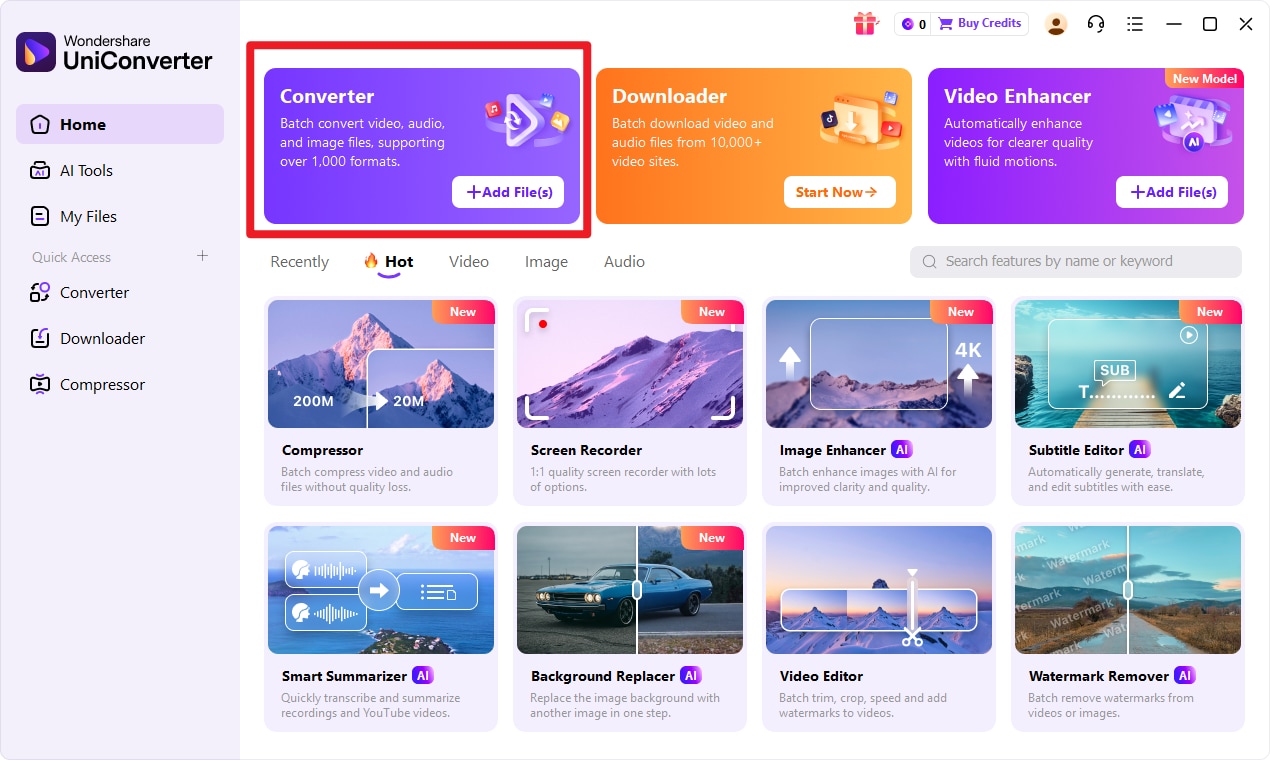
Choose Converter in UniConverter. Launch the software and enter the main conversion workspace. This is where you can manage your audio file imports, output setup, and conversion tasks in one place. Starting from the dedicated converter helps keep the workflow clean and straightforward.
Step 2
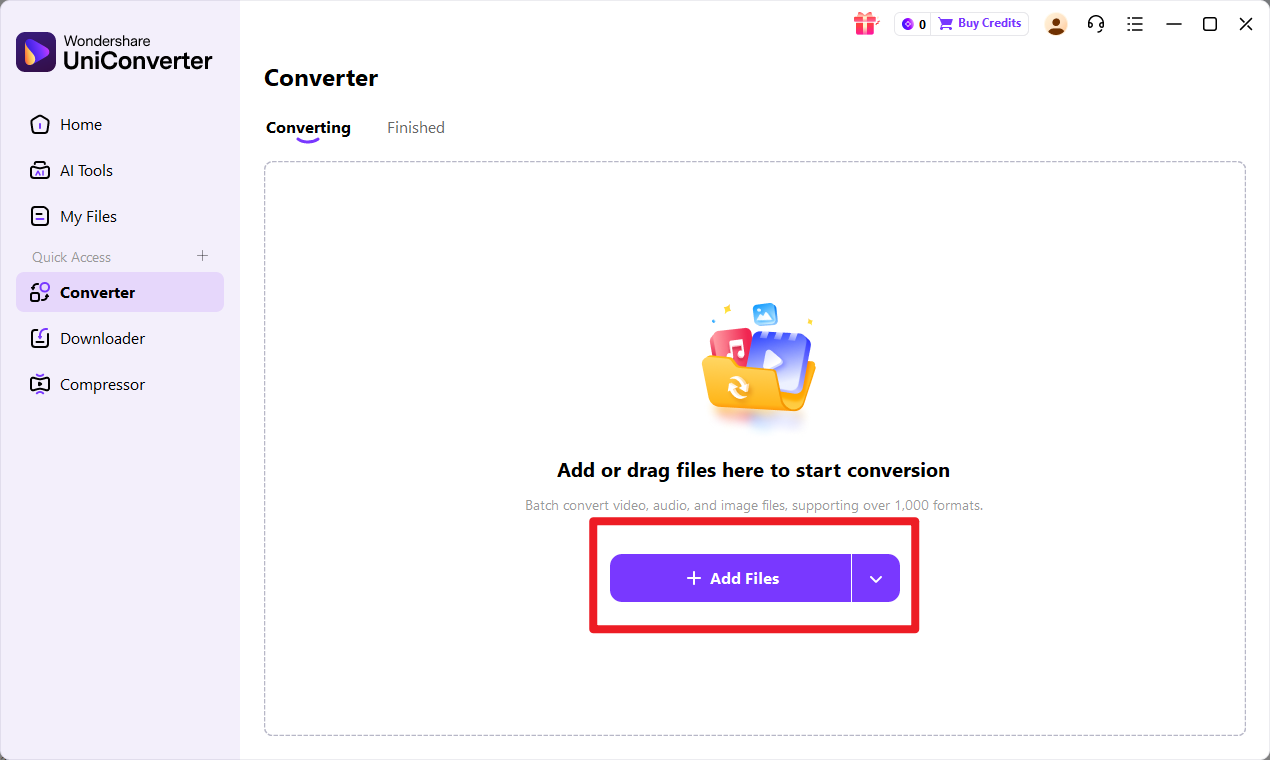
Add Files to UniConverter. Import your input format files into the converter. You can add one file for a quick task or import multiple files if you want to batch process your audio library more efficiently. This is useful when you are dealing with several APE files at once.
Step 3
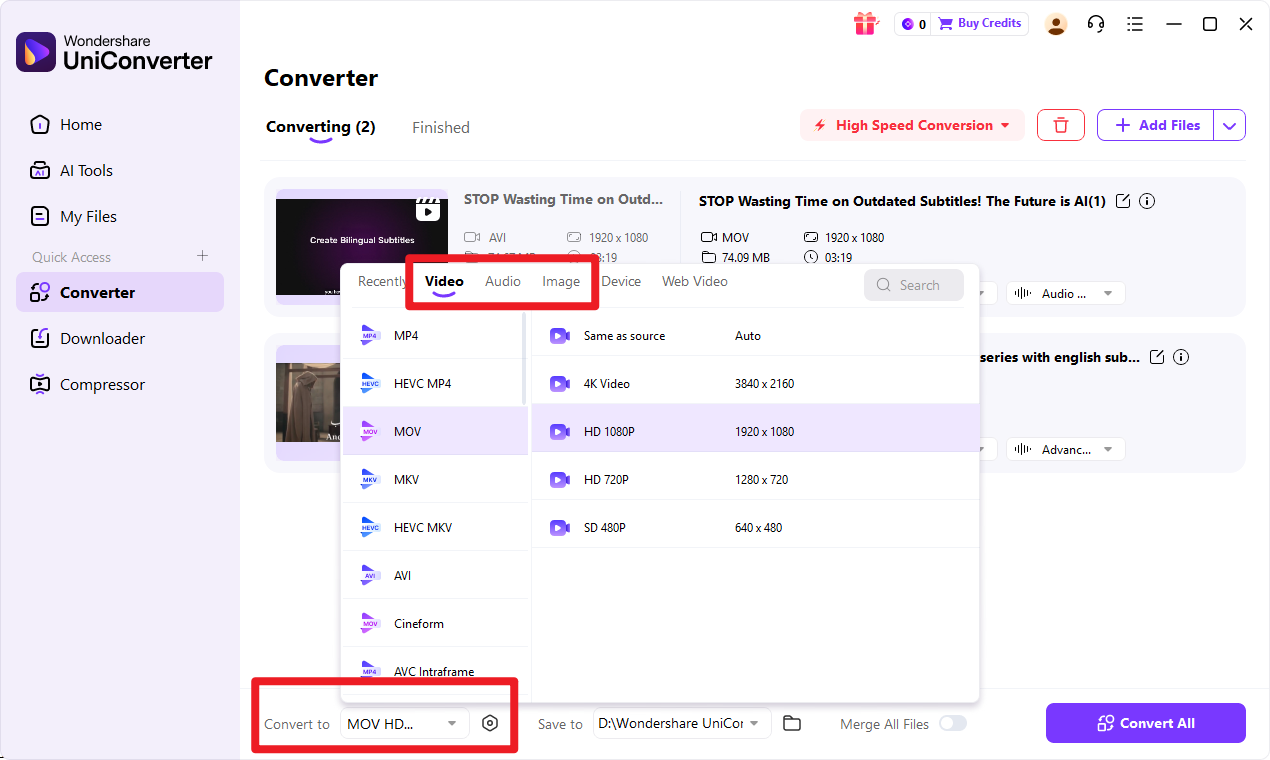
Choose Output Format. Select target format as your export option. If needed, review the available output settings to make sure the exported audio matches your playback or workflow requirements. This step is where you align the file with the system or software that needs to use it.
Step 4
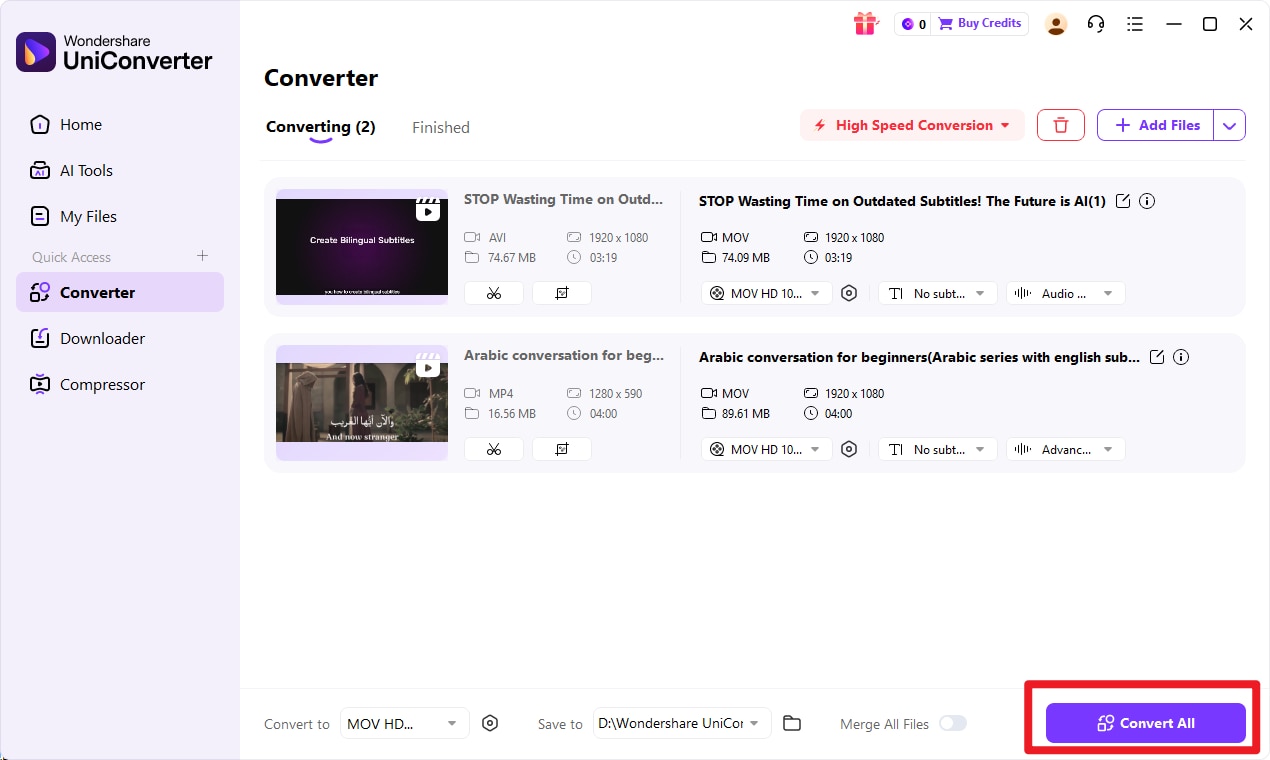
Start the Conversion. Begin converting from input format to target format, then save the new files to your preferred location. After the process finishes, verify playback or import the converted files into your target application to confirm everything works as expected.

Simple APE to AU Audio Conversion
Conclusion
Choosing between APE vs AU comes down to what matters most in your workflow. APE is generally the better option for lossless storage, audio fidelity, and archive-focused use. AU is more relevant when you need to support a legacy platform, older software environment, or a specialized system requirement.
There is no one-size-fits-all winner. The better format depends on whether your main goal is quality preservation, storage efficiency, compatibility, or technical workflow alignment.
If you need to convert APE to AU quickly and with less hassle, Wondershare UniConverter is the most practical first-choice tool in this workflow. It simplifies the process, supports batch conversion, and helps you make your audio files easier to use across different devices and applications.
Choose the format that fits your playback, storage, or editing needs, and try UniConverter when you want a faster and more user-friendly audio conversion experience.
FAQs
-
1. Is APE better than AU for audio quality?
In most cases, yes. APE is generally better if your goal is to preserve original audio quality because it uses lossless compression. AU may still contain usable audio, but it is not usually the preferred choice for high-fidelity archival purposes. -
2. Is AU still used today?
Yes, but mostly in legacy and niche environments. In 2026, AU is far less common in general consumer media use, yet it still appears in older systems, specialized software, and certain technical workflows where the format remains supported. -
3. Which format is easier to play on modern devices?
Neither APE nor AU is ideal for universal modern playback compared with mainstream formats. However, APE often faces compatibility limitations in everyday consumer apps, while AU is usually tied to older or more specialized environments. The easier format depends on the exact device or software you are using. -
4. Can I convert APE to AU without losing workflow efficiency?
Yes. Using Wondershare UniConverter is one of the easiest ways to do this. Its guided interface, batch processing support, and straightforward conversion workflow help users convert files without adding unnecessary technical steps. -
5. When should I choose APE instead of AU?
Choose APE when you want better archival quality, lossless preservation, and more efficient storage than uncompressed audio. It is the stronger option for users building personal music collections or maintaining high-quality source files for long-term use.
