
- Value: Cleanup.pictures excels for quick, casual object removal, ideal for social media and simple edits.
- Comparison: It offers unmatched simplicity and speed compared to complex tools like Photoshop, but with less precision.
- Decision: Choose Cleanup.pictures for effortless, everyday photo fixes; opt for UniConverter or Photoshop for professional-grade results and control.
- Value: UniConverter offers a robust desktop alternative, ensuring privacy, high-quality exports, and advanced features for complex tasks.
- Decision: Balance convenience with quality; online tools suit quick edits, while desktop software provides precision and data security.
In this article
- Part 1: What is Cleanup.pictures?
- Part 2: Cleanup.pictures: Core Features, Pros, and Cons
- Part 3: Who is Cleanup.pictures For? Use Cases and Limitations
- Part 4: Cleanup.pictures vs. Competitors: A Comparative Analysis
- Part 5: Risks and Pitfalls to Consider
- Part 6: How to Use UniConverter to Efficiently Remove Objects from Images
- Part 7: Final Verdict and Recommendations
- Part 8: FAQs
When I first started dabbling in photo editing, one of my biggest frustrations was always those pesky unwanted objects or people photobombing what would otherwise be a perfect shot. I tried various tools, from complex desktop software to clunky online editors, but nothing quite hit the mark for quick, effective object removal. Then I stumbled upon Cleanup.pictures, an AI-powered tool that promised to make this task effortless. This Cleanup.pictures review will delve into my experience with this tool, comparing it to other options on the market, and help you decide if it's the right fit for your editing needs. I'll share my insights on its strengths, weaknesses, and where it truly shines, so you can make an informed decision.
Part 1: What is Cleanup.pictures?
Cleanup.pictures emerged as a game-changer for me, offering a surprisingly simple solution to a common photo editing headache: removing unwanted elements. At its core, it's an online tool that leverages artificial intelligence to intelligently erase objects, text, or even people from your images. I remember thinking, "Could it really be that easy?" And for many scenarios, it genuinely is. It’s designed for speed and accessibility, meaning you don't need to be a Photoshop wizard to get decent results. My initial impression was that it aimed to democratize object removal, making it available to anyone with an internet connection.
The Rise of AI-Powered Photo Editing Tools
The landscape of photo editing has been rapidly evolving, largely thanks to advancements in AI.
* Democratization of complex tasks: AI has made sophisticated editing tasks, once exclusive to professionals, accessible to everyday users.
* Time-saving solutions: What used to take minutes, or even hours, can now be done in seconds with AI assistance.
* Focus on user experience: Many AI tools prioritize intuitive interfaces, reducing the learning curve significantly.
* Addressing common pain points: Tools like Cleanup.pictures directly tackle frequent frustrations, such as unwanted elements in photos.
Part 2: Cleanup.pictures: Core Features, Pros, and Cons
Cleanup.pictures, in my experience, is all about focused functionality. Its core ability is, unsurprisingly, object removal. You upload an image, brush over what you want gone, and the AI attempts to fill in the background seamlessly. I've found it to be incredibly effective for certain types of edits.
* Intuitive Brush Tool: The primary feature is a simple brush that allows you to highlight the unwanted object.
* AI-Powered Inpainting: Once brushed, the AI algorithm analyzes the surrounding pixels to intelligently reconstruct the background.
* Adjustable Brush Size: You can easily change the brush size for precision or broader strokes.
* Undo/Redo Functionality: Essential for correcting mistakes or trying different approaches.
* Download Options: After editing, you can download your cleaned-up image.
Pros:
* Intuitive and user-friendly interface for quick edits: Seriously, I was able to get started in seconds without any tutorials. It’s incredibly straightforward.
* Effective object removal for simple backgrounds: For things like removing a stray cable on a plain wall or a small stain on a table, it works wonders.
* Free tier availability for basic usage: This was a huge plus for me when I was just experimenting. It lets you test the waters without commitment.
Cons:
* Limitations in handling complex backgrounds or intricate objects: This is where I often hit a wall. If the background is busy or the object has complex edges, the results can be less than ideal.
* Potential for noticeable artifacts or blurring in challenging scenarios: I've definitely seen instances where the AI struggles, leaving behind smudges or oddly blended areas, especially around tricky edges.
Part 3: Who is Cleanup.pictures For? Use Cases and Limitations
From my perspective, Cleanup.pictures isn't a one-size-fits-all solution, but it excels in specific niches. It's a fantastic tool if you're looking for speed and simplicity over pixel-perfect precision.
Best Use Case: Quick Fixes for Social Media and Casual Photos
If you're like me and just want to quickly remove a distracting element from a photo before posting it on Instagram or sending it to a friend, Cleanup.pictures is your go-to. I've used it countless times to:
* Remove photobombers: A random person walking into your scenic shot? Gone in seconds.
* Clean up cluttered backgrounds: A stray coffee cup or a messy corner in an otherwise good photo? Easily fixed.
* Erase text or logos: Sometimes you just want a clean image without branding.
Limited Use Case: Professional Photo Retouching and High-Stakes Projects
However, for anything that demands professional-grade results or intricate detail, I wouldn't rely solely on Cleanup.pictures. I've found that for:
* Product photography: Where every detail matters and the background needs to be perfectly seamless.
* Portrait retouching: Removing blemishes or stray hairs without affecting skin texture is beyond its current capabilities.
* Complex architectural shots: Where straight lines and precise geometry are crucial, Cleanup.pictures can introduce distortions.
In these scenarios, the potential for artifacts or unnatural blending becomes a significant drawback.
Part 4: Cleanup.pictures vs. Competitors: A Comparative Analysis
When it comes to object removal, Cleanup.pictures is just one player in a growing field. I've tried a few others, and here's how I see them stacking up.
| Feature/Tool | Cleanup.pictures | Adobe Photoshop | PhotoRoom | Remove.bg |
| Ease of Use | High | Low (Steep Learning Curve) | High | High |
| Object Removal Quality (Simple) | High | Very High | High | Medium |
| Object Removal Quality (Complex) | Medium | Very High | High | Low |
| Pricing Model | Freemium | Subscription | Freemium | Freemium |
| Advanced Features | Limited | Extensive | Moderate (Backgrounds, Templates) | Limited (Background Removal Only) |
Key Differentiators: Simplicity vs. Advanced Control
What I've learned is that the choice often boils down to what you prioritize. Cleanup.pictures shines in its simplicity and speed for straightforward tasks. If you just want to quickly erase something without fuss, it's excellent. However, when I need absolute precision and control, especially for complex images, nothing beats the power of Adobe Photoshop. Its content-aware fill is incredibly sophisticated, allowing for fine-tuning that Cleanup.pictures simply can't offer. PhotoRoom and Remove.bg are also great for quick edits, but PhotoRoom leans more into background replacement with templates, and Remove.bg is primarily for full background removal rather than selective object removal. For me, Cleanup.pictures hits a sweet spot for casual, everyday fixes.
Part 5: Risks and Pitfalls to Consider
While Cleanup.pictures offers a lot of convenience, I've also become aware of some potential downsides and risks, especially when relying on online tools for photo editing. It's important to go in with open eyes.
Data Privacy Concerns with Online Tools
This is a big one for me. When you upload your photos to an online service like Cleanup.pictures, you're essentially entrusting your personal images to a third party. While they typically have privacy policies, I always wonder:
* Who has access to my photos?
* How long are they stored on their servers?
* Could they be used for AI training without my explicit consent?
For highly sensitive or personal images, I'm always hesitant to use purely online tools.
Potential for Quality Degradation on Free Tiers
I've noticed that the free versions of many online tools, including Cleanup.pictures, often come with limitations. This can manifest as:
* Lower resolution downloads: Your edited image might be smaller or less sharp than the original.
* Watermarks: Some tools add their branding to free exports.
* Slower processing times: Free users might be queued behind paid subscribers.
This can be frustrating if you're trying to achieve a certain level of quality without paying.
Over-reliance on AI for Critical Edits
While AI is powerful, it's not infallible. I've seen instances where Cleanup.pictures makes odd choices, especially with complex textures or patterns. If you're working on a critical project, blindly trusting the AI can lead to:
* Unnatural blending: Areas that just don't look right.
* Distorted elements: AI trying to reconstruct something it doesn't quite understand.
* Time wasted: Having to re-edit in another tool because the AI's attempt wasn't good enough.
In-app Advertisements or Upselling
Many freemium models, including Cleanup.pictures, will try to encourage you to upgrade. This can come in the form of:
* Pop-up ads: Interrupting your workflow.
* Feature limitations: Constantly reminding you that a better version is behind a paywall.
* Promotional emails: After signing up, you might receive marketing communications.
While understandable for their business model, it can sometimes detract from the user experience.
Part 6: How to Use UniConverter to Efficiently Remove Objects from Images
Sometimes, when other tools fall short with batch processing, pixelated exports, or blurry edges, I turn to UniConverter. It's a robust desktop solution that avoids many of the pitfalls of online tools, offering a more stable and high-quality experience for object removal and other photo enhancements. It's my go-to for an all-in-one media toolkit.
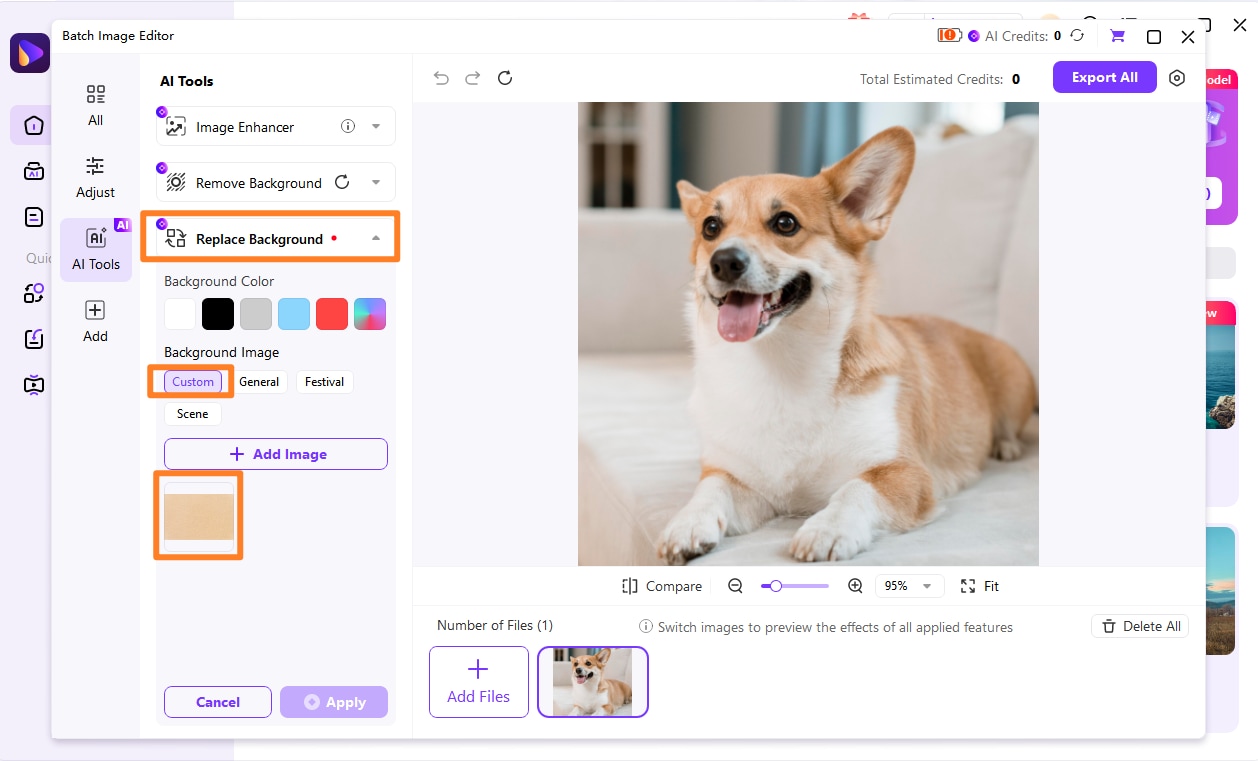
Step 1: Open UniConverter and Choose Background Replacer
Launch UniConverter on your computer. On the main interface, navigate to the "Toolbox" section. Here, you'll find a variety of tools. Select "Background Replacer" to begin the object removal process.
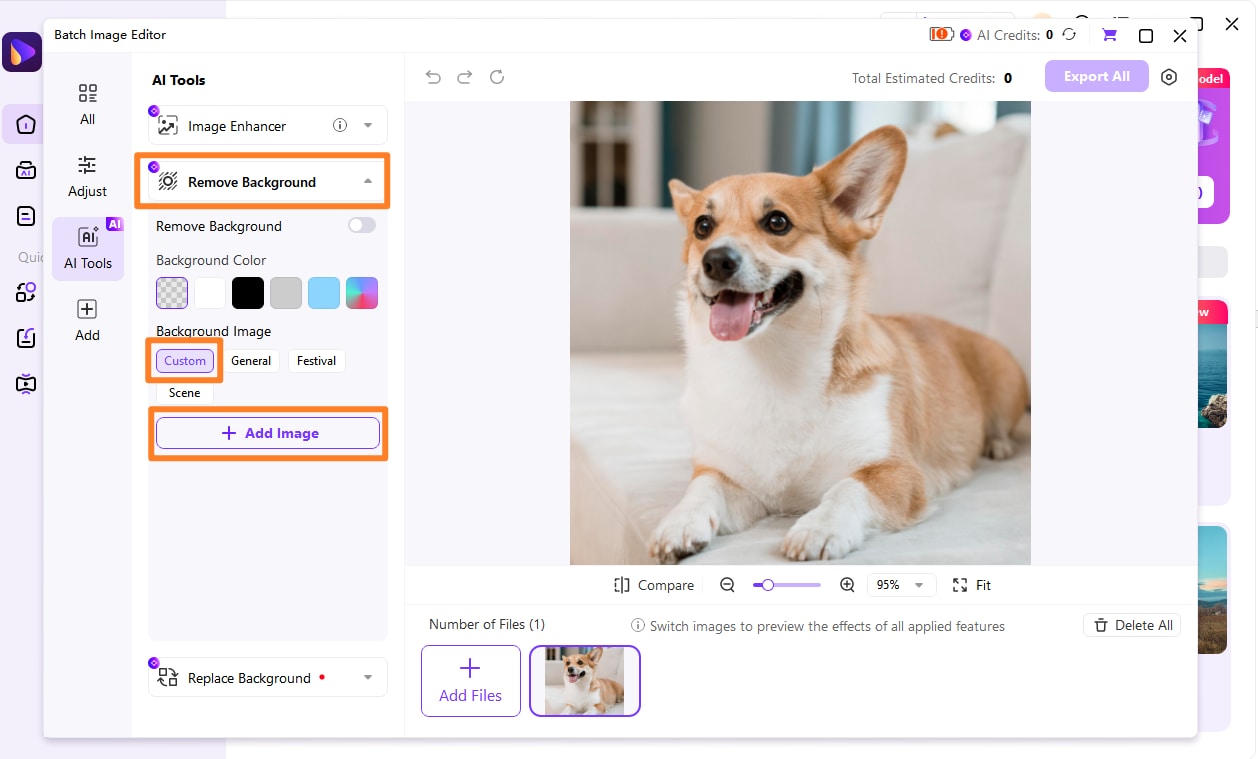
Step 2: Upload the Images
Click on the "Add Files" button or simply drag and drop the images from which you want to remove objects into the UniConverter window. You can add multiple images for batch processing, which is a huge time-saver.
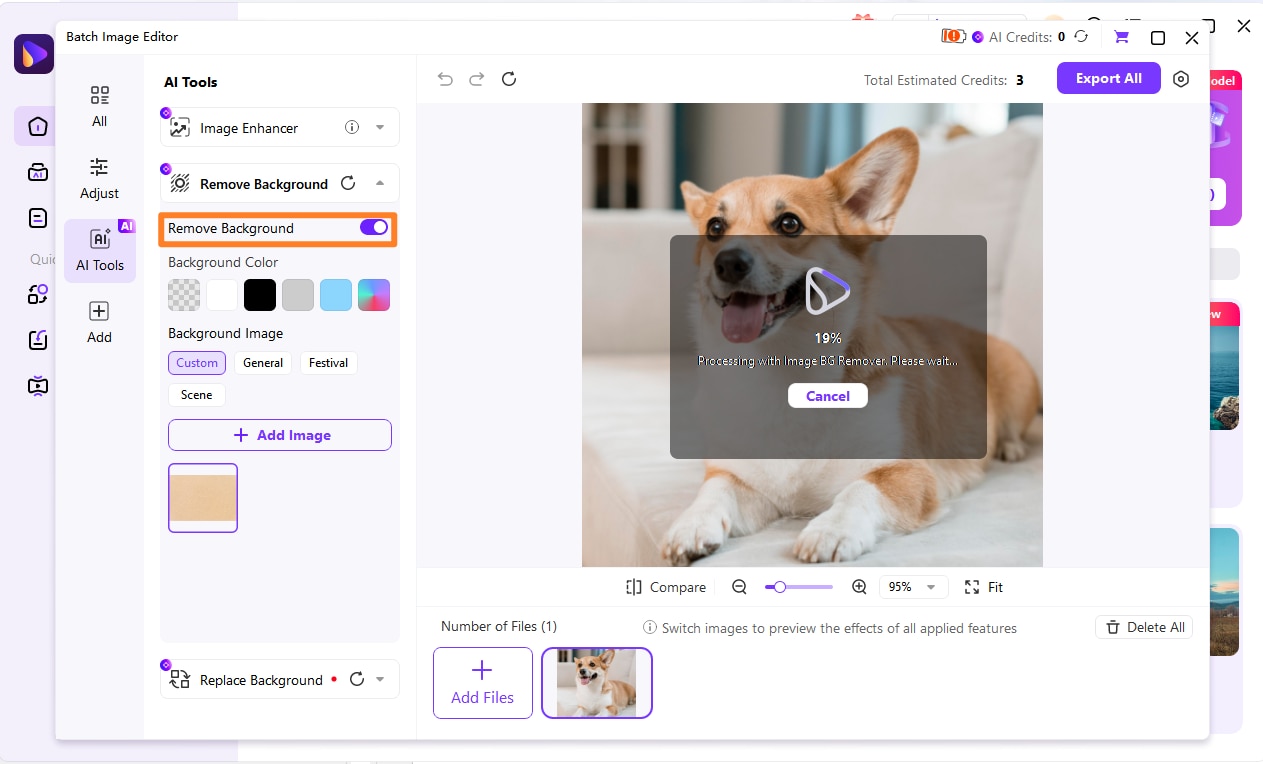
Step 3: Utilize Advanced Object Removal and Enhancement Tools
Once your images are loaded, UniConverter provides intuitive tools to highlight and remove unwanted objects. Use the brush tool to mark the areas you want to erase. The software's AI will then intelligently remove the objects, often with superior precision compared to online alternatives, ensuring clean edges and natural-looking results. You can also fine-tune other aspects of your image here, such as utilizing its capabilities as a high-definition background remover or to remove background without losing quality.
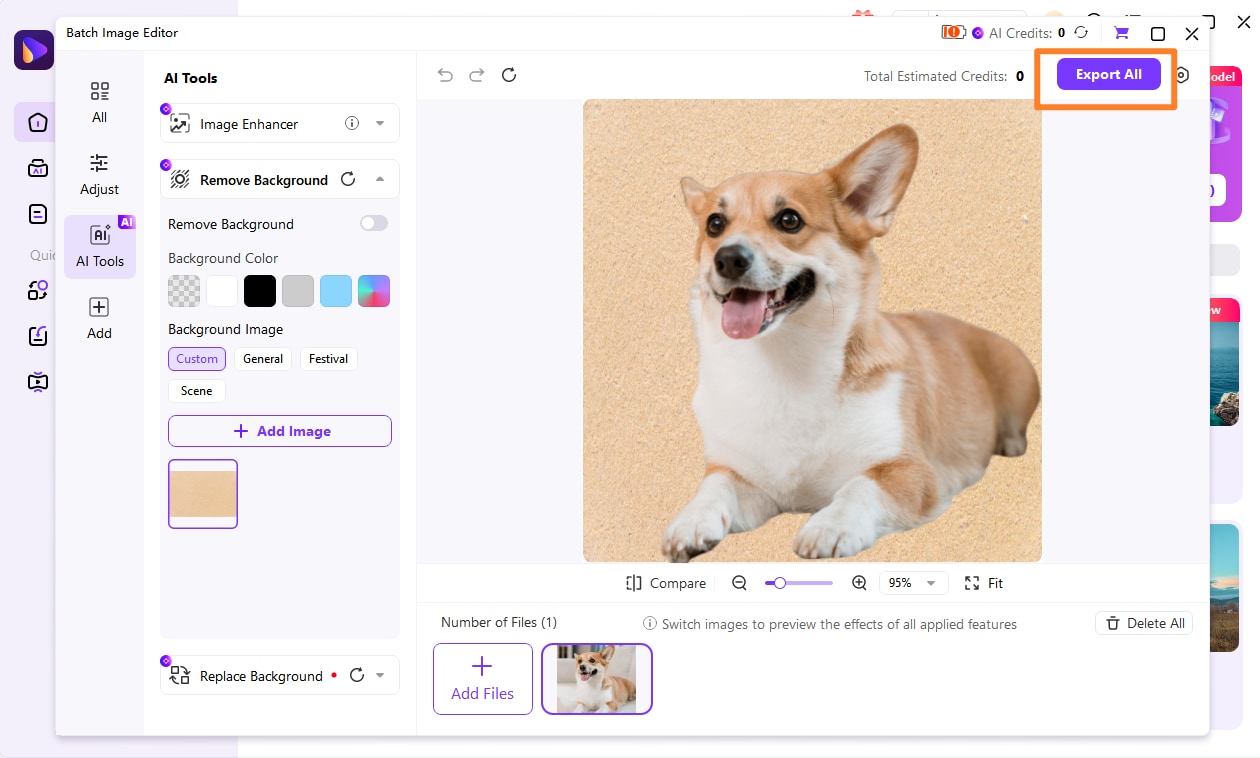
Step 4: Preview and Export Images
After making your edits, you can preview the results to ensure everything looks perfect. UniConverter allows you to export your high-quality edited images in various formats without any loss in resolution or unwanted watermarks. Choose your desired output format and destination, then click "Export."

Looking for a Cleanup.pictures alternative?
Part 7: Final Verdict and Recommendations
After spending considerable time with Cleanup.pictures and its competitors, my Cleanup.pictures review concludes that it occupies a valuable niche in the photo editing world. It's a tool that prioritizes accessibility and speed, making it incredibly useful for certain user groups and scenarios.
For Casual Users and Quick Edits
If you're a casual user who just needs to quickly tidy up photos for social media, personal albums, or quick shares, Cleanup.pictures is an excellent choice. Its intuitive interface and effective performance on simple backgrounds mean you can get decent results in seconds without any prior editing experience. It's perfect for those "oops, someone walked into my shot" moments.
For Professionals and Advanced Editing Needs
However, for professionals or anyone requiring pixel-perfect precision, intricate detail, or handling complex images, Cleanup.pictures will likely fall short. The limitations in dealing with busy backgrounds, complex objects, and the potential for artifacts mean you'll still need more robust software like Adobe Photoshop or a dedicated desktop solution like UniConverter. These tools offer the control and quality necessary for high-stakes projects where compromises aren't an option.
The Importance of Balancing Convenience and Quality
Ultimately, the best tool depends on your specific needs. Cleanup.pictures offers unparalleled convenience for quick fixes, but that convenience comes with trade-offs in terms of ultimate quality and control. It's about finding that balance between how much effort you're willing to put in and the quality of the output you require. For me, Cleanup.pictures is a fantastic addition to my casual editing toolkit, but it doesn't replace my more powerful desktop software for professional work.
Part 8: FAQs
-
1. **Is Cleanup.pictures completely free to use?**
Cleanup.pictures offers a free tier that allows you to perform basic object removal. However, it often comes with limitations such as lower resolution downloads or a cap on the number of edits. For higher resolution outputs and unlimited usage, you'll need to subscribe to their premium plan.
-
2. **How does Cleanup.pictures compare to Photoshop's content-aware fill?**
Photoshop's Content-Aware Fill is generally more sophisticated and offers greater control, especially for complex backgrounds and intricate objects. It allows for manual adjustments and a more precise outcome. Cleanup.pictures is much simpler and faster, relying heavily on AI automation, which can be less precise but more user-friendly for quick, less demanding edits.
-
3. **Can Cleanup.pictures remove watermarks from images?**
While Cleanup.pictures can technically remove any object you brush over, including watermarks, I've found its effectiveness varies. For simple, small watermarks on plain backgrounds, it might work. However, for complex or transparent watermarks, or those integrated into detailed parts of an image, the results can be unnatural or leave noticeable traces. It's generally not designed as a dedicated watermark removal tool.
-
4. **What are the best alternatives to Cleanup.pictures for complex object removal?**
For complex object removal, I would highly recommend Adobe Photoshop due to its advanced Content-Aware Fill and healing tools. Other strong contenders include PhotoRoom for its AI-powered background removal and object editing, and desktop software like UniConverter for a more robust and comprehensive editing experience that avoids online privacy concerns and quality degradation.
-
5. **Is it safe to upload personal photos to Cleanup.pictures?**
Like any online service, uploading personal photos to Cleanup.pictures involves a degree of trust. While they typically outline their data privacy policies, if you have highly sensitive or confidential images, it's always safer to use offline desktop software where your images remain on your local machine. For casual photos, the risk is generally considered low, but it's a personal decision based on your comfort level with online data sharing.
