
- Value: Capture One excels in color accuracy, tethered shooting, and customization for professional photographers.
- Ideal User: Best for professional studio and commercial photographers prioritizing image quality and workflow efficiency.
- Comparison: Offers superior color science and tethering compared to Lightroom; UniConverter handles specific batch tasks efficiently.
- Decision: Consider Capture One if you need precise control and have robust hardware; otherwise, simpler alternatives suffice.
- Pitfalls: Be aware of the subscription cost, high hardware demands, and potential vendor lock-in with Capture One.
- UniConverter Use: Use UniConverter for efficient, high-quality batch image background replacement, a task not optimized for Capture One.
In this article
- Part 1: What is Capture One?
- Part 2: Capture One: Core Features, Pros, and Cons
- Part 3: Capture One: Ideal Users and Scenarios
- Part 4: Capture One and Alternatives Comparison
- Part 5: Risks and Pitfalls to Consider
- Part 6: How to Use UniConverter for Efficient Image Background Replacement
- Part 7: Conclusion
- Part 8: FAQs
When I first started my journey in professional photography, I quickly realized that the right software could make or break my workflow. After years of grappling with various editing suites, I landed on Capture One review, and it truly transformed how I approach image processing. This deep dive isn't just a feature list; it's my personal take on why Capture One stands out, who it's for, and what pitfalls to watch out for. I’ll also lay out how it stacks up against its rivals and, for those looking for alternatives, a look at UniConverter. My goal here is to give you a clear, experience-driven perspective to help you make an informed decision for your own photographic endeavors.
Part 1: What is Capture One?
Capture One is a professional-grade raw image converter and photo editing software developed by Phase One. From my perspective, it’s always been positioned as a premium tool for photographers who demand the absolute best in image quality and workflow efficiency. Unlike some other editors that try to be a jack-of-all-trades, Capture One has consistently focused on delivering unparalleled color accuracy, robust tethered shooting, and a highly customizable interface.
The Evolving Landscape of Professional Photo Editing
The world of professional photo editing is constantly shifting, and staying competitive means having tools that can keep up.
* Demand for Pristine Image Quality: Clients expect perfection, and that starts with how raw files are processed. I’ve found that Capture One’s color science gives me an edge here.
* Workflow Efficiency is Key: Time is money, especially in commercial photography. A streamlined editing process is non-negotiable for me.
* Integration with High-End Gear: As camera technology advances, software needs to seamlessly integrate with new raw formats and advanced features.
Part 2: Capture One: Core Features, Pros, and Cons
From my daily grind, Capture One's core strength lies in its meticulous approach to image processing. It’s not just about sliders; it’s about how those sliders interact with the raw data. The software's ability to handle complex color adjustments and its robust session-based workflow are what keep me coming back. I've found its tools for local adjustments to be incredibly precise, allowing me to fine-tune specific areas of an image without affecting others. The style and preset options are also a lifesaver for maintaining consistency across a shoot.
Pros:
* Unparalleled Color Grading and Control: This is where Capture One truly shines for me. The color editor is incredibly powerful, allowing for precise adjustments to specific color ranges without affecting skin tones or other critical elements. I can achieve looks here that are simply impossible in other software.
* Superior Tethered Shooting Capabilities: For studio work, this is a game-changer. The stability and speed of tethered shooting with Capture One are unmatched. I can instantly review images on a large monitor, apply adjustments on the fly, and get client feedback in real-time.
* Robust Layer-Based Editing Workflow: I appreciate the flexibility of layers. It allows me to make non-destructive adjustments and experiment without committing to a look. This is crucial for complex retouches and ensuring I can always revert to an earlier state.
Cons:
* Steep Learning Curve for New Users: I won't lie, when I first started, it felt overwhelming. The interface is powerful but can be intimidating if you're used to simpler editors. It takes time to master its nuances.
* Higher Price Point Compared to Competitors: It’s an investment, no doubt. While I believe it pays for itself in efficiency and quality, the initial cost can be a barrier for many, especially those just starting out.
Part 3: Capture One: Ideal Users and Scenarios
Based on my experience, Capture One isn't for everyone, but for the right user, it's indispensable. If you're serious about your craft and your income depends on the quality of your images, then this software is designed with you in mind. I've seen many photographers struggle with it because their needs didn't align with its strengths.
Best Use Case: Professional Studio Photography and High-End Commercial Work
This is where Capture One truly excels. For me, working in a studio environment, the tethered shooting capabilities are a lifesaver. I can instantly see the results on a large monitor, make adjustments, and get client approval on the spot. The precise color control is also crucial for commercial work where color accuracy is paramount – think product photography or fashion shoots where specific brand colors need to be perfectly reproduced. The session-based workflow also makes managing large projects much more organized.
Limited Scenario: Casual Photographers and Budget-Conscious Hobbyists
If you're just looking to quickly enhance your vacation photos or share images on social media, Capture One is probably overkill. The learning curve is significant, and the cost can be prohibitive if photography isn't your primary source of income or a serious hobby. For casual users, simpler and more affordable alternatives offer more than enough functionality without the complexity. I’ve seen friends try it and quickly get frustrated because they didn't need its advanced features.
Part 4: Capture One and Alternatives Comparison
When I look at the market, Capture One definitely carves out its niche. It's not trying to be everything to everyone, which I appreciate. Here's how I see it stacking up against some of its main rivals, including UniConverter for specific needs.
| Feature/Product | Capture One | Adobe Lightroom | DxO PhotoLab | Affinity Photo | UniConverter (for specific tasks) |
| Processing Speed | Excellent, especially with sessions | Good, can be slow with large catalogs | Very Good, particularly with DeepPRIME | Good, but raw processing can be slower | Fast, especially for batch conversions/edits |
| Output Quality | Superb, especially color fidelity | Excellent, industry standard | Outstanding, especially noise reduction | Excellent, robust for pixel editing | High, maintains original quality |
| Ease of Use | Moderate (steep learning curve) | High (intuitive for most) | Moderate (powerful but specific tools) | Moderate (closer to Photoshop) | Very High (user-friendly interface) |
| Customer Support | Good, responsive community | Extensive, large community & resources | Good, active forums | Good, active forums & tutorials | Excellent, dedicated support team |
| Security | Local processing, robust data handling | Cloud integration, secure Adobe ecosystem | Local processing, secure | Local processing, secure | Local processing, secure |
| Key Differentiator | Color Science, Tethering, Customization | Ecosystem, Cataloging, Mobile Sync | Optics Correction, Noise Reduction | Layer-based Editing, Perpetual License | Batch Processing, Format Conversion, AI Tools |
From my perspective, if color accuracy and tethered shooting are your top priorities, Capture One is the clear winner. Lightroom is fantastic for overall asset management and its ecosystem, but I find its color engine less nuanced. DxO PhotoLab is a beast for optical corrections and noise reduction, often producing cleaner files than anything else, but its workflow is different. Affinity Photo is a powerful Photoshop alternative with a perpetual license, great for pixel-level editing, but its raw processing isn't as refined as Capture One's. UniConverter, while not a direct competitor for full raw editing, is incredibly useful for specific tasks like batch processing and format conversion, and it does those jobs exceptionally well and quickly.
Part 5: Risks and Pitfalls to Consider
Even with all its strengths, I’ve learned that using Capture One isn't without its considerations. It's important to go in with your eyes open, especially given its professional focus. I've seen colleagues get frustrated because they didn't anticipate some of these aspects.
Subscription Model Dependency
Like many professional software tools these days, Capture One has moved towards a subscription model for its latest versions. While they still offer perpetual licenses for older versions, relying on the latest features often means a recurring cost. For me, this is a significant ongoing expense that needs to be factored into my business budget. If you stop paying, you lose access to updates and potentially the software itself, which can be a real headache if you're mid-project.
Hardware Requirements for Optimal Performance
Capture One is a resource-intensive application. I quickly learned that trying to run it on an underpowered machine leads to frustration, slow processing, and crashes. You really need a robust computer with a powerful processor, ample RAM (16GB minimum, 32GB or more is better for heavy use), and a fast SSD to experience it at its best. If your hardware isn't up to snuff, you'll find yourself waiting a lot, which kills workflow efficiency.
Integration Challenges with Other Software
While Capture One is excellent at what it does, it doesn't always play perfectly with other software in a broader workflow. For instance, if you're used to round-tripping files seamlessly between Lightroom and Photoshop, you might find the process a bit clunkier with Capture One. Exporting to Photoshop for pixel-level editing is straightforward, but managing those files back in Capture One's catalog can sometimes feel less integrated than I'd like. It requires a more deliberate file management strategy.
Potential for Vendor Lock-in
Once you start building extensive catalogs and applying specific edits within Capture One, migrating to another platform can be a daunting task. While you can export JPEGs or TIFFs, you lose the non-destructive raw adjustments. This means a significant investment in time and effort in Capture One can make it difficult to switch to a competitor down the line without essentially starting over on your edits. It’s a commitment, and I’ve felt that pressure myself.
Part 6: How to Use UniConverter for Efficient Image Background Replacement
Sometimes, even with powerful tools like Capture One, you encounter specific tasks that are either cumbersome or not their primary focus. For instance, if I need to quickly batch replace backgrounds on a large number of images, or if I find that other tools are giving me pixelated exports or jagged edges, I turn to UniConverter. It's not a full-fledged photo editor, but it's an incredibly efficient and reliable solution for these kinds of specific, often repetitive, image manipulation tasks. It's fast, ad-free, supports a ton of formats, and leverages GPU acceleration for stable, lossless results, making it an ultimate all-in-one solution for various media needs.
Step 1: Open UniConverter and Choose Background Replacer
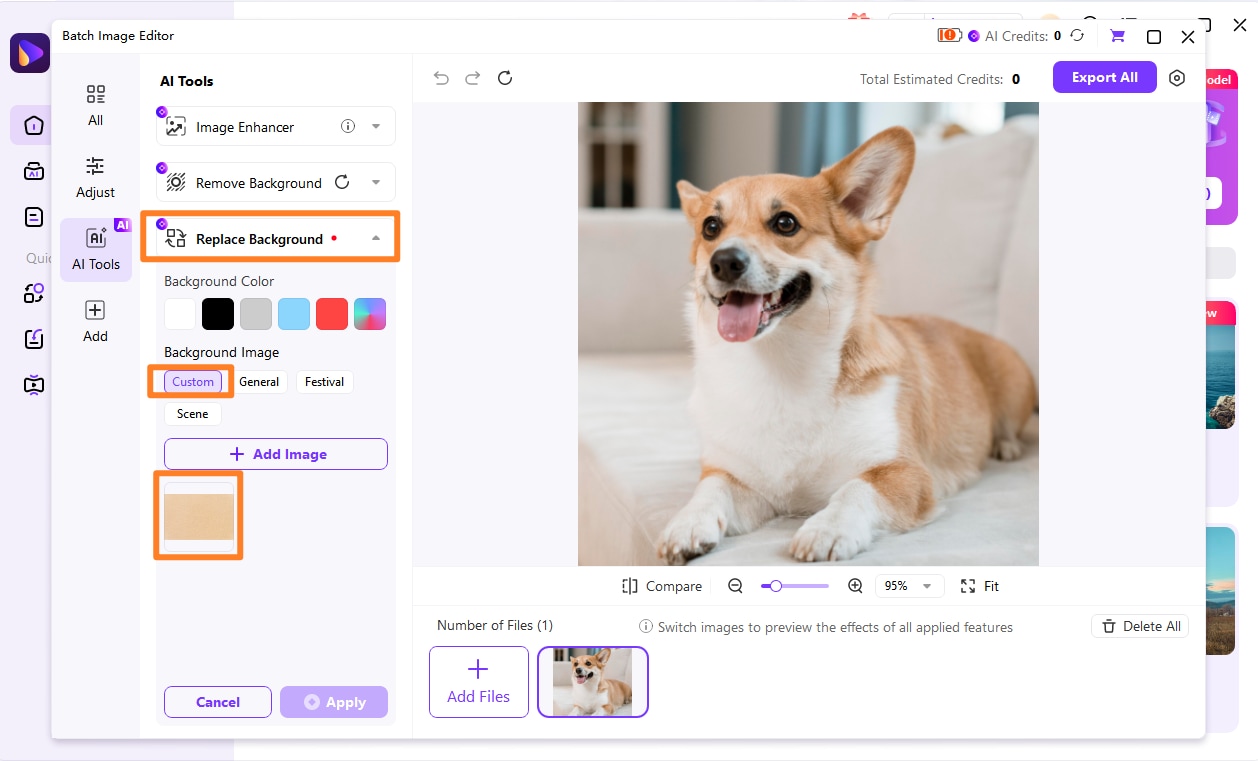
Launch UniConverter on your computer. On the main interface, navigate to the "Toolbox" section and select the Background Replacer feature. This tool is designed to help you remove background without losing quality from your images.
Step 2: Upload the Images
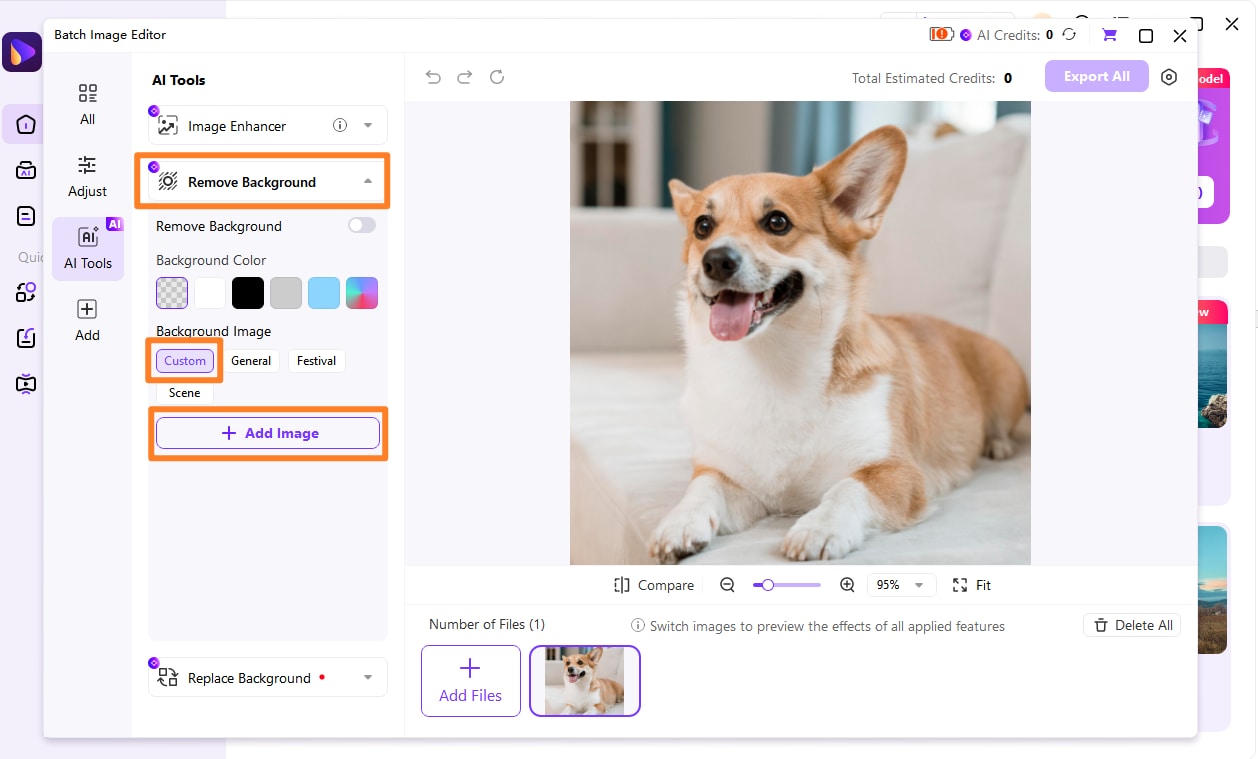
Click on the "Add Files" button or simply drag and drop the images you want to process into the designated area. You can upload multiple images for batch processing, making it easy to change video background or image backgrounds efficiently.
Step 3: Preview Images and Select Background
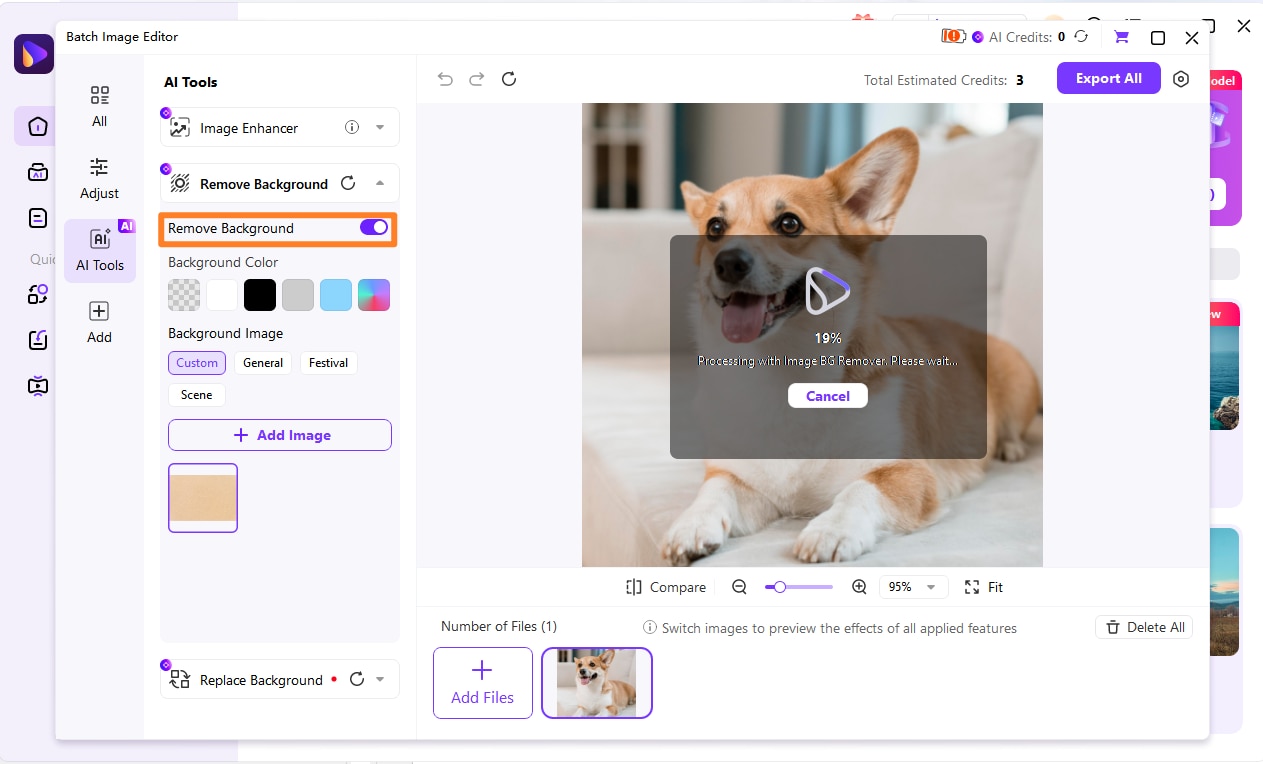
Once your images are uploaded, UniConverter will automatically begin processing them. You can preview the results for each image. Choose from various background options, including solid colors, custom images, or transparent backgrounds. This allows for a high degree of customization, whether you need a high-definition background remover or a simple color swap.
Step 4: Export Images
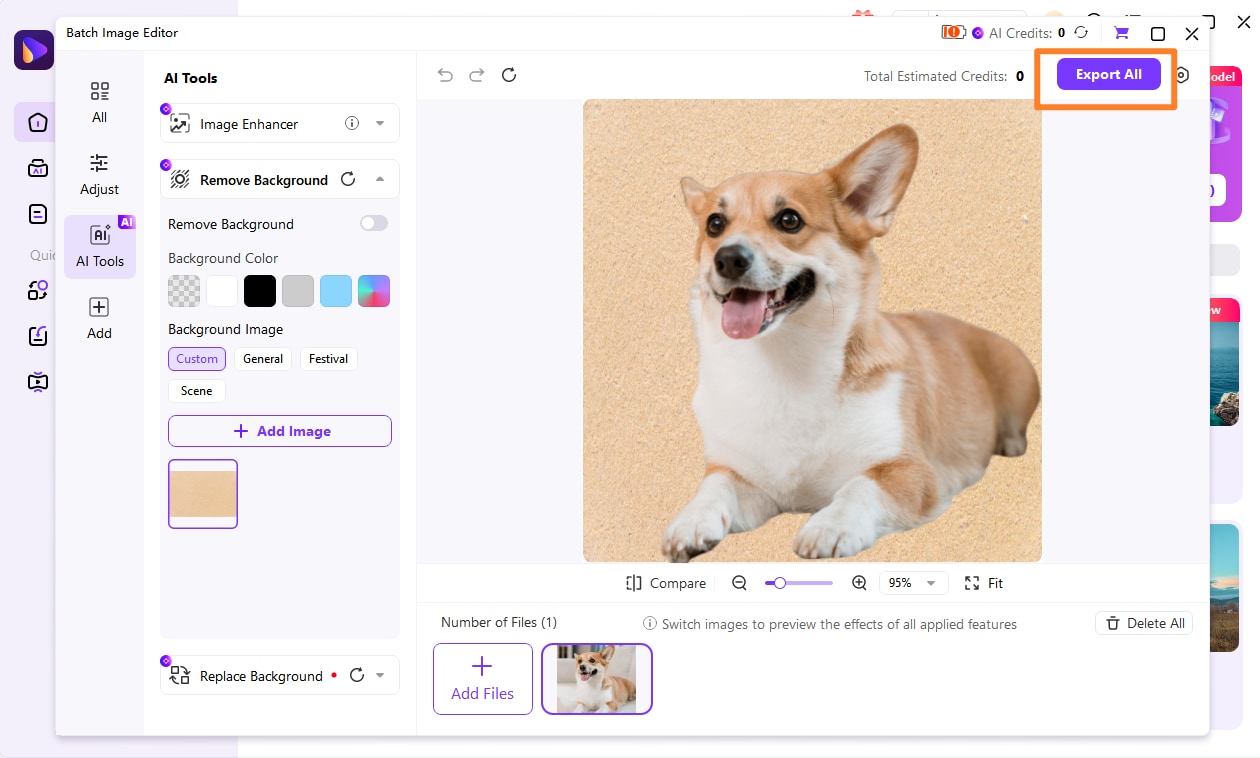
After you're satisfied with the background replacements, click the "Export" button. Select your desired output folder and file format, then let UniConverter quickly save all your newly edited images. For those working with specific file types, the SVG background remover functionality ensures broad compatibility.

Seeking a Versatile Capture One Alternative?
Part 7: Conclusion
In my journey through professional photography, Capture One review has consistently proven itself as a powerful and indispensable tool, particularly for those who prioritize color accuracy, tethered shooting, and a highly customizable workflow. For professional photographers and studios, its advanced features and superior raw processing capabilities offer a significant edge, allowing for precise control and efficient production. Advanced amateurs and enthusiasts who are serious about their craft and willing to invest time in mastering a complex tool will also find immense value in Capture One's output quality. However, for beginners and casual users, the steep learning curve and higher price point make it less ideal; simpler, more intuitive, and more affordable alternatives would likely serve their needs better. Ultimately, my recommendation hinges on your specific photographic demands and your commitment to a professional-grade workflow.
Part 8: FAQs
-
1. Is Capture One better than Lightroom for color grading?
From my experience, yes, Capture One generally offers more precise and powerful color grading tools. Its Color Editor and Advanced Color Editor allow for more granular control over specific hues, saturation, and lightness, often resulting in more natural and nuanced color adjustments compared to Lightroom.
-
2. What are the system requirements for Capture One?
To run Capture One smoothly, I'd recommend at least an Intel Core i3 (or equivalent AMD) processor, 8 GB of RAM (16 GB is much better), and 10 GB of free hard disk space. For optimal performance, especially with large raw files or complex edits, a multi-core processor, 16-32 GB of RAM, and a fast SSD are highly recommended.
-
3. Can I use Capture One for video editing?
No, Capture One is exclusively designed for still image editing and raw processing. It does not have any video editing capabilities. For video, you would need dedicated video editing software like Adobe Premiere Pro or DaVinci Resolve.
-
4. Does Capture One offer a perpetual license?
Yes, as of my last check, Capture One still offers perpetual licenses for specific versions, alongside its subscription options. However, perpetual licenses typically only include updates for the specific version you purchase, while subscriptions provide access to all future updates and new features.
-
5. How does Capture One handle raw files from different cameras?
Capture One is renowned for its excellent raw file processing and supports a vast array of cameras from various manufacturers. It has its own proprietary raw processing engine that is often praised for its ability to extract maximum detail and color accuracy from raw files, often outperforming camera manufacturers' own software.
