
- Canva's Strength: Simplifies design for everyone with intuitive drag-and-drop and extensive templates.
- Canva's Weakness: Lacks advanced features for intricate designs; premium elements require subscription.
- Ideal Use: Perfect for small businesses needing quick social media graphics and basic visuals.
- Limited Use: Not suitable for professional print design requiring precise color management or vector detail.
- Canva vs. Figma: Canva prioritizes accessibility; Figma excels in professional, collaborative UI/UX design.
- UniConverter's Role: Complements design tools for high-quality multimedia conversion and precise image editing.
- Decision Factor: Choose Canva for ease and speed; opt for specialized tools for complexity and professionalism.
In this article
When I first stumbled upon Canva review, I was skeptical. Could a web-based tool truly democratize design, making it accessible to everyone, regardless of their artistic skill? As someone who’s constantly creating visual content, from social media posts to presentations, I’ve always been on the lookout for tools that streamline my workflow without compromising quality. This comprehensive review will delve into Canva's strengths, weaknesses, and ideal use cases, comparing it with key competitors like Adobe Express and Figma. We'll also explore potential pitfalls and introduce UniConverter as a powerful alternative for specific multimedia needs, helping you make an informed decision about your design toolkit.
Part 1: What is Canva?
Canva, at its core, is an online graphic design platform that simplifies the creation of visual content. It launched with the ambitious goal of empowering "everyone to design," and in many ways, it has succeeded. I remember when I first tried it, I was amazed by how quickly I could whip up a professional-looking Instagram story without any prior design experience. It's built on the principle of drag-and-drop functionality, making complex design tasks feel intuitive. This platform has become a go-to for countless individuals and small businesses who need to produce eye-catching visuals without investing in expensive software or hiring a professional designer.
The Rise of Visual Content Creation
The demand for visual content has exploded, driven by several factors:
* Social Media Dominance: Platforms like Instagram, TikTok, and Facebook are inherently visual, requiring a constant stream of engaging images and videos.
* Digital Marketing Imperative: Businesses of all sizes rely on compelling visuals for advertising, branding, and customer engagement.
* Accessibility of Tools: The proliferation of user-friendly design tools has lowered the barrier to entry, enabling more people to create their own content.
* Attention Economy: In a crowded digital landscape, strong visuals are crucial for capturing and retaining audience attention.
Part 2: Canva's Core Strengths and Weaknesses
From my experience, Canva shines in its ability to make design accessible. It's like having a design assistant who anticipates your needs.
Pros
* Intuitive Drag-and-Drop Interface for Beginners: Seriously, if you can click and drag, you can design in Canva. This was a game-changer for me when I started.
* Extensive Template Library for Diverse Needs: Whether it's a presentation, a flyer, or a YouTube thumbnail, there's almost always a template that gets you 80% of the way there.
* Collaborative Features for Team Projects: Working with my team on marketing materials is seamless; we can comment and edit in real-time.
Cons
* Limited Advanced Design Capabilities: When I need to do something truly custom or intricate, I often hit a wall. It's not Photoshop, and it doesn't pretend to be, but sometimes I wish it had a bit more depth.
* Subscription Model for Premium Features: While the free version is great, the best templates, stock photos, and features are locked behind a paywall. It can add up if you're a heavy user.
Part 3: Target Users and Use Cases
Canva is a fantastic tool, but it's not a one-size-fits-all solution. I've found it incredibly useful for certain tasks, while for others, I look elsewhere.
Best Use Case: Quick Social Media Graphics for Small Businesses
If you're running a small business and need to churn out engaging social media posts, stories, and ads quickly, Canva is your best friend. The vast template library means you can maintain a consistent brand aesthetic without needing a dedicated designer. I've personally used it to create countless Instagram carousels and Facebook banners in minutes, saving me hours of work. It’s perfect for those who need to be agile and visually present online without a huge budget.
Limited Use Case: Professional Print Design for Agencies
However, if you're a professional agency working on high-fidelity print designs like large-format posters, magazine layouts, or intricate branding guidelines, Canva will likely fall short. Its color management capabilities are basic, and the resolution for very large prints can sometimes be an issue. I've tried to push its limits for print, and while it can do basic flyers, anything requiring precise CMYK color profiles or vector-level detail quickly becomes frustrating. For these scenarios, you'll need more robust software designed specifically for print production.
Part 4: Canva and Alternatives Comparison
When I'm evaluating design tools, I don't just look at one; I consider the ecosystem. Here's how Canva stacks up against some of its closest competitors, including UniConverter for specific multimedia tasks.
| Feature/Scenario | Canva | Adobe Express | Figma | UniConverter |
| Ease of Use | Excellent | Very Good | Moderate | Excellent |
| Template Variety | Extensive | Good | Limited | N/A (Tool-specific) |
| Advanced Editing | Basic | Moderate | Excellent | N/A (Tool-specific) |
| Collaboration | Good | Good | Excellent | Basic (File sharing) |
| Pricing | Freemium | Freemium | Freemium | Paid (Free trial) |
| Processing Speed | Fast (Web-based) | Fast (Web-based) | Fast (Web-based) | Very Fast (GPU acceleration) |
| Output Quality | Good (Raster) | Good (Raster) | Excellent (Vector) | Excellent (Lossless) |
| Customer Support | Email/Help Center | Email/Help Center | Community/Email | 24/7 Live Chat/Email |
| Security | Standard | Standard | High | High (Offline processing) |
Key Differentiators: Accessibility vs. Professionalism
Canva excels in accessibility, making design available to everyone. Adobe Express offers a slightly more robust feature set while maintaining ease of use, bridging the gap between Canva and professional tools. Figma, on the other hand, is the undisputed champion for collaborative UI/UX design, offering unparalleled vector editing and team workflows. UniConverter, while not a design tool in the traditional sense, is a powerhouse for multimedia conversion and basic editing, especially when you need high-quality output and fast processing for videos and images, which often complement design projects. If you're just looking for quick social media graphics, Canva is probably enough. But if you're diving into complex UI/UX or need precise vector work, Figma is the way to go. For me, UniConverter comes in handy when I need to prepare media assets for my Canva or Figma projects, ensuring they are in the right format and quality.
Part 5: Potential Pitfalls and Considerations
While Canva is incredibly convenient, I've learned there are several areas where you need to be cautious, especially if you're relying on it for critical projects.
Data Privacy and Security Concerns
As a cloud-based platform, all your designs and uploaded assets reside on Canva's servers. While they have security measures in place, I always have a slight concern about data privacy, especially for sensitive client work. It's something to consider if you're dealing with proprietary information. I always make sure not to upload anything too confidential without a clear understanding of their data handling policies.
Over-reliance on Templates for Originality
Canva's vast template library is a double-edged sword. It's fantastic for speed, but I've noticed a tendency for designs to look generic if you don't customize them significantly. It's easy to fall into the trap of just swapping out text and images, leading to a lack of originality. I always try to use templates as a starting point, not the final destination, to ensure my work stands out.
Quality Limitations for High-Resolution Outputs
For web graphics, Canva's output quality is generally fine. However, when I've needed really high-resolution images for large prints or detailed presentations, I've sometimes found the rasterization to be less than ideal. The edges can look a bit soft, and fine details might get lost. This is where professional vector-based tools truly shine.
Hidden Costs of Premium Elements
The "freemium" model can be a bit sneaky. You start designing with a free template, add a few premium stock photos, a cool font, and suddenly you're prompted to pay. These small costs can add up quickly, and it's easy to accidentally incorporate premium elements without realizing it until you try to download your design. I've learned to be very mindful of the little crown icons!
AI-Generated Content Ethics
Canva has integrated AI tools, which are exciting but also raise ethical questions. Who owns the copyright of AI-generated images? Are the datasets used to train the AI ethically sourced? These are important considerations, especially if you're using AI-generated content for commercial purposes. It's a rapidly evolving area, and I think it's crucial to stay informed about the implications.
Part 6: How to Use UniConverter for Multimedia Needs
Sometimes, when Canva or other design tools fall short in specific multimedia tasks, I turn to UniConverter. For instance, if I need to batch process images, convert video formats, or even replace image backgrounds with precision, UniConverter is my go-to. It's a robust desktop solution that avoids the common pitfalls of online tools like ads, watermarks, and inconsistent quality, offering GPU acceleration for speed and lossless output.
Step 1: Open UniConverter and Choose Background Replacer
Launch UniConverter and navigate to the "Toolbox" section. Here, you'll find a variety of powerful tools. Select "Background Replacer" to begin.
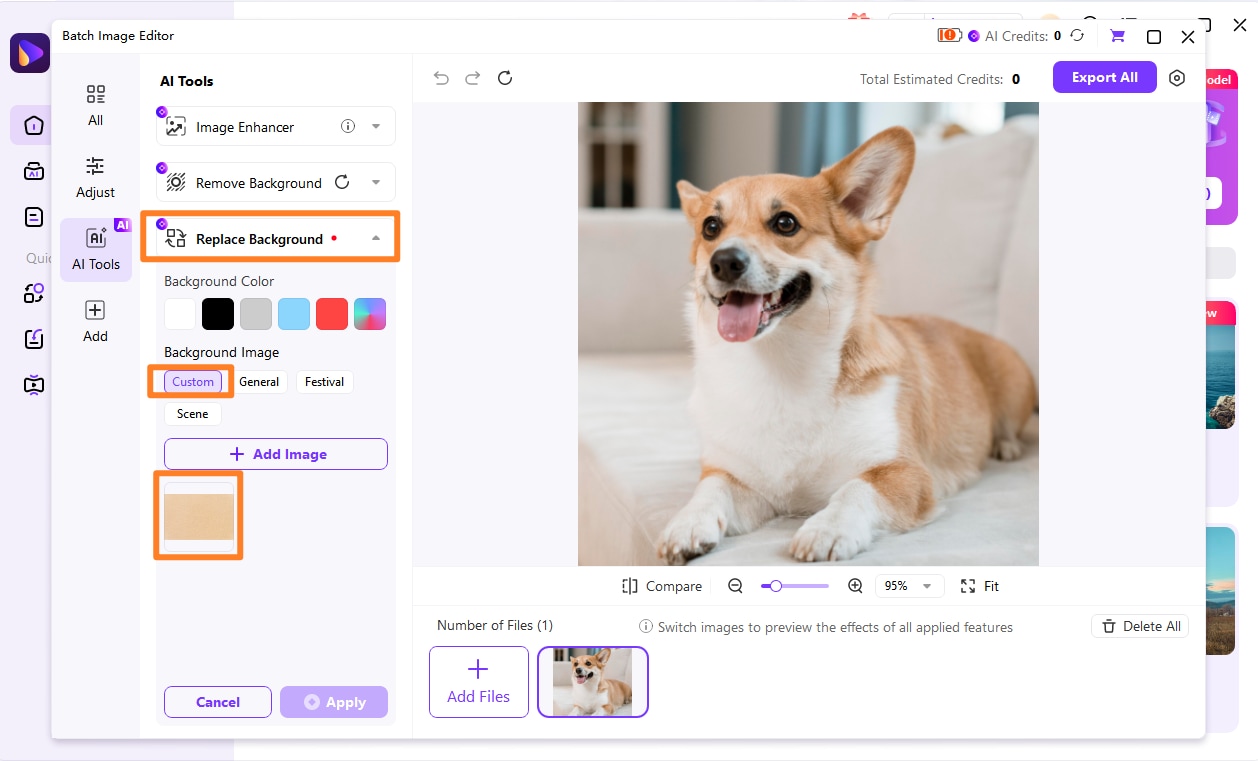
Step 2: Upload the Images
Drag and drop the images you want to edit into the designated area, or click "Add Files" to browse your computer. UniConverter supports batch processing, which is a huge time-saver.
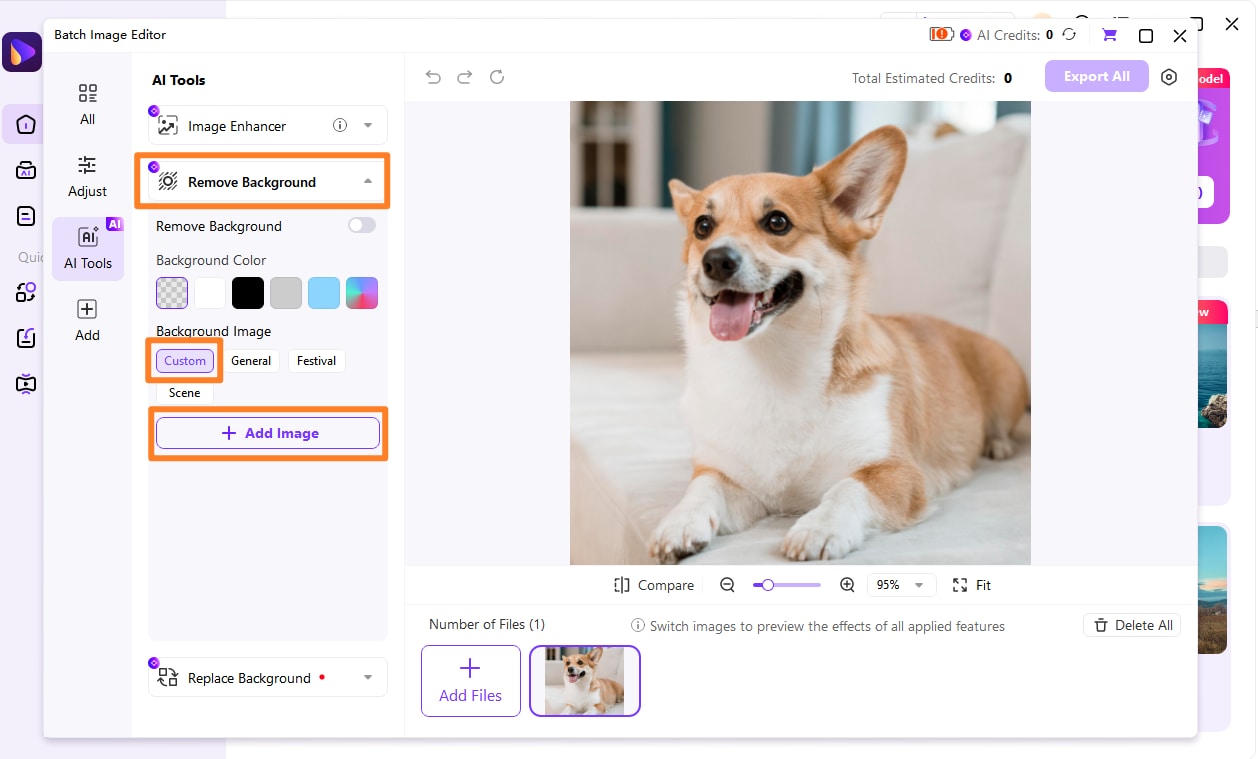
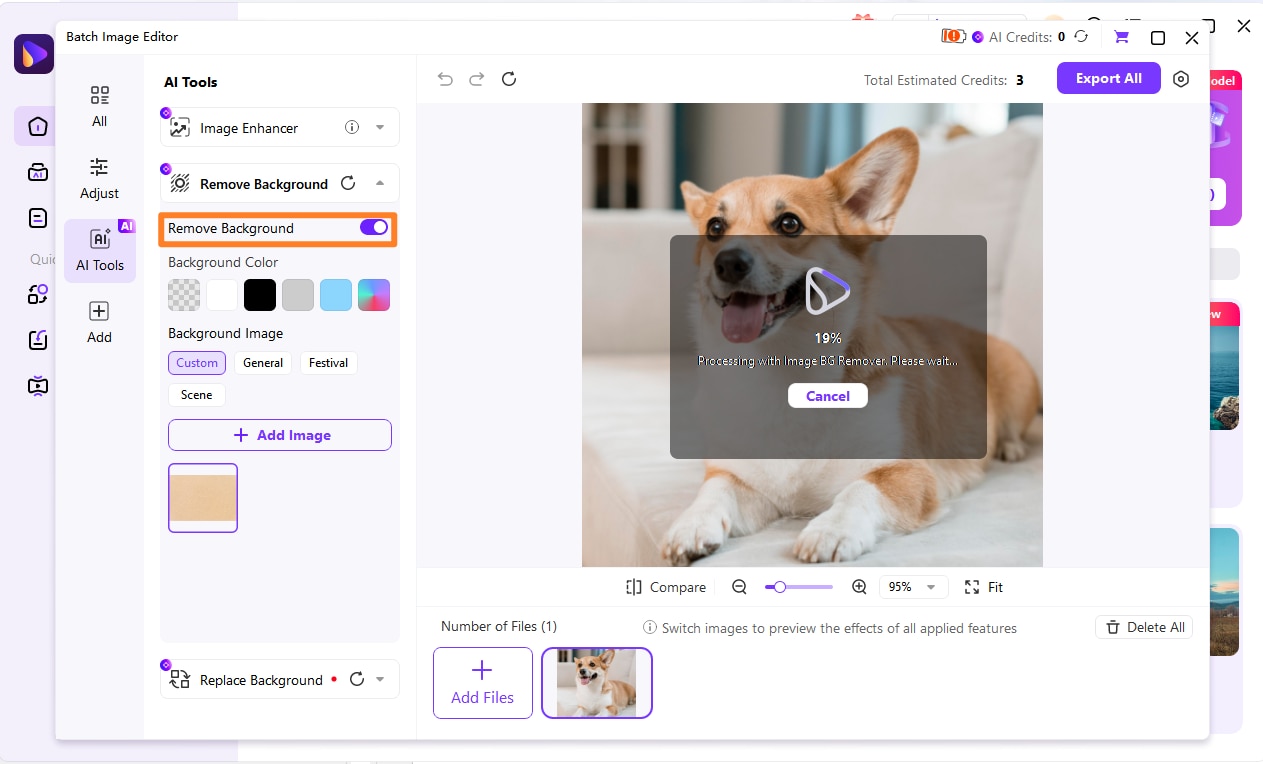
Step 3: Click to Preview Images
Once your images are uploaded, UniConverter will automatically process them. Click on each image to preview the background replacement and make any necessary adjustments.
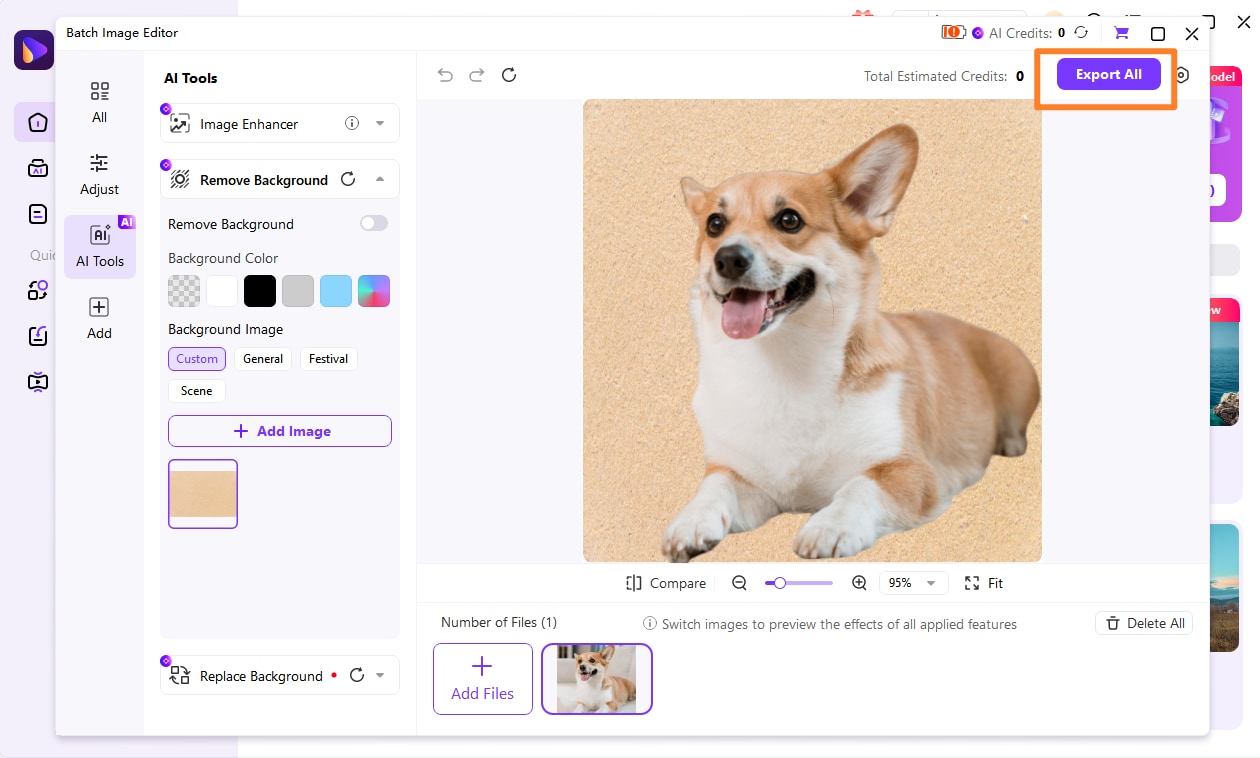
Step 4: Preview and Export Images
After you're satisfied with the results, choose your desired output folder and click "Export" to save your newly edited images.

Need a Canva Alternative for Video Editing?
Part 7: Final Verdict and Recommendations
After extensive use and comparison, my Canva review leads me to a clear conclusion: it's an incredibly powerful and accessible tool, but it's not a silver bullet for all design needs. For casual users and small businesses, Canva is an absolute must-have. Its intuitive interface and vast template library make it incredibly easy to create professional-looking graphics quickly, empowering you to maintain a strong visual presence without a steep learning curve or significant financial investment. However, for marketing professionals and content creators who require more advanced editing capabilities, precise brand control, or high-fidelity output for print, Canva might feel limiting. You'll likely find yourself needing to supplement it with more specialized software. For graphic design students and hobbyists, Canva is an excellent starting point to grasp design principles and quickly prototype ideas, but to truly hone your skills and tackle complex projects, exploring professional-grade tools like Adobe Creative Suite or Figma will be essential. Ultimately, the best tool depends on your specific needs, skill level, and the complexity of your design projects.
Part 8: FAQs
-
1. Is Canva truly free to use?
Yes, Canva offers a robust free tier with a significant number of templates, stock photos, and design elements. However, many premium features, templates, and stock assets are locked behind a subscription (Canva Pro). You can create many designs without paying, but for full access and advanced functionalities, a subscription is required.
-
2. Can I use Canva for commercial purposes?
Absolutely. You can use designs created with Canva for commercial purposes, including social media posts, marketing materials, and presentations for your business. Just be mindful of the licensing for premium elements (stock photos, illustrations) if you're using the free version, as some may require a Pro subscription for commercial use.
-
3. How does Canva compare to Adobe Photoshop?
Canva and Adobe Photoshop serve very different purposes. Canva is a user-friendly, template-driven tool for quick graphic design, focusing on ease of use for non-designers. Photoshop is a professional-grade image manipulation and editing software with advanced features for photo retouching, complex compositions, and detailed graphic design, requiring a steeper learning curve. They are not direct competitors but rather tools for different design needs and skill levels.
-
4. What are the best alternatives to Canva for advanced users?
For advanced users, alternatives like Adobe Illustrator (for vector graphics), Adobe Photoshop (for raster image editing), and Figma (for UI/UX design and collaborative projects) offer much more control, precision, and advanced features. These tools are industry standards for professional designers.
-
5. Does Canva offer any educational discounts?
Yes, Canva offers a free version called Canva for Education, which provides K-12 students and teachers with access to all the premium features of Canva Pro. This is a fantastic initiative to empower educational institutions with powerful design tools.
