
- Value: Pixlr offers accessible, browser-based photo editing for quick tasks and social media content.
- Comparison: Pixlr balances features and accessibility, outperforming basic editors but less powerful than desktop software.
- Decision: Choose Pixlr for convenience and basic edits; consider alternatives like UniConverter for advanced, offline, or batch processing needs.
- Pitfalls: Be aware of Pixlr's ad-supported experience, performance limits, and reliance on internet connection.
- UniConverter Advantage: UniConverter provides an ad-free, robust solution for background removal and other media tasks, ideal for consistent quality and batch processing.
In this article
When it comes to quick and accessible photo editing, Pixlr review often pops up as a go-to online solution. In a world where everyone's a content creator, having a reliable, easy-to-use editor right in your browser is a game-changer. This review will dive deep into Pixlr's capabilities, comparing it with other popular tools and highlighting its strengths and weaknesses. We'll explore its features, ideal use cases, and even some potential pitfalls, helping you decide if Pixlr is the right fit for your editing needs. From social media enthusiasts to small business owners, understanding Pixlr's place in the online editing landscape is crucial for making informed decisions.
Part 1: What is Pixlr?
Pixlr is an online photo editor that has been around for quite some time, offering a suite of tools accessible directly through your web browser. It's essentially a cloud-based solution for image manipulation, aiming to provide a powerful yet user-friendly experience without the need for software downloads or installations. For me, it's always been that quick fix when I need to make an edit on the fly, especially when I'm not near my main workstation. It’s evolved over the years, now offering two main versions: Pixlr X for quick, basic edits and Pixlr E for more advanced, Photoshop-like functionalities.
The Online Photo Editing Landscape
The demand for accessible and efficient online photo editing tools has surged, driven by several factors:
* The rise of social media: Everyone wants their photos to look good before sharing.
* The need for quick turnarounds: Bloggers and small businesses often need fast edits.
* Accessibility from any device: Being able to edit from a public computer or a tablet is a huge plus.
* Cost-effectiveness: Many users are looking for powerful tools without the hefty price tag of professional software.
Part 2: Pixlr: Core Features, Pros, and Cons
Pixlr, in its various iterations, offers a surprisingly robust set of features for an online editor. I’ve found it particularly useful for everything from simple cropping to more intricate layer-based adjustments. The core capabilities span across basic adjustments like brightness and contrast, to more advanced tools such as healing brushes, filters, and even some AI-powered enhancements. It’s not Photoshop, but it certainly tries to emulate some of its key functionalities in a browser-friendly format.
Pros:
* Accessibility and Ease of Use for Quick Edits: I love that I can just open a browser tab and start editing. For quick crops, resizes, or filter applications, it’s incredibly fast and intuitive.
* Feature-Rich for a Free Online Tool: Considering it's free (with ads), the sheer number of tools available is impressive. I’ve often been surprised by what I could achieve without paying a dime.
* Cloud-Based Collaboration Potential: While not as robust as dedicated collaboration platforms, the ability to share links and work on projects from different locations has been a subtle but useful advantage for me when working with others.
Cons:
* Performance Limitations with Large Files: This is where I’ve hit a wall sometimes. If I’m trying to edit a really high-resolution image, Pixlr can get sluggish, and sometimes even crash, which is frustrating.
* Intrusive Advertisements in Free Version: The ads can be quite distracting. They often pop up in inconvenient places, interrupting the workflow, which makes me consider the premium version more often than not.
Part 3: Pixlr: Ideal Users and Use Cases
From my experience, Pixlr shines for specific types of users and scenarios. It's definitely not a one-size-fits-all solution, but for its target audience, it’s incredibly effective. I wouldn't recommend it for professional photographers needing precise color grading, but for everyday tasks, it's a lifesaver.
Scenario 1: Quick Social Media Content Creation
This is where Pixlr truly excels for me. When I need to quickly resize an image for Instagram, add some text for a Facebook post, or apply a trendy filter, Pixlr X is my go-to. It’s fast, efficient, and has all the basic tools I need to make my content pop without spending hours on it. The template options are also a nice touch for getting started quickly.
Scenario 2: Basic Photo Retouching for Bloggers
As a blogger, I often need to do basic retouching on product photos or images for my articles. Pixlr E, with its layers and adjustment tools, allows me to remove blemishes, adjust lighting, or even composite a few images together. It’s not as powerful as desktop software, but for cleaning up images for web display, it does the job surprisingly well.
Scenario 3: Collaborative Design for Small Teams (with limitations)
I've tried using Pixlr for small team projects, where we needed to quickly mock up some visual ideas. While it doesn't have real-time collaboration like some dedicated design tools, the ability to save projects to the cloud and share them for others to open and edit has been a decent workaround. It's not seamless, but for quick iterations on simple designs, it can work, especially if everyone is familiar with the interface.
Part 4: Pixlr vs. Competitors: A Comparative Analysis
When I look at Pixlr, I always consider what else is out there. Each tool has its own niche, and understanding these differences is key to choosing the right one for your specific task.
| Feature/Scenario | Pixlr | Adobe Photoshop Express | Canva | GIMP (Desktop) |
| Ease of Use (Beginner) | High | High | Very High | Moderate |
| Advanced Editing | Moderate | Moderate | Low | Very High |
| Collaboration | Basic | Basic | High | Low |
| Offline Access | No | Limited | No | Yes |
| Cost (Free Tier) | Yes (Ad-supported) | Yes | Yes | Yes |
Key Differentiators:
Pixlr's balance of features and accessibility for online use: For me, Pixlr hits a sweet spot. It’s more powerful than basic editors but still completely browser-based, making it incredibly convenient. Canva's focus on graphic design templates and ease of content creation: If I need to create a social media graphic from scratch with pre-designed elements, Canva is usually my first choice. Its template library is unmatched. Photoshop Express's integration with Adobe ecosystem: If I’m already deep into the Adobe world, Photoshop Express offers a familiar interface and some handy mobile features, though it feels a bit more constrained than Pixlr for browser-based work. GIMP's powerful desktop capabilities for advanced users: For serious, intricate photo manipulation without the Adobe subscription, GIMP is the clear winner. However, its learning curve is much steeper, and it's a desktop application, not an online one.
Part 5: Risks and Pitfalls to Consider
While Pixlr is a fantastic tool for many, I've definitely encountered some downsides that are worth considering before committing to it, especially for more sensitive or professional work.
Data Privacy and Security Concerns
Using any online tool means entrusting your data to a third party. For me, this always raises questions about how my images are stored, who has access to them, and what their privacy policies truly entail. While Pixlr states it respects user privacy, the nature of cloud-based services always carries an inherent risk that desktop software doesn't.
Ad-Supported Experience and User Interruption
The free version's reliance on ads can be a real buzzkill. I've had moments where I'm deep in an editing flow, and a large banner ad pops up, disrupting my concentration. It’s a trade-off for free access, but it definitely impacts the overall user experience, making me less productive.
Image Quality Degradation with Compression
I've noticed that sometimes, when exporting images from Pixlr, especially if I'm not careful with the settings, there can be a slight degradation in quality due to compression. While often minor for web use, it's something to be aware of if you need pristine image quality for print or high-resolution displays.
Limited Offline Functionality
A major drawback for me is the complete reliance on an internet connection. If I'm traveling or in an area with spotty Wi-Fi, Pixlr becomes unusable. This limitation often pushes me towards desktop alternatives for critical tasks.
Subscription Model for Advanced Features
While the free version is generous, many of the truly powerful features, and the ad-free experience, are locked behind a subscription. While understandable, it means that for advanced users, the "free" aspect quickly diminishes, and you might find yourself paying for something that still has performance limitations compared to dedicated desktop software.
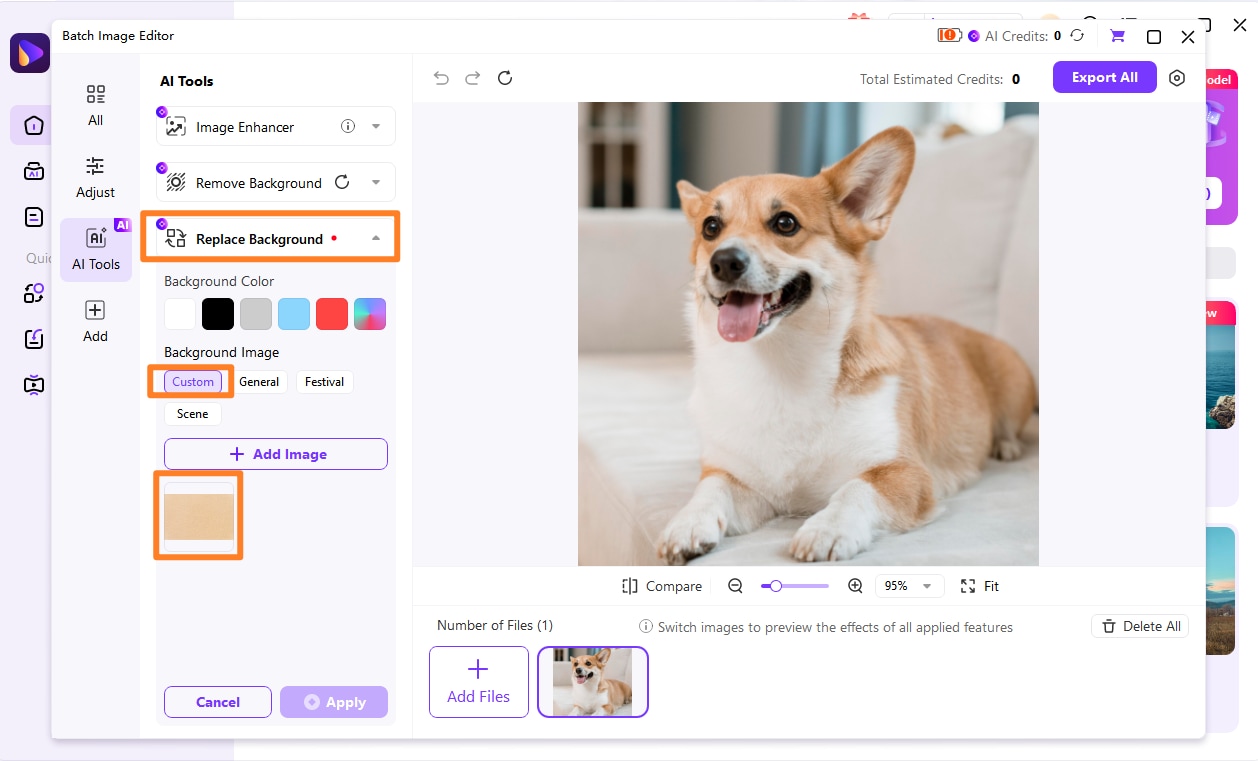
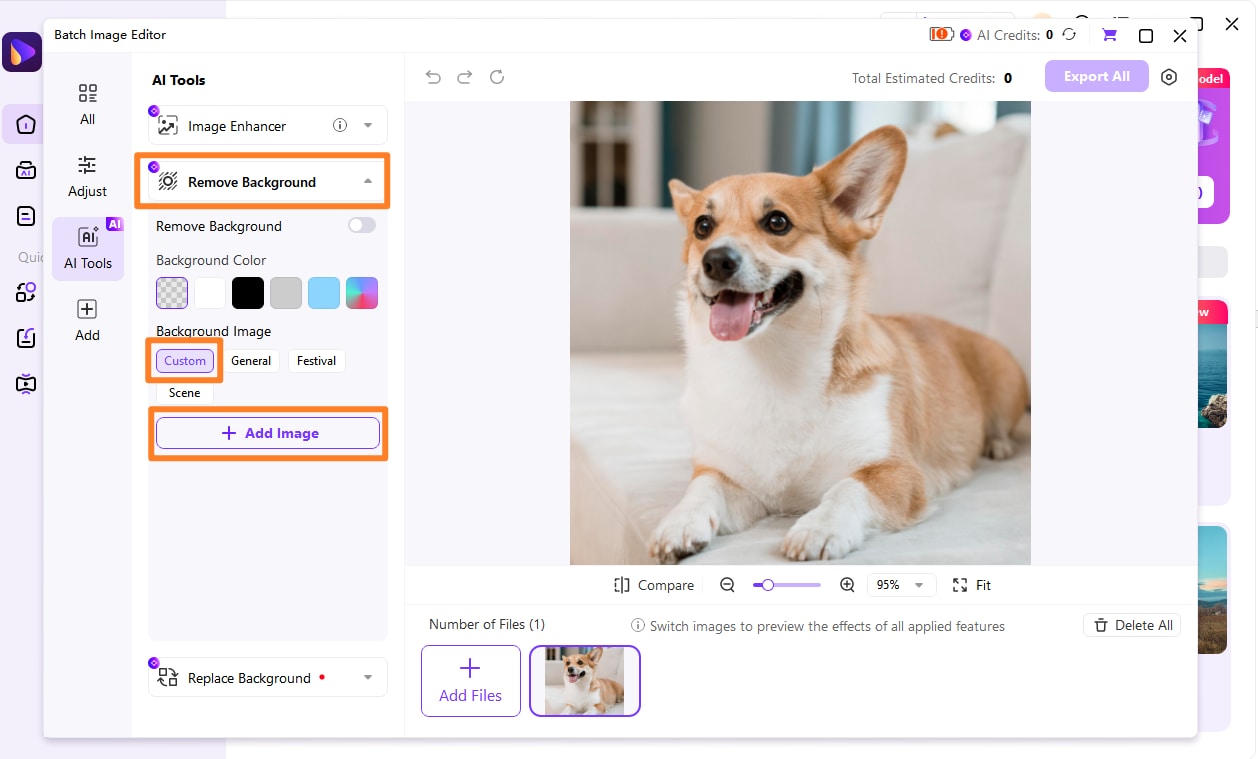
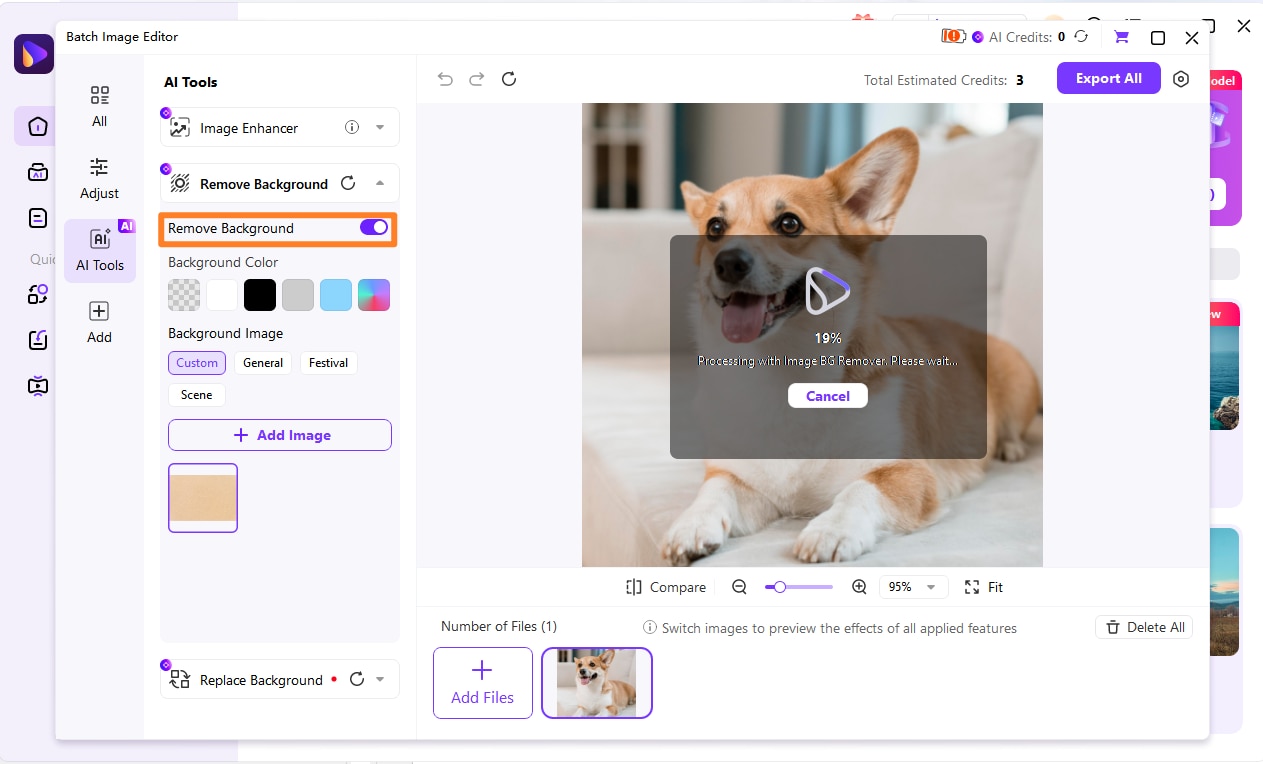
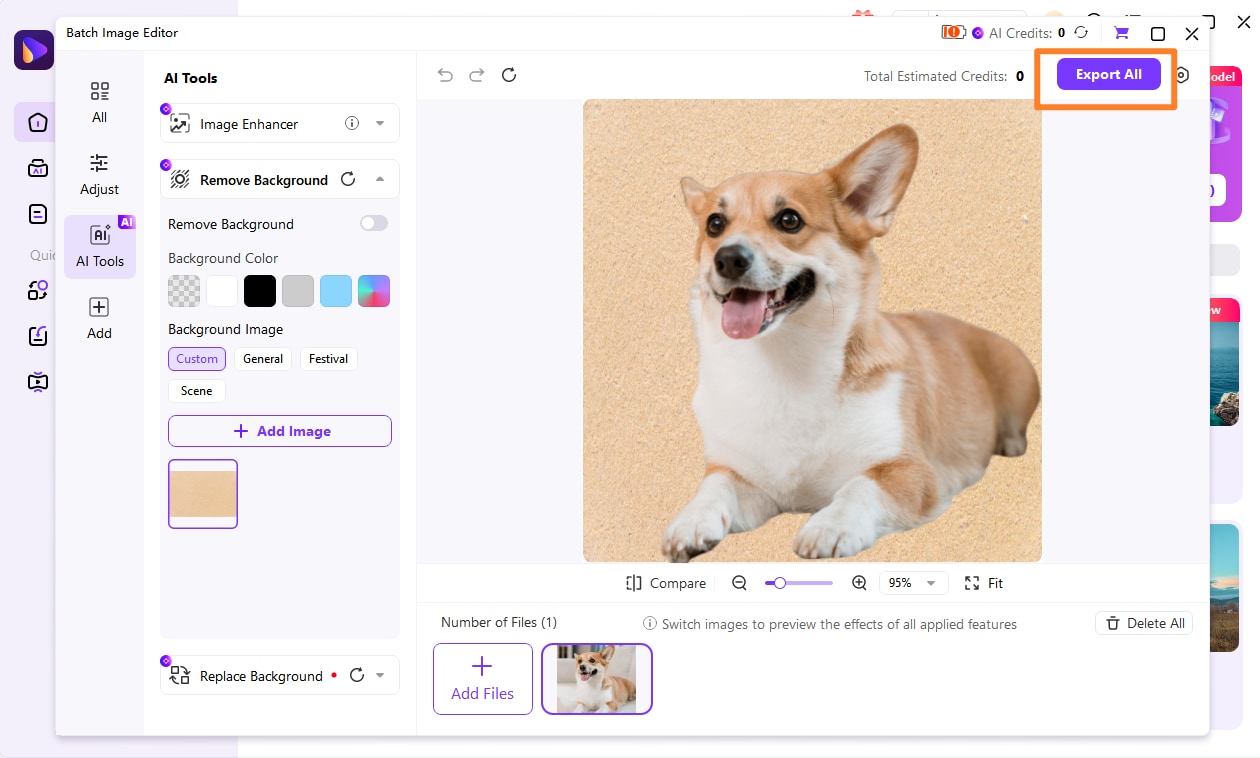
Part 6: How to use UniConverter to Efficiently Replace Image Backgrounds
Sometimes, when I'm dealing with tools that don't quite hit the mark for batch processing, or when the exported image quality isn't consistent, or if the background replacement edges are either too blurry or too sharp, I turn to UniConverter. It's a robust solution that avoids these common pitfalls, offering a seamless experience for various media needs, including image conversion and advanced editing like background removal. UniConverter stands out with its ad-free environment, extensive format support, GPU acceleration for speed, and stable, lossless processing, making it an ultimate all-in-one solution for me.
Step 1: Open UniConverter and Choose Background Replacer
Step 2: Upload the Images
Step 3: Click to Preview Images
Step 4: Preview and Export Images

Seeking a Powerful Pixlr Alternative?
Part 7: Conclusion
After spending considerable time with Pixlr, I can confidently say it holds a valuable place in the online photo editing ecosystem. For casual users and social media enthusiasts, its accessibility and ease of use for quick edits make it an excellent choice. If you're a budget-conscious creator, the free, ad-supported version offers a surprising amount of functionality, making it a strong contender for everyday tasks without breaking the bank. However, for professional designers and advanced editors who require precise control, offline capabilities, or seamless handling of very large files, Pixlr will likely feel limiting; dedicated desktop software remains superior. Similarly, for users prioritizing offline capabilities, Pixlr's browser-only nature is a significant drawback. Ultimately, the best tool depends on your specific needs, but for many, the Pixlr review shows it's a highly capable and convenient online editor.
Part 8: FAQs
-
1. Is Pixlr completely free to use?
Yes, Pixlr offers a free version that is ad-supported and provides a wide range of editing tools. There's also a premium subscription that removes ads and unlocks additional features.
-
2. Can Pixlr replace professional desktop photo editors?
For basic to intermediate tasks, Pixlr can be a good substitute. However, for highly advanced, professional-grade photo manipulation, precise color grading, or complex graphic design, it cannot fully replace powerful desktop software like Adobe Photoshop or GIMP due to performance and feature limitations.
-
3. What are the main differences between Pixlr E and Pixlr X?
Pixlr X is designed for quick, easy edits with a focus on speed and simplicity, ideal for beginners and social media content. Pixlr E offers a more advanced, layer-based editing experience, resembling desktop photo editors, suitable for users needing more control and complex adjustments.
-
4. Does Pixlr offer cloud storage for my projects?
Yes, Pixlr allows you to save your projects to its cloud storage, making them accessible from different devices as long as you're logged into your account. This feature facilitates some basic level of project continuity.
-
5. How does Pixlr handle user data and privacy?
Pixlr states that it respects user privacy and has policies in place regarding data handling. However, as an online service, users should always be mindful of the general risks associated with uploading personal data to cloud platforms and review the privacy policy for detailed information.
