
- PhotoRoom Value: AI photo editing simplifies e-commerce visuals, offering quick background removal and professional-looking shots.
- Ideal Users: Best for small businesses and e-commerce sellers needing fast, high-quality product photos without design skills.
- Feature Comparison: PhotoRoom excels in AI-driven product photography templates, surpassing general editors like Canva or Photoshop Express.
- Limitations & Risks: Limited manual control, subscription costs, and potential AI over-reliance are key considerations.
- UniConverter Alternative: Offers versatile, ad-free batch background replacement with lossless quality, ideal for diverse media needs.
In this article
- Part 1: What is PhotoRoom?
- Part 2: PhotoRoom: Core Features, Pros, and Cons
- Part 3: PhotoRoom: Ideal Users and Use Cases
- Part 4: PhotoRoom and Alternatives Comparison
- Part 5: Risks and Pitfalls to Consider
- Part 6: How to Use UniConverter to Efficiently Replace Image Backgrounds
- Part 7: Conclusion
- Part 8: FAQs
PhotoRoom Review: A Deep Dive into AI Photo Editing for E-commerce and Beyond
When I first stumbled upon PhotoRoom, I was immediately intrigued by its promise of AI-powered image editing, especially for product photography. As someone constantly looking for efficient tools to enhance visual content, particularly for online sales, the idea of one-tap background removal and instant professional-looking shots was incredibly appealing. This PhotoRoom review will delve into its core functionalities, compare it with alternatives, and help you understand if it's the right fit for your workflow. We'll explore its strengths and weaknesses, ideal use cases, and even some potential pitfalls to consider, offering a comprehensive look at how it stacks up in the crowded market of photo editing apps.
Part 1: What is PhotoRoom?
PhotoRoom positions itself as an AI-driven photo editor designed to simplify the process of creating professional-looking images, particularly for e-commerce and social media. It's built around the idea that you shouldn't need extensive graphic design skills to produce stunning visuals. My initial impression was that it aimed to democratize high-quality image creation, making it accessible to small business owners, online sellers, and anyone needing quick, clean product shots or engaging social media content. This review aims to clarify whether PhotoRoom truly delivers on this promise and how it stacks up against other tools I've used.
The Rise of AI in Visual Content Creation
The demand for high-quality visual content has exploded, and traditional editing methods can be time-consuming and costly. This has led to a surge in AI-powered tools that:
* Automate tedious tasks: Like background removal and object isolation, saving hours of manual work.
* Democratize design: Allowing users without professional design skills to create polished visuals.
* Accelerate content production: Enabling faster turnaround times for marketing campaigns and product launches.
* Enhance image quality: With AI algorithms that can intelligently improve lighting, color, and overall aesthetics.
Part 2: PhotoRoom: Core Features, Pros, and Cons
PhotoRoom's core strength lies in its AI capabilities, which significantly streamline the image editing process. For me, the standout feature is undoubtedly its background removal. It's incredibly fast and generally quite accurate, especially with well-defined subjects. The app also offers a variety of templates, which I found useful for quickly generating social media posts or promotional banners. However, it's not without its limitations, particularly if you're used to more granular control.
Pros:
* One-tap Background Removal and Object Isolation for E-commerce Product Shots: This is a game-changer for anyone selling products online. It saves an immense amount of time.
* AI-powered Smart Editing for Professional-looking Images with Minimal Effort: The smart editor often makes subtle improvements to lighting and color that genuinely elevate the image.
* Extensive Template Library for Social Media and Marketing Collateral: I found myself using these templates more often than I expected for quick social media updates.
Cons:
* Limited Advanced Manual Editing Controls for Granular Adjustments: If you need to fine-tune specific areas or perform complex retouching, PhotoRoom can feel restrictive.
* Subscription-based Model for Full Feature Access Can Be Costly for Casual Users: While there's a free version, the best features are locked behind a paywall, which might be a deterrent for occasional use.
Part 3: PhotoRoom: Ideal Users and Use Cases
From my experience, PhotoRoom shines brightest for a very specific type of user. If you're a small business owner or an e-commerce seller, this tool is almost tailor-made for you. I've used it extensively for product photos, and the speed and quality it delivers for that purpose are hard to beat. However, if your needs lean towards more artistic or complex photo manipulation, you might find its capabilities somewhat lacking.
Best Use Case: Small Business Owners and E-commerce Sellers Needing Quick, High-Quality Product Photos
For me, this is where PhotoRoom truly excels. I can snap a picture of a product, and within seconds, have a clean, professional-looking image ready for my online store or social media. It eliminates the need for expensive studio setups or professional photographers for basic product shots.
Limited Use Case: Professional Photographers Requiring Extensive Post-Processing Capabilities
As a professional photographer, I wouldn't rely on PhotoRoom for my main editing workflow. It lacks the deep control over color grading, local adjustments, and advanced retouching that I need for high-end client work. It's more of a quick-fix tool than a comprehensive editing suite.
Part 4: PhotoRoom and Alternatives Comparison
When evaluating PhotoRoom, it's important to see how it stacks up against its competitors. I've tried several tools in this space, and each has its own strengths. PhotoRoom carves out a niche in AI-driven product photography, but others offer different advantages.
| Feature/Aspect | PhotoRoom | Remove.bg | Canva | Photoshop Express |
| Primary Focus | AI Background Removal, Product Photos | Background Removal | Graphic Design, Templates | Photo Editing, Filters |
| Ease of Use | Very High | High | Medium | Medium |
| Advanced Editing | Limited | Very Limited | Moderate | Moderate |
| Template Variety | High | Low | Very High | Low |
| Pricing Model | Freemium, Subscription | Freemium, Subscription | Freemium, Subscription | Freemium, Subscription |
Key Differentiators: PhotoRoom's Niche in AI-Driven Product Photography
PhotoRoom's main differentiator is its focus on product photography templates and AI-powered smart editing beyond just background removal. While Remove.bg is excellent for pure background removal, PhotoRoom goes a step further by offering a suite of tools specifically designed to make product images pop. Canva is fantastic for graphic design, but its photo editing capabilities are more general. Photoshop Express offers more traditional photo editing, but lacks PhotoRoom's specialized e-commerce focus.
Part 5: Risks and Pitfalls to Consider
While PhotoRoom offers significant advantages, I've also encountered some aspects that users should be aware of. It's not a magic bullet, and understanding its limitations and potential downsides is crucial before fully committing to it as a primary tool.
Data Privacy Concerns with Cloud-Based Image Processing
Since PhotoRoom processes images in the cloud, I always have a slight concern about data privacy, especially when dealing with sensitive product images or personal photos. It's essential to understand their privacy policy and terms of service.
Potential for Over-Reliance on AI, Limiting Creative Control
I've found that sometimes, the AI makes decisions I wouldn't have made myself. Over-reliance on AI can stifle creative control, leading to images that look good but lack a unique artistic touch. If you want a specific aesthetic, you might struggle to achieve it.
Subscription Fatigue and Hidden Costs for Premium Features
Like many apps today, PhotoRoom operates on a freemium model. While the free version is functional, the best features are behind a subscription wall. I've experienced "subscription fatigue" where multiple small subscriptions add up, so it's worth evaluating if the cost justifies your usage.
Image Quality Degradation with Complex Backgrounds
While PhotoRoom is excellent with simple backgrounds, I've noticed that with very busy or intricate backgrounds, the background removal can sometimes be less precise, leading to jagged edges or artifacts. This can require manual touch-ups, which defeats the "one-tap" promise.
In-App Advertisements and Upsells in the Free Version
The free version, as expected, comes with ads and constant prompts to upgrade to the Pro version. While understandable, it can be a bit disruptive to the workflow, especially when you're trying to quickly edit multiple images.
Part 6: How to Use UniConverter to Efficiently Replace Image Backgrounds
Sometimes, you encounter tools that don't support batch processing for background replacement, or the exported images are pixelated, or the background edges are either too blurry or too sharp. In such cases, I've found UniConverter to be a robust alternative. It's a comprehensive media editing suite that offers a reliable solution for background replacement, among many other features. UniConverter stands out because it's ad-free, supports a wide range of formats, leverages GPU acceleration for speed, ensures stable and lossless processing, and can handle batch background replacement efficiently. It's truly an all-in-one solution for diverse media needs.
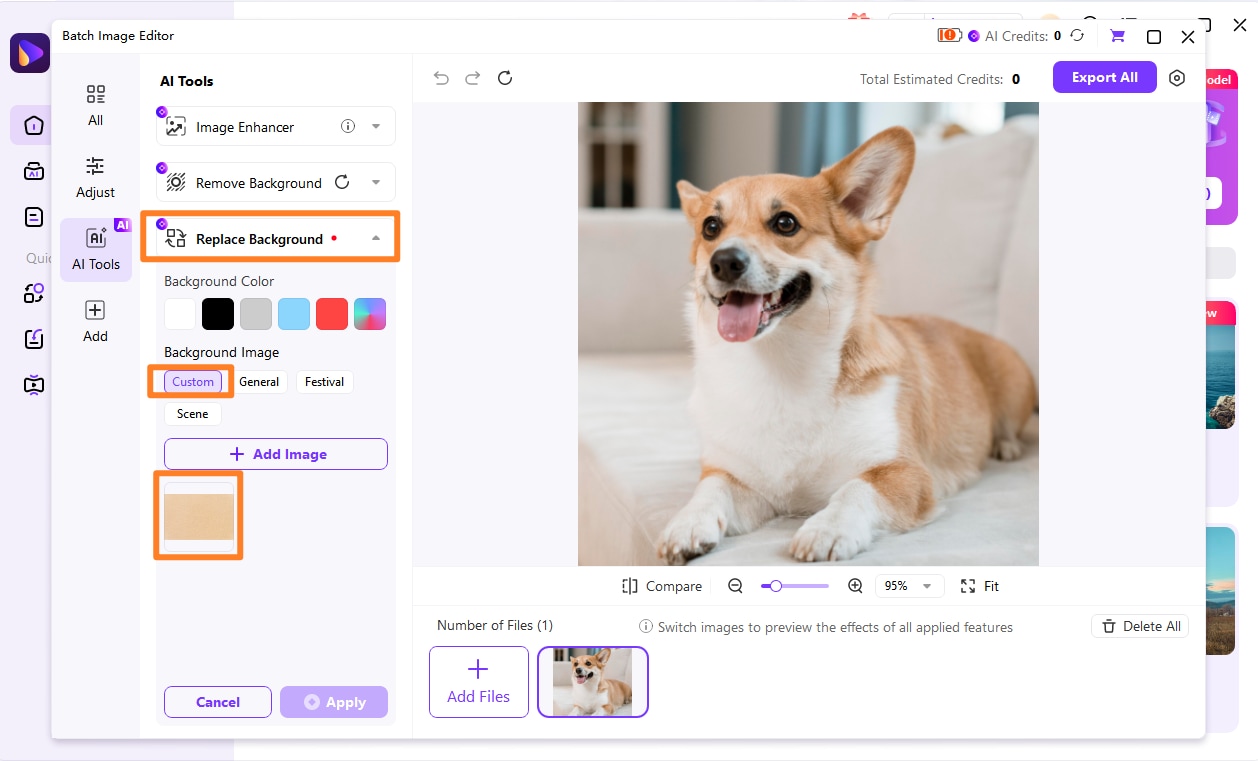
Step 1: Open UniConverter and Choose Background Replacer
First, launch UniConverter on your computer. On the main interface, navigate to the "Toolbox" section. Here, you'll find various utilities. Select the "Background Replacer" option to begin.
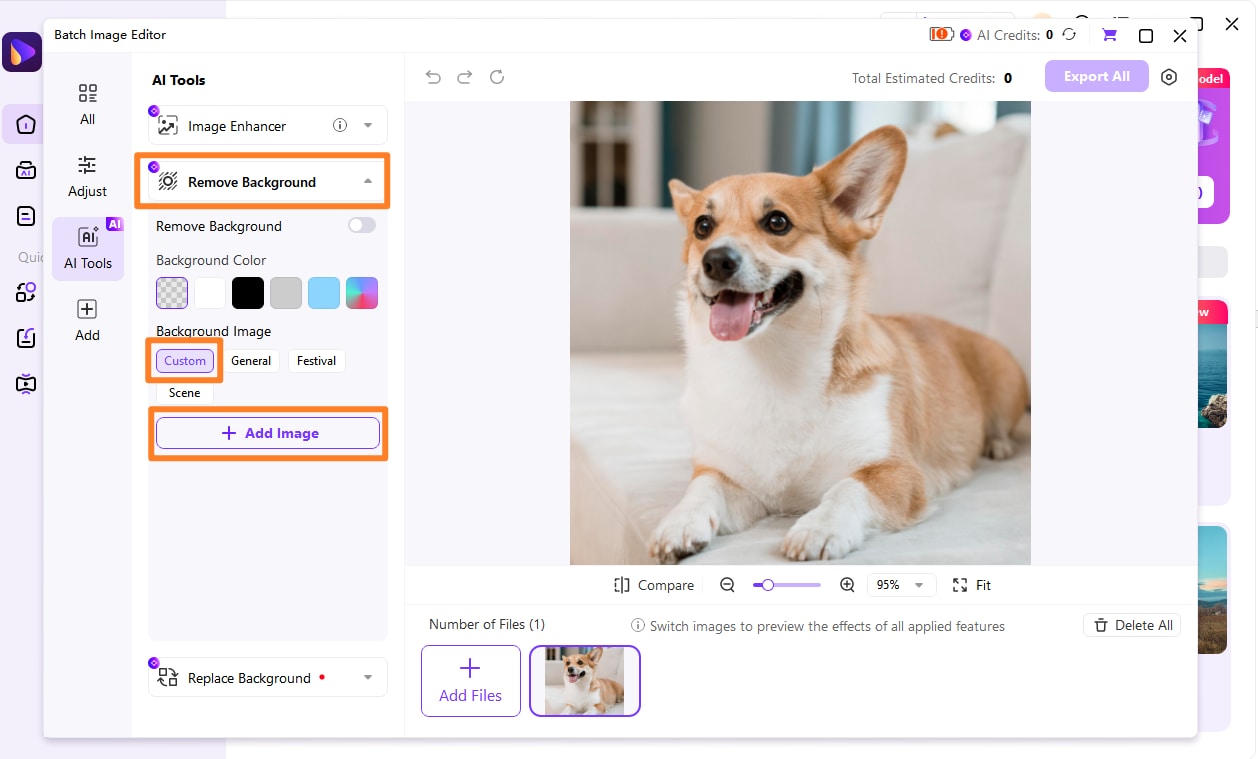
Step 2: Upload the Images
Once the Background Replacer tool is open, you'll be prompted to add your images. You can either drag and drop your desired images directly into the interface or click the "Add Files" button to browse and select them from your computer. UniConverter supports batch processing, so you can upload multiple images at once.
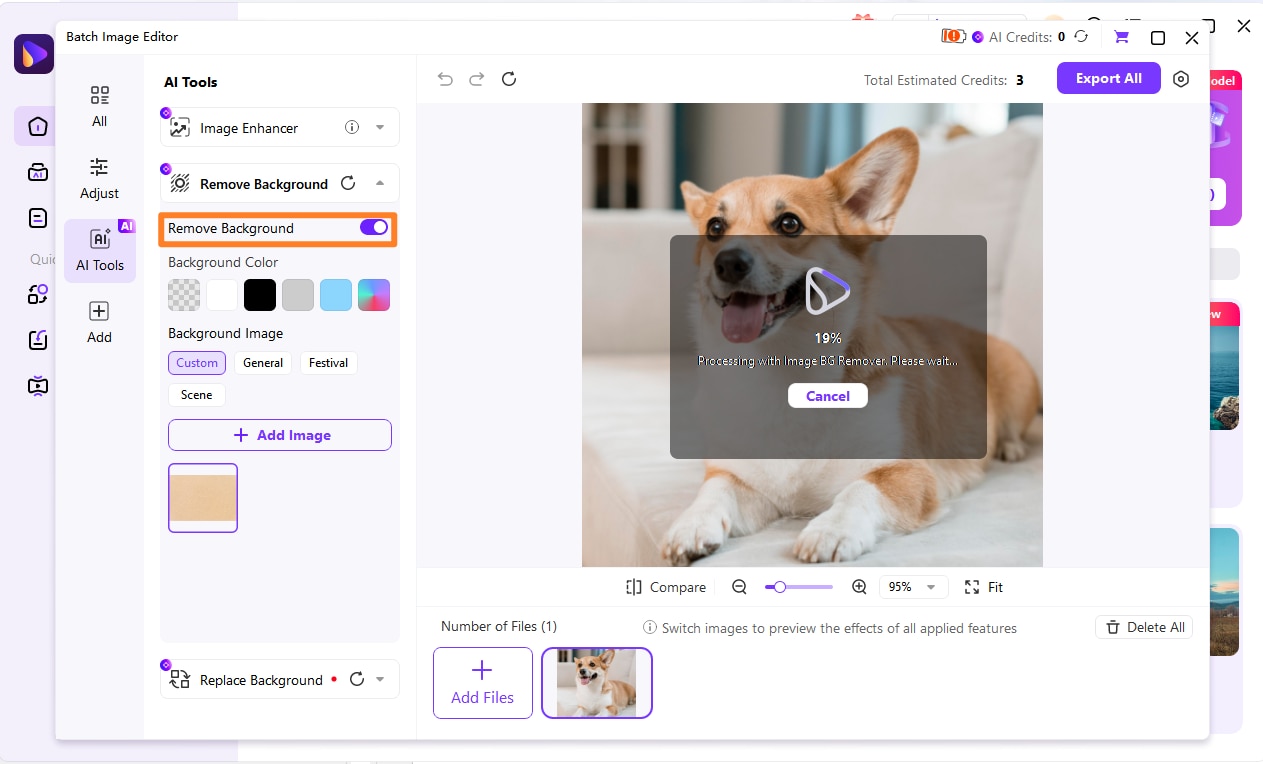
Step 3: Click to Preview Images
After uploading your images, UniConverter will automatically process them to remove the background. You can then click on each image to preview the result. This allows you to check the accuracy of the background removal and make any necessary adjustments before exporting.
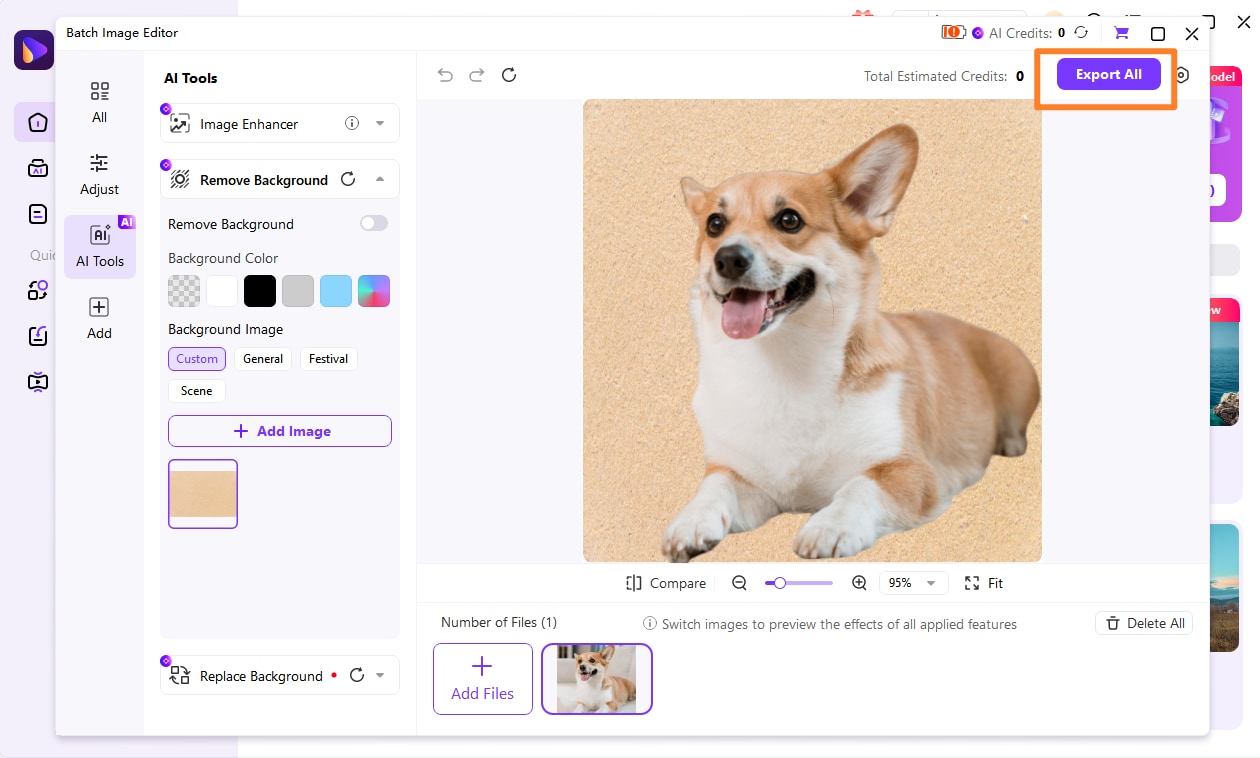
Step 4: Preview and Export Images
Once you're satisfied with the background removal for all your images, you can proceed to export them. Choose your desired output format and destination folder. Click the "Export" button, and UniConverter will quickly save your images with their new backgrounds.

Seeking a PhotoRoom Alternative for Image Editing?
Part 7: Conclusion
In conclusion, my PhotoRoom review reveals it to be an incredibly powerful and efficient tool for specific use cases, particularly for small business owners and e-commerce sellers who need to produce high-quality product images quickly. Its AI-powered background removal and extensive template library are genuine time-savers. However, for those requiring advanced manual editing controls or dealing with complex image scenarios, its limitations become apparent. While it excels at speed and simplicity, it might not replace a full-fledged photo editor for professional photographers or graphic designers. UniConverter, on the other hand, offers a more versatile and comprehensive solution for a broader range of media editing needs, including reliable background replacement without the common pitfalls of other tools. Ultimately, the best choice depends on your specific workflow, budget, and the level of creative control you require.
Part 8: FAQs
-
1. Is PhotoRoom completely free to use?
PhotoRoom offers a free version with limited features and watermarks on exported images. To unlock all features, remove watermarks, and access higher resolution exports, you need to subscribe to PhotoRoom Pro.
-
2. Can PhotoRoom handle complex image backgrounds?
PhotoRoom generally performs well with simple and moderately complex backgrounds. However, for extremely intricate backgrounds with fine details or similar colors to the subject, the AI might struggle, potentially requiring manual touch-ups or resulting in less precise cutouts.
-
3. How does PhotoRoom compare to professional photo editing software like Photoshop?
PhotoRoom is designed for quick, AI-powered edits, especially for product photography and social media. Photoshop, on the other hand, is a professional-grade tool offering extensive manual control, advanced retouching, and graphic design capabilities. PhotoRoom is about speed and automation; Photoshop is about precision and ultimate creative control.
-
4. What are the best alternatives to PhotoRoom for background removal?
For pure background removal, Remove.bg is a strong contender. For graphic design with some photo editing, Canva is excellent. If you need a more comprehensive media editing suite that includes background removal, UniConverter is a robust option.
-
5. Is PhotoRoom suitable for creating social media graphics?
Yes, PhotoRoom is very suitable for creating social media graphics. Its extensive template library, combined with easy background removal and text/sticker additions, makes it quick and straightforward to design engaging visuals for various social media platforms.
