
- LightX Value: LightX excels in quick, AI-powered mobile photo edits, especially for social media content.
- Feature Highlight: Its intuitive AI background removal is a standout, saving time for casual users.
- User Suitability: Ideal for social media enthusiasts and casual editors needing fast enhancements, not professional print work.
- Comparison Point: LightX offers better AI background removal than Snapseed/PicsArt, but lacks advanced controls of Lightroom Mobile.
- Decision Factor: Consider LightX for ease and speed; choose alternatives like UniConverter for batch processing and advanced quality.
- Potential Pitfalls: Be aware of ads in the free version, potential image quality degradation, and subscription value.
- UniConverter Advantage: UniConverter provides efficient, high-quality batch background replacement, surpassing LightX for multiple images.
- Alternative Use: UniConverter is a powerful tool for media conversion and background removal, complementing photo editors like LightX.
In this article
- Part 1: What is LightX?
- Part 2: LightX: Core Features, Pros, and Cons
- Part 3: LightX: Ideal Users and Usage Scenarios
- Part 4: LightX and Alternatives Comparison
- Part 5: Risks and Pitfalls to Consider
- Part 6: How to Use UniConverter for Efficient Background Replacement
- Part 7: Conclusion
- Part 8: FAQs
When I first started dabbling in mobile photo editing, I was overwhelmed by the sheer number of apps available. That's when I stumbled upon LightX. This LightX review aims to cut through the noise and provide a practical, scenario-based comparison of LightX against its competitors. I’ll share my personal experiences, highlighting its strengths for quick social media edits and its limitations for more professional tasks. My goal is to help you decide if LightX is the right tool for your needs, or if you should consider alternatives for a more robust editing experience.
Part 1: What is LightX?
LightX is a mobile photo editor that has gained significant traction for its user-friendly interface and powerful AI-driven features. It’s designed to make complex editing tasks accessible to a broader audience, bridging the gap between basic filters and professional-grade software. When I first downloaded it, I was looking for something that could quickly remove backgrounds and add a bit of flair to my photos without a steep learning curve. This review will delve into whether LightX truly delivers on that promise and how it stacks up against other popular editing apps in various real-world scenarios.
The Rise of Mobile Photo Editing
The explosion of social media and the increasing sophistication of smartphone cameras have fueled an unprecedented demand for mobile photo editing tools. For me, the convenience of editing on the go is paramount.
* Instant Sharing: We want to capture a moment, edit it, and share it almost immediately.
* Accessibility: Not everyone has access to or the skills for desktop software like Photoshop.
* Creative Expression: Mobile apps offer a vast array of filters, effects, and tools to personalize images.
* Professional Results on the Go: The desire for high-quality, polished images even when away from a desktop workstation.
Part 2: LightX: Core Features, Pros, and Cons
LightX, in my experience, really shines with its AI-powered tools and a surprisingly rich feature set for a mobile app. I initially downloaded it for background removal, and it exceeded my expectations in that regard. Beyond that, it offers a decent suite of tools for color correction, effects, and even some basic retouching.
Pros
* Intuitive AI-powered background removal for quick edits: This is where LightX truly excels. I've found its AI to be remarkably accurate, saving me a ton of time compared to manual selection tools in other apps.
* Extensive library of filters and effects for creative expression: If you're into experimenting with different looks, LightX has a vast collection that can transform your photos with just a tap.
* User-friendly interface for beginners and casual users: I was able to navigate the app and start editing almost immediately, which is a huge plus for anyone who isn't a seasoned editor.
Cons
* Limited advanced editing tools compared to professional software: While great for quick edits, I quickly hit a wall when I needed more granular control over curves, precise masking, or complex layer adjustments.
* Occasional performance issues on older devices: On my older tablet, I noticed some lag, especially when dealing with high-resolution images or applying multiple effects.
Part 3: LightX: Ideal Users and Usage Scenarios
From my perspective, LightX is a fantastic tool for a specific type of user and scenario. If you're like me and primarily edit photos for social media or personal sharing, it's a strong contender. However, it's crucial to understand its limitations, especially if you have more demanding needs.
Best Use Case: Quick Social Media Edits
This is where LightX truly shines. I often use it to quickly remove backgrounds from product shots for my online store, or to add a fun filter to a selfie before posting it on Instagram. The AI background removal is a game-changer for this, allowing me to isolate subjects with surprising accuracy in seconds. I can then easily add text, stickers, or adjust colors to make my posts pop. If you're just looking to enhance your photos for platforms like Instagram, Facebook, or TikTok, LightX offers a streamlined and efficient workflow.
Limited Use Case: Professional Print Photography
While LightX is great for quick digital edits, I wouldn't recommend it for professional print photography. The lack of advanced color management, precise masking tools, and non-destructive editing capabilities means you'll struggle to achieve the high-fidelity results required for print. I once tried to prepare a photo for a small print using LightX, and the limitations in resolution control and fine-tuning quickly became apparent. For anything that requires pixel-perfect precision and archival quality, you'll need more robust desktop software.
Part 4: LightX and Alternatives Comparison
When I started looking beyond LightX, I realized there's a whole ecosystem of photo editing apps out there. Here's how LightX stacks up against some popular alternatives based on my experience.
| Feature/App | LightX | Snapseed | PicsArt | Adobe Lightroom Mobile | UniConverter |
| AI Background Removal | Excellent | Good | Good | Basic | Excellent |
| Filter Variety | Extensive | Moderate | Extensive | Moderate | N/A |
| Advanced Editing | Basic | Good | Moderate | Excellent | N/A |
| Ease of Use | High | Moderate | Moderate | Moderate | High |
| Subscription Model | Freemium | Free | Freemium | Freemium | Paid |
| Processing Speed | Fast | Fast | Moderate | Moderate | Very Fast |
| Output Quality | Good | Excellent | Good | Excellent | Excellent |
| Customer Support | Forum | Email/Forum | Email/Forum | Excellent | |
| Security | Standard | Standard | Standard | Standard | High |
Key Differentiators
From my perspective, LightX's AI background removal is its strongest suit, often outperforming Snapseed and PicsArt in speed and accuracy for quick tasks. However, if you're looking for more advanced editing capabilities, Snapseed offers better control over adjustments, and Adobe Lightroom Mobile is in a league of its own for professional-grade color grading and RAW file support. PicsArt is more about creative collages and stickers. UniConverter, while not a direct photo editor, excels in batch processing and conversion, which can be incredibly useful for preparing images for editing or sharing.
Part 5: Risks and Pitfalls to Consider
While LightX offers a lot of convenience, I've learned that it's important to be aware of certain drawbacks, especially if you're relying on the free version or dealing with sensitive content. These are the things I wish I knew before diving deep into using it.
Data Privacy Concerns
Like many mobile apps, LightX requires access to your photo library. While they state they don't misuse your data, it's always a good practice to be cautious about what permissions you grant. I always think twice before uploading highly personal or sensitive images to any cloud-based editing service.
Intrusive Advertisements in Free Version
The free version of LightX can be quite ad-heavy. I found myself constantly closing pop-up ads or watching video ads to unlock certain features. It can significantly disrupt the editing flow and become quite annoying, pushing you towards the paid subscription.
Potential for Image Quality Degradation
I've noticed that when exporting images, especially after multiple edits or using certain effects, there can be a slight but noticeable degradation in image quality, particularly if you're not careful with the export settings. This is less of an issue for social media but could be problematic for higher-resolution needs. The edges after background removal, while generally good, can sometimes appear a bit fuzzy or overly sharp depending on the complexity of the subject.
Subscription Model Value Proposition
The freemium model means that many of the more powerful features are locked behind a subscription. While the cost isn't exorbitant, I always weigh whether the features I actually use justify the recurring expense, especially when free alternatives like Snapseed offer robust tools without a paywall. I initially thought I could get by with the free version, but the ads and locked features eventually made me consider the subscription or look for alternatives.
Part 6: How to Use UniConverter for Efficient Background Replacement
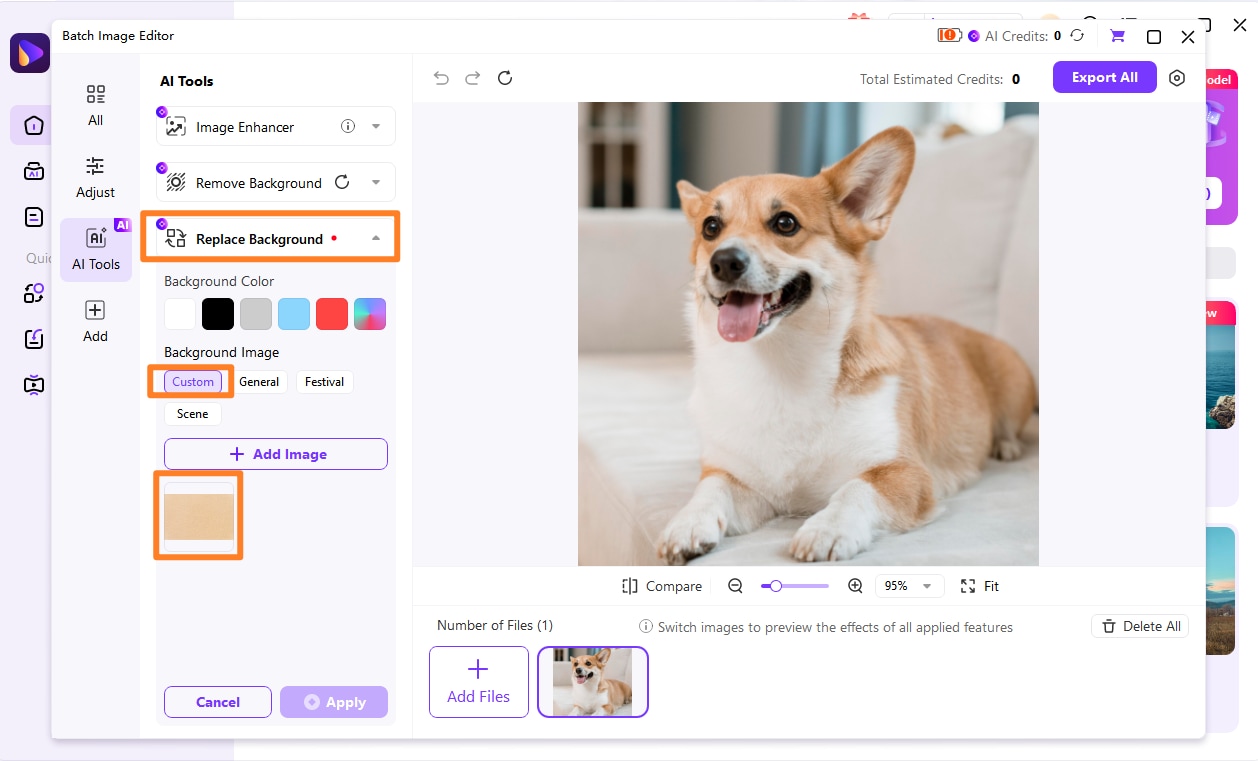
Sometimes, when I find myself struggling with batch processing images, or when other tools produce inconsistent background replacement quality with fuzzy edges or pixelated results, I turn to UniConverter. It's not a direct photo editor in the same vein as LightX, but it's an incredibly powerful tool for media conversion and, surprisingly, offers a robust background replacer that handles multiple images with high precision and no quality loss. It's ad-free, supports a wide range of formats, leverages GPU acceleration for speed, and ensures stable, lossless output. For me, it’s the ultimate solution when I need to process many images efficiently and achieve high-definition background removal.
Step 1: Open UniConverter and Choose Background Replacer
Launch UniConverter on your computer. Navigate to the "Toolbox" section and select the "Background Replacer" option.
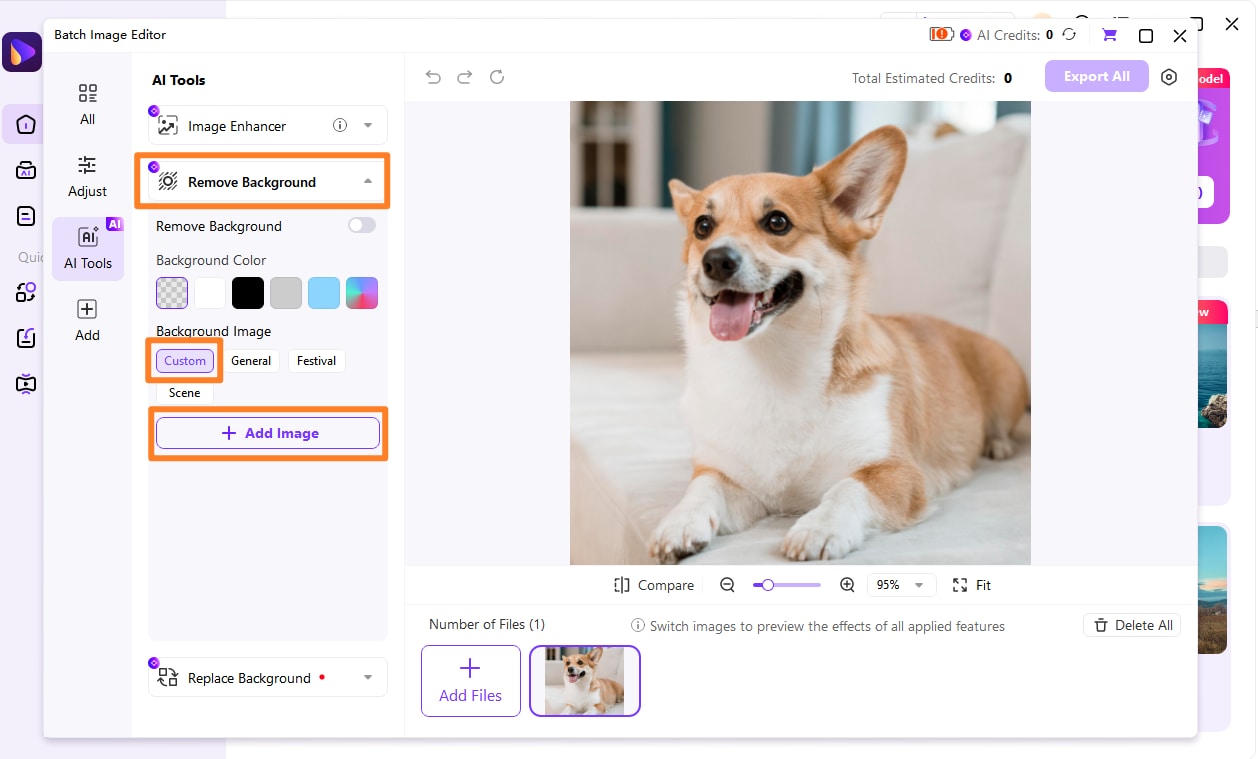
Step 2: Upload the Images
Drag and drop your images into the designated area, or click "Add Files" to browse and select them. You can upload multiple images for batch processing.
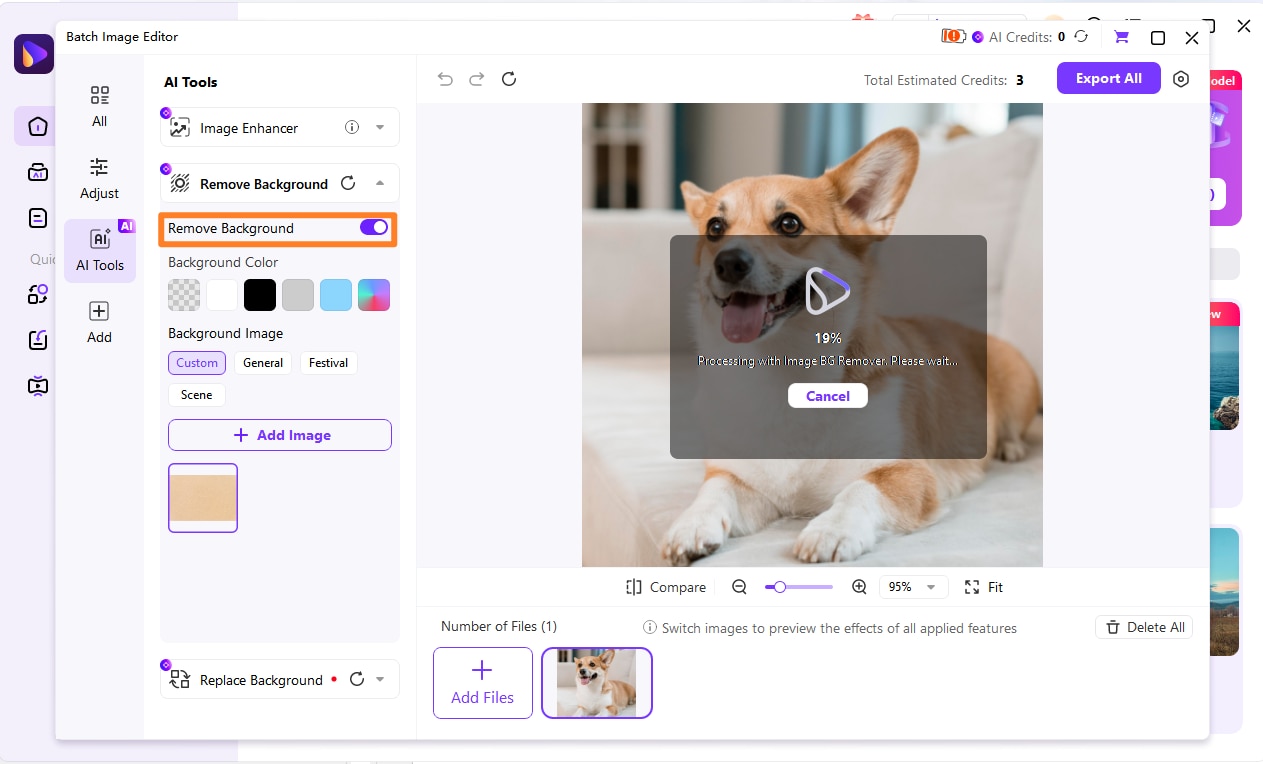
Step 3: Preview and Export Images
Once the images are uploaded, UniConverter will automatically process them, removing the backgrounds. You can preview each image to ensure the result is satisfactory.
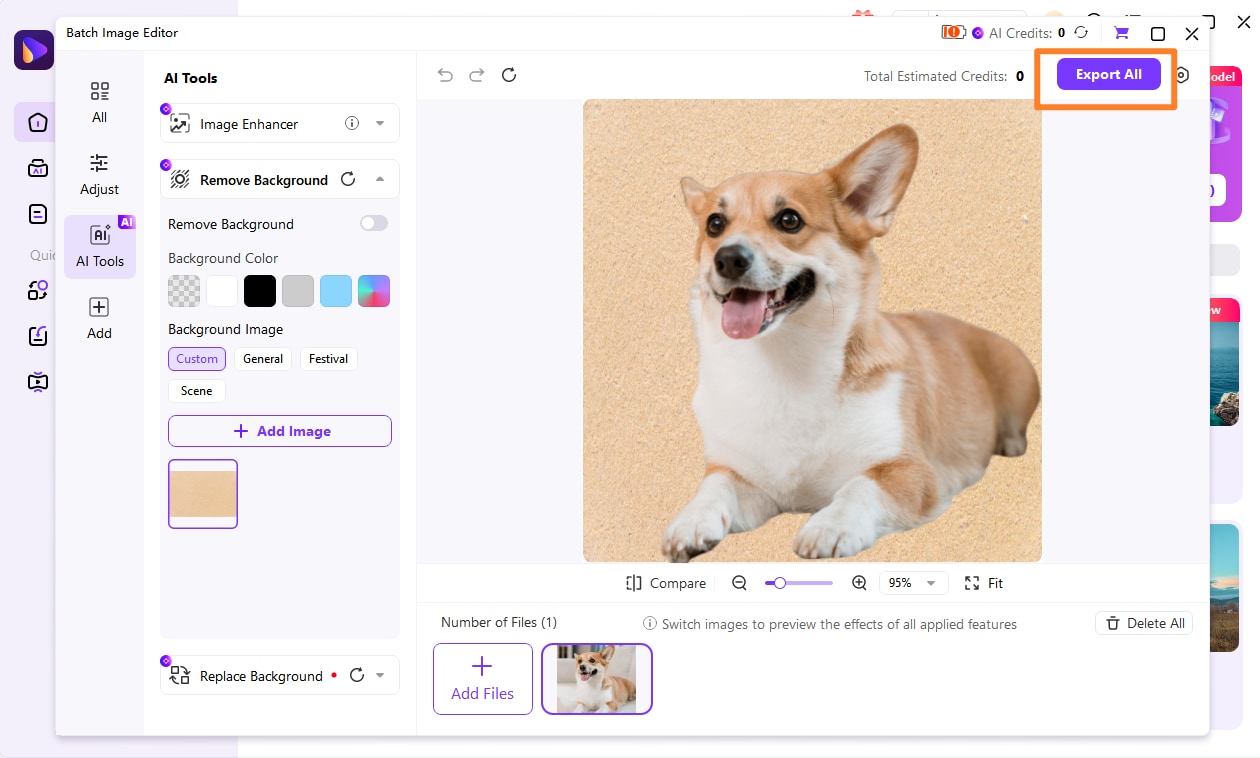
Step 4: Export Your Masterpiece
After reviewing, click the "Export" button to save your images with transparent backgrounds to your desired location.

Seeking a LightX Alternative for Video Editing?
Part 7: Conclusion
After spending considerable time with LightX, I can confidently say it's a strong contender for anyone needing quick, AI-powered photo edits on their mobile device. The LightX review highlights its intuitive interface and excellent background removal as standout features, making it perfect for social media enthusiasts and casual editors who want to enhance their photos without a steep learning curve. However, for users seeking advanced editing capabilities, precise control, or professional-grade output for print, LightX will likely fall short. In those scenarios, I'd recommend looking towards more robust desktop software or mobile alternatives like Adobe Lightroom Mobile. Ultimately, your choice should align with your specific needs and the complexity of your editing tasks.
Part 8: FAQs
-
1. Is LightX free to use?
LightX offers a freemium model. You can download and use many basic features for free, but premium tools, an ad-free experience, and higher-resolution exports are typically locked behind a subscription.
-
2. Can LightX edit videos?
No, LightX is primarily a photo editing application. For video editing on mobile, you would need to look into dedicated video editing apps.
-
3. How does LightX compare to Photoshop Express?
LightX generally offers more AI-driven features like background removal with greater ease of use for casual editors. Photoshop Express, while also mobile-friendly, leans more towards basic photo corrections and adjustments, leveraging Adobe's imaging technology.
-
4. What are the best alternatives to LightX for professional use?
For professional use, especially on mobile, Adobe Lightroom Mobile is a strong alternative due to its RAW file support, advanced color grading, and cloud synchronization. For desktop, Photoshop or GIMP are industry standards.
-
5. Does LightX offer cloud storage for edited photos?
LightX does not offer its own dedicated cloud storage for edited photos. Your edited images are typically saved to your device's local storage or can be shared directly to other platforms.
