
- iPiccy Overview: iPiccy is a free, user-friendly online photo editor for quick, browser-based image enhancements.
- Core Features: Offers basic adjustments, retouching, effects, text, and collage making for diverse needs.
- Pros & Cons: Intuitive interface and free access are strengths; performance lags and limited advanced features are weaknesses.
- Ideal User: Best for social media, bloggers, and small businesses needing fast, basic photo edits.
- Limitations: Not suitable for professional graphic design, high-volume batch processing, or intricate tasks.
- Competitive Edge: Excels in ease of use and generous free features compared to Canva, Fotor, and Pixlr.
- Risks: Be aware of data privacy, ads, potential image quality loss, and internet dependency.
- UniConverter Alternative: For advanced, lossless editing and batch processing, UniConverter offers a robust desktop solution.
- Final Verdict: iPiccy is a valuable, free tool for casual users, but consider UniConverter for demanding tasks.
In this article
- Part 1: What is iPiccy?
- Part 2: iPiccy: Core Features, Pros, and Cons
- Part 3: Who is iPiccy For? Use Cases and Limitations
- Part 4: iPiccy vs. Competitors: A Comparative Analysis
- Part 5: Potential Risks and Pitfalls When Using iPiccy
- Part 6: How to Use UniConverter for Comprehensive Media Editing
- Part 7: Final Verdict and Recommendations
- Part 8: FAQs About iPiccy and Online Photo Editors
When I first started dabbling in online photo editing, I was overwhelmed by the sheer number of options available. Many promised professional results with just a few clicks, but few delivered without a steep learning curve or a hefty price tag. That's when I stumbled upon iPiccy review, an online photo editor that claimed to be both powerful and user-friendly. In this comprehensive iPiccy review, I'll share my experiences, dive into its core features, compare it with its competitors, and help you decide if it's the right tool for your photo editing needs. I'll also highlight some potential pitfalls and offer an alternative for more demanding tasks.
Part 1: What is iPiccy?
iPiccy is an online photo editing platform that offers a suite of tools for enhancing, retouching, and transforming images directly in your web browser. It positions itself as an accessible solution for anyone looking to improve their photos without the need for expensive software or extensive technical knowledge. My initial impression was that it aimed to be a "Photoshop Lite" for the masses, and in many ways, it succeeds. The core problem it addresses is the common desire to quickly and easily make photos look better, whether for social media, personal projects, or even small business use.
The Landscape of Online Photo Editing Tools
* Accessibility: Many users need quick, browser-based solutions without software installation.
* Ease of Use: A significant portion of users are not professional designers and require intuitive interfaces.
* Cost-Effectiveness: Free or low-cost options are highly sought after, especially for casual use.
Part 2: iPiccy: Core Features, Pros, and Cons
From my time using iPiccy, I've found its core capabilities to be quite robust for an online editor. It covers a broad spectrum of editing needs, from basic adjustments to more creative effects. I've used it for everything from cropping vacation photos to adding text overlays for my blog.
* Basic Adjustments: Brightness, contrast, saturation, exposure, and color balance are all easily tweakable.
* Retouching Tools: Blemish remover, wrinkle remover, teeth whitening, and red-eye correction are surprisingly effective.
* Effects and Filters: A wide array of artistic filters, textures, and frames to give photos a distinct look.
* Text and Stickers: Options to add text with various fonts and styles, as well as a library of stickers.
* Collage Maker: A simple tool for combining multiple photos into a single collage.
Pros
* Intuitive User Interface for Quick Edits: I found it incredibly easy to navigate and understand, even for someone new to photo editing.
* Wide Range of Basic and Advanced Editing Tools: It offers more than just the bare minimum, providing a good balance for most casual users.
* Free Access to Most Features: This was a huge draw for me; I could do a lot without ever needing to pay.
Cons
* Occasional Performance Lags with Large Files: When I uploaded high-resolution images, I sometimes experienced noticeable slowdowns.
* Limited Advanced Features Compared to Desktop Software: While good for online, it can't fully replace a dedicated desktop editor like Photoshop for complex tasks.
Part 3: Who is iPiccy For? Use Cases and Limitations
Based on my experience, iPiccy truly shines for certain types of users and specific scenarios. If you're looking for a quick fix or a simple enhancement, it's a fantastic option. However, it definitely has its limits, and I wouldn't recommend it for every photo editing need.
Best Use Case: Quick Social Media Edits and Basic Photo Enhancements
For me, iPiccy is my go-to for sprucing up photos before posting them on Instagram or Facebook. I can quickly crop, adjust colors, and add a filter in minutes. It's also great for basic photo enhancements like brightening a dark image or removing a small blemish. If you're a blogger who needs to quickly prepare images for your posts, or a small business owner who wants to make product photos look a bit more polished without a huge time investment, iPiccy is perfectly suited. It's about getting decent results fast, without fuss.
Limited Use Case: Professional-Grade Graphic Design and High-Volume Batch Processing
Where iPiccy falls short is in professional-grade graphic design or when I need to process a large number of images simultaneously. For intricate layering, precise color grading, or creating complex visual assets for print, it simply doesn't have the depth of features. I've tried to use it for batch resizing a folder of images, and it was a tedious, manual process. If your workflow involves high-volume image manipulation or requires pixel-perfect accuracy, you'll quickly find its limitations frustrating. It's not built for that kind of heavy lifting.
Part 4: iPiccy vs. Competitors: A Comparative Analysis
When I look at iPiccy alongside its competitors, I see a clear picture of where it stands. It's a strong contender in the free online editor space, but each tool has its own strengths.
| Feature / Product | iPiccy | Canva | Fotor | Pixlr |
| Processing Speed | Moderate | Fast | Moderate | Fast |
| Output Quality | Good | Excellent | Good | Excellent |
| Ease of Use | Very High | Very High | High | High |
| Customer Support | Extensive Help Center, Email | Email, FAQs | Email, Community | |
| Security | Standard | High | Standard | High |
Key Differentiators: Ease of Use, Feature Set, and Pricing Models
From my perspective, iPiccy's biggest differentiator is its pure focus on photo editing with a very straightforward interface. Canva, while also easy to use, leans more towards graphic design and template-based creations, making it fantastic for social media graphics but perhaps overkill if you just want to edit a photo. Fotor offers a good balance, similar to iPiccy, but I've found iPiccy's UI slightly more intuitive for direct photo manipulation. Pixlr, especially Pixlr E, feels more like a simplified Photoshop, offering more advanced tools but with a slightly steeper learning curve than iPiccy. Price-wise, iPiccy's free tier is very generous, while Canva and Fotor push more aggressively towards their premium subscriptions for full functionality. If you just want to edit photos without getting into design, iPiccy often feels like the most direct and free path.
Part 5: Potential Risks and Pitfalls When Using iPiccy
While I've generally had a positive experience with iPiccy, it's crucial to be aware of the potential downsides, especially when relying on any free online service. I've learned these lessons through trial and error, and I want to share them so you don't make the same mistakes.
Data Privacy Concerns with Online Platforms
When I upload my photos to any online editor, including iPiccy, I always have a nagging thought about data privacy. My images are being sent to their servers, processed, and then returned. While iPiccy states they don't claim ownership of your images, the fact remains that your personal photos are temporarily residing on a third-party server. For highly sensitive or confidential images, I would never use an online editor. It's a risk I'm generally willing to take for casual photos, but it's something everyone should consider.
Presence of Advertisements on the Free Version
As expected with a free service, iPiccy does display advertisements. I've found them to be generally unobtrusive, usually appearing on the side panels or occasionally as pop-ups when I'm saving an image. They're not deal-breakers, but they can be a minor annoyance, especially if you're trying to focus on a detailed edit. It's the trade-off for not paying a subscription fee, and I've come to accept it, but it's definitely something to be aware of if you prefer an ad-free experience.
Image Quality Degradation During Compression
This is a pitfall I've encountered with many online editors, and iPiccy is no exception. When I upload a high-resolution image and then save it, especially if I choose a lower quality setting or a compressed format like JPEG, I sometimes notice a slight degradation in image quality. Fine details can become a bit softer, and color banding might appear in gradients. While often imperceptible for social media, it's a concern if you're aiming for print quality or need to maintain the absolute fidelity of your original file. Always check your saved image carefully.
Dependence on Internet Connectivity
This might seem obvious, but it's a significant limitation of any online tool. I've been in situations where my internet connection was spotty or non-existent, and suddenly, my photo editing came to a grinding halt. Unlike desktop software, iPiccy requires a stable internet connection to function. If you're often working offline, traveling, or in areas with unreliable internet, this dependence can be a major workflow interruption. It's a key factor in deciding whether an online editor is truly suitable for your primary needs.
Part 6: How to Use UniConverter for Comprehensive Media Editing
Sometimes, I find that online tools, while convenient, just don't cut it for more demanding tasks like precise background removal, especially when dealing with multiple images or needing lossless quality. When I encounter issues like batch processing limitations, pixelated exports, or fuzzy edges in background replacements, I turn to UniConverter. It's my go-to for a more robust, ad-free, and high-quality solution that offers GPU acceleration for speed and supports a vast array of formats, ensuring stable and lossless output. It truly feels like an all-in-one media editing powerhouse. For those seeking to remove background without losing quality, UniConverter provides an excellent solution.
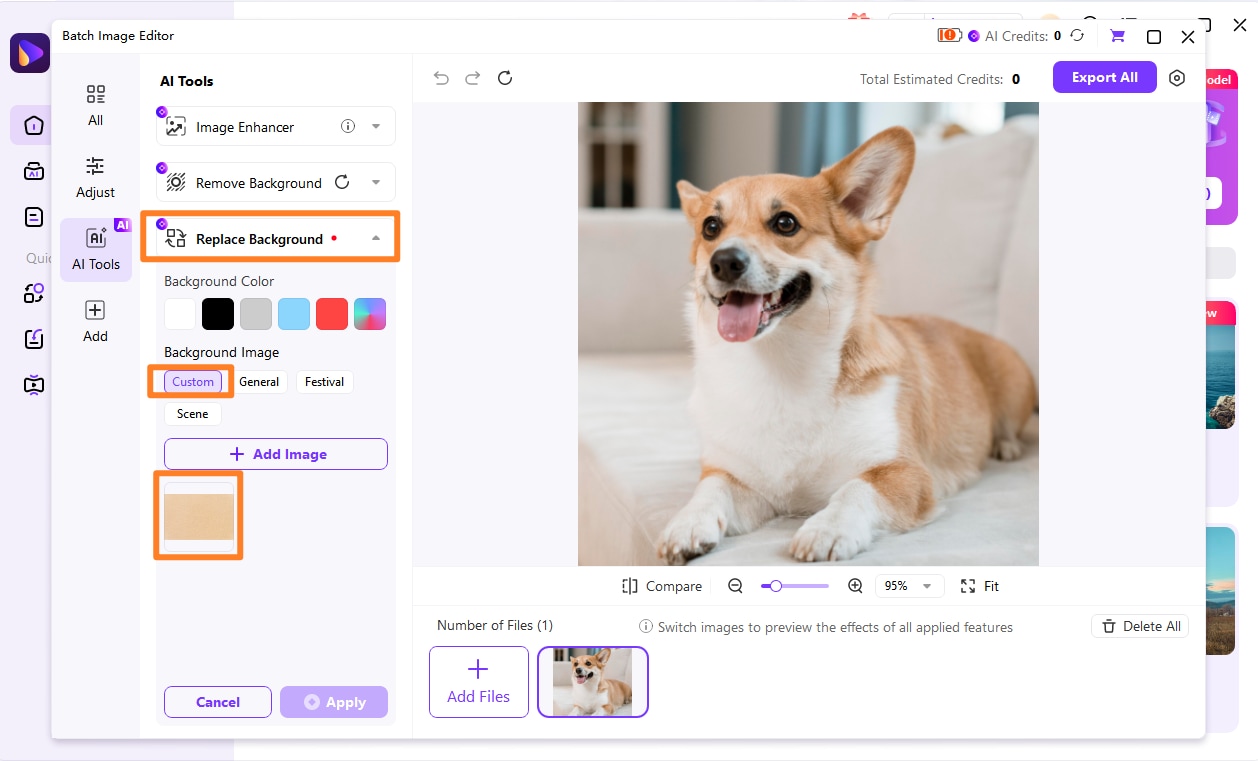
Step 1: Open UniConverter and Choose Background Replacer
First, I launch UniConverter on my desktop. On the main interface, I navigate to the "Toolbox" section and select the "Background Replacer" feature. This is where the magic begins for precise background removal.
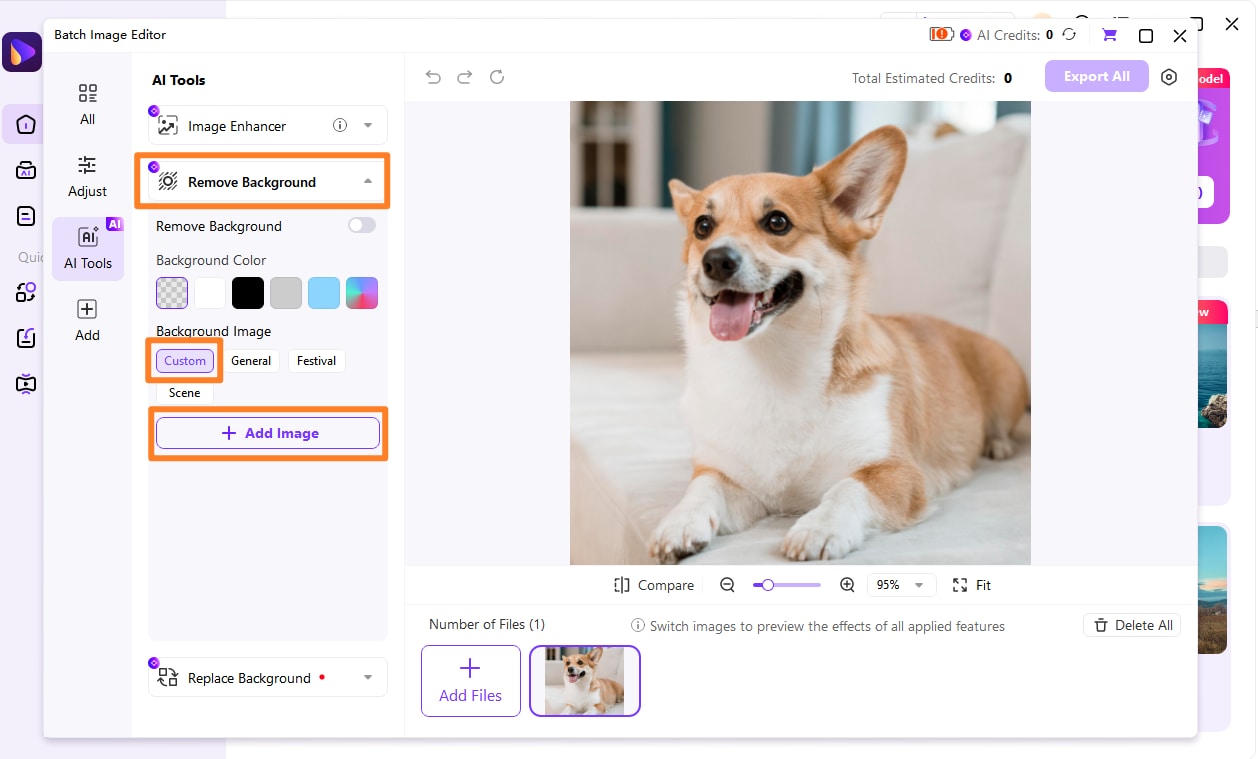
Step 2: Upload the Images
Next, I simply drag and drop the images I want to edit into the designated area within the Background Replacer tool. UniConverter handles various image formats, so I don't have to worry about compatibility. For users interested in high-definition background remover, this step is crucial for optimal results.
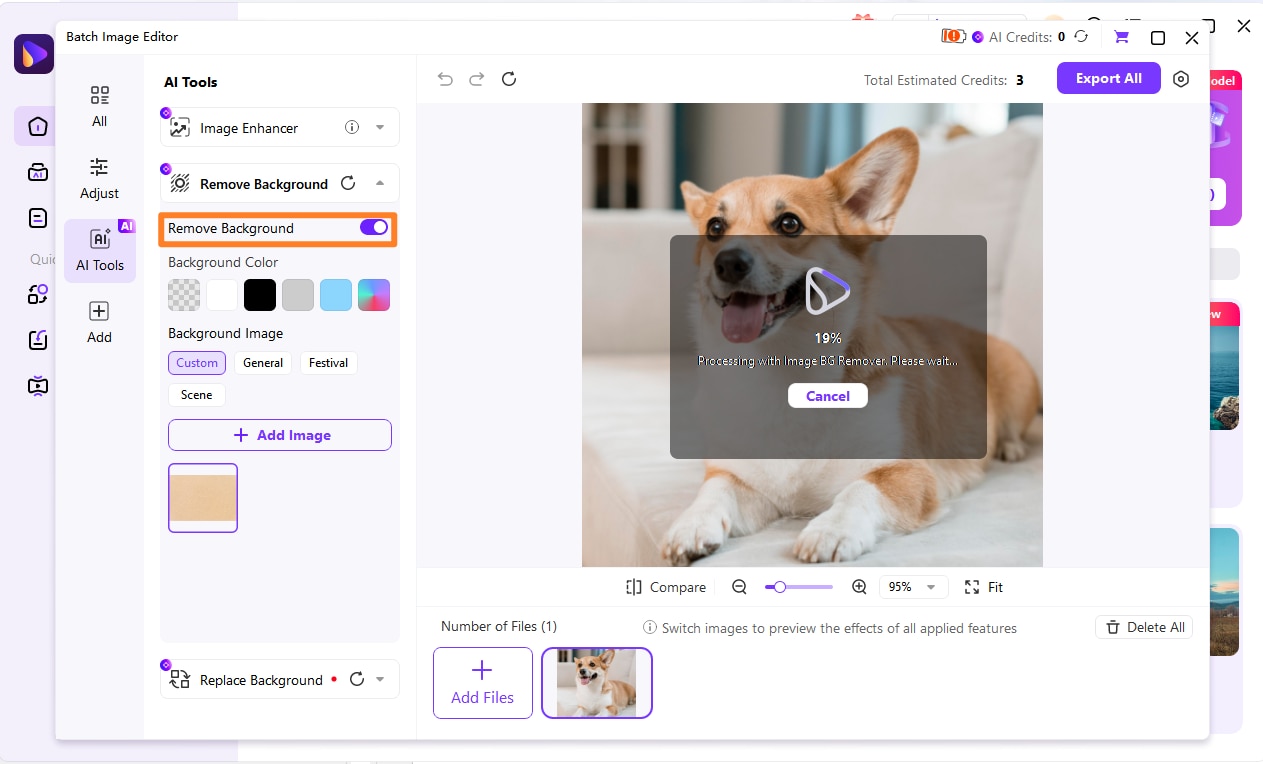
Step 3: Click to Preview Images
After uploading, UniConverter automatically processes the images. I can then click on each image to preview the background replacement. This allows me to make any necessary adjustments or fine-tune the edges before exporting.
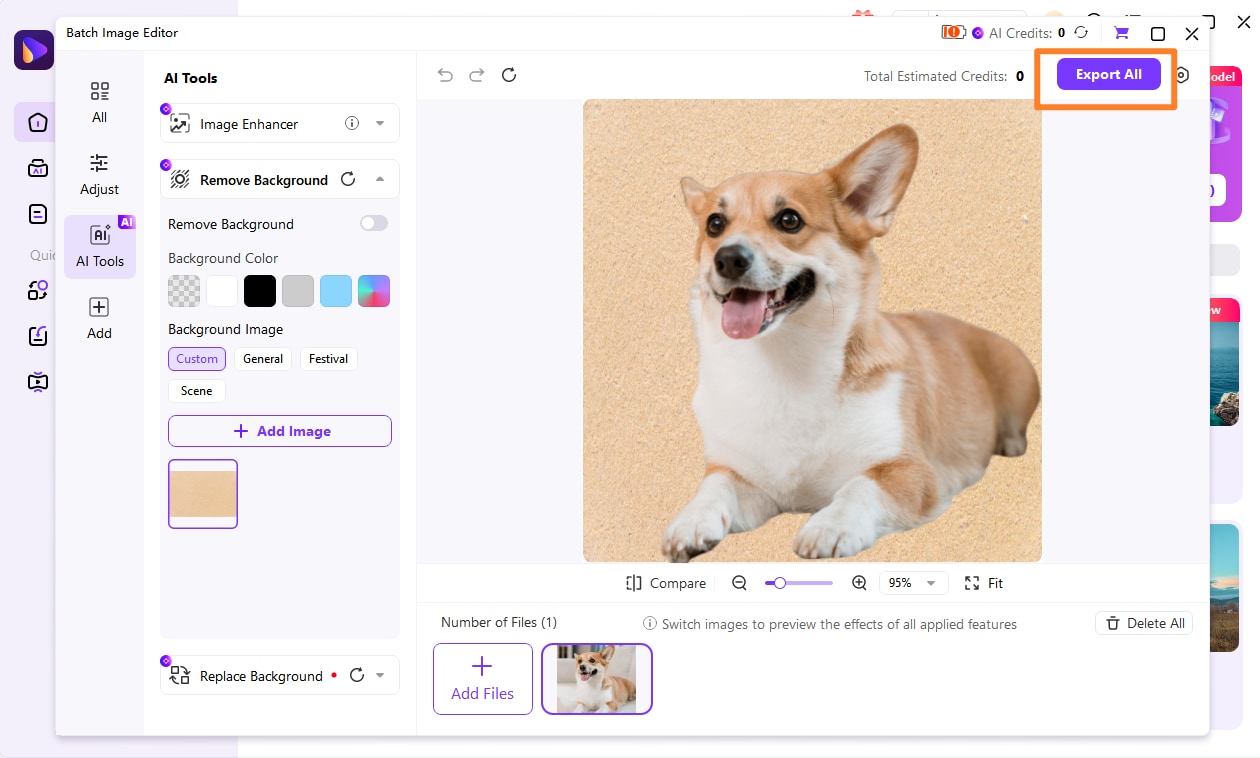
Step 4: Preview and Export Images
Once I'm satisfied with the preview, I can select all the processed images and click the "Export" button. UniConverter quickly saves the high-quality, background-removed images to my chosen destination, maintaining excellent detail.

Seeking an iPiccy Alternative for Advanced Editing?
Part 7: Final Verdict and Recommendations
After spending considerable time with iPiccy review, I've come to appreciate its strengths and understand its limitations. It's a solid, free online photo editor that serves a specific niche very well. For me, it has been a reliable tool for quick edits and enhancements, but it's not a one-size-fits-all solution.
For casual users and bloggers, I wholeheartedly recommend iPiccy. If you're looking to quickly crop, brighten, add a filter, or do some basic retouching for your personal photos or blog posts, it's incredibly efficient and easy to learn. You'll get decent results without any cost or software installation.
For small businesses and marketers who need to create simple social media graphics or polish product photos for their online stores, iPiccy can be a good starting point. However, if your needs grow to include more complex designs, branding consistency across multiple platforms, or high-volume content creation, you might find yourself needing a more robust tool like Canva or even a desktop application.
For users seeking a free and accessible option, iPiccy is definitely worth exploring. It provides a comprehensive set of features for no cost, making it an excellent choice for those on a budget or who only need occasional photo editing capabilities. Just be mindful of the ads and the internet dependency. Ultimately, iPiccy is a valuable tool in the online photo editing landscape, but knowing its place will help you make the best decision for your specific needs.
Part 8: FAQs About iPiccy and Online Photo Editors
-
1. Is iPiccy completely free to use?
Yes, iPiccy offers a robust free version that includes most of its core editing features. There are no hidden costs for basic use, though it does display advertisements.
-
2. Can I use iPiccy on my mobile device?
iPiccy is primarily designed for desktop web browsers. While you can access the website on a mobile browser, the interface is not optimized for smaller screens, and the experience might be clunky. There isn't a dedicated mobile app.
-
3. What file formats does iPiccy support?
iPiccy generally supports common image formats like JPEG, PNG, and GIF for both uploading and saving. I've found it to be quite flexible with these standard formats.
-
4. How does iPiccy compare to Photoshop Express?
iPiccy and Photoshop Express both offer free online editing, but they cater to slightly different needs. iPiccy feels more like a general-purpose editor with a broader range of creative effects. Photoshop Express, being from Adobe, often has a more polished feel and integrates better with the Adobe ecosystem, focusing more on quick, high-quality adjustments and filters. For me, iPiccy is often quicker for simple tasks.
-
5. Is my data safe when using iPiccy?
iPiccy states that they do not claim ownership of your images and that your data is handled according to their privacy policy. However, as with any online platform, there's an inherent risk when uploading personal data. For highly sensitive images, it's always safer to use offline software.
