
- MagicPic Overview: iMyFone MagicPic simplifies AI photo editing for quick enhancements.
- Core Features: Offers AI enhancement, old photo restoration, colorization, and background removal.
- Pros & Cons: Intuitive for beginners, efficient batch processing; limited advanced control, subscription model.
- Target Audience: Ideal for casual users, enthusiasts, and revitalizing old family photos.
- Comparison Insights: Excels in ease of use; alternatives like Topaz AI offer professional control.
- Risks to Consider: Cloud-based processing raises data privacy concerns; potential for over-processed results.
- UniConverter Advantage: Offers robust, ad-free, GPU-accelerated local processing for background removal.
- Decision Guide: Choose MagicPic for simplicity; UniConverter for versatile, private, high-quality batch processing.
In this article
- Part 1: What is iMyFone MagicPic?
- Part 2: iMyFone MagicPic: Core Features, Pros & Cons
- Part 3: iMyFone MagicPic: Target Audience & Use Cases
- Part 4: iMyFone MagicPic and Alternatives Comparison
- Part 5: Risks & Pitfalls to Consider
- Part 6: How to Use UniConverter for Efficient Image Background Replacement
- Part 7: Conclusion
- Part 8: FAQs
When I first started exploring AI-powered photo editing, I was overwhelmed by the sheer number of options. Many promised magic, but few delivered. That's when I stumbled upon iMyFone MagicPic review, a tool that positions itself as an intuitive solution for enhancing images with artificial intelligence. In this comprehensive review, I'll share my firsthand experience, delving into its core features, comparing it with other prominent tools in the market, and highlighting its strengths and weaknesses. My goal is to help you navigate the crowded landscape of AI photo editors and determine if iMyFone MagicPic is the right fit for your specific needs, whether you're a casual user looking to spruce up old photos or a professional seeking advanced control.
Part 1: What is iMyFone MagicPic?
iMyFone MagicPic emerged as a contender in the rapidly expanding field of AI-driven image enhancement software. My initial impression was that it aimed to simplify complex photo editing tasks, making them accessible to users without extensive technical knowledge. It’s designed to breathe new life into your digital images, from sharpening blurry shots to restoring faded memories. This review will tackle the core question: Does iMyFone MagicPic truly deliver on its promise of effortless, high-quality AI image enhancement, especially when compared to its rivals?
The Rise of AI Photo Editors
The demand for AI photo editors has surged, driven by several factors:
* Ease of Use: Traditional photo editing software often has a steep learning curve. AI tools simplify this significantly.
* Time-Saving: Automated processes can enhance photos in seconds, a task that would take minutes or hours manually.
* Accessibility: High-quality photo enhancement is no longer exclusive to professionals; anyone can achieve impressive results.
* Revitalizing Old Memories: AI is particularly adept at restoring and colorizing old, damaged photographs.
Part 2: iMyFone MagicPic: Core Features, Pros & Cons
My experience with iMyFone MagicPic revealed a tool focused on delivering quick, AI-powered image improvements. It offers a suite of features designed to tackle common photo imperfections and enhance overall visual appeal.
Here are some of its core capabilities:
* AI Image Enhancement: Automatically adjusts brightness, contrast, and sharpness.
* Old Photo Restoration: Repairs scratches, tears, and discoloration in aged photographs.
* Colorization: Adds natural-looking colors to black and white images.
* Background Removal: Precisely isolates subjects from their backgrounds.
* Noise Reduction: Cleans up grainy photos, especially those taken in low light.
Pros:
* Intuitive AI-powered image enhancement for beginners: I found it incredibly easy to pick up and use, even without prior editing experience.
* Efficient batch processing for multiple photos: This was a huge time-saver when I had a large collection of photos to enhance.
* Specialized tools for common photo issues (e.g., old photo restoration): The old photo restoration feature truly impressed me with its ability to revive faded memories.
Cons:
* Limited advanced manual control for professional users: For someone who needs granular control over every edit, I quickly hit the limits of its capabilities.
* Subscription model might be a barrier for occasional use: If you only need to edit photos once in a while, the ongoing subscription cost might feel a bit much.
Part 3: iMyFone MagicPic: Target Audience & Use Cases
From my perspective, iMyFone MagicPic is clearly designed for a specific type of user. If you're someone who wants quick, impressive results without getting bogged down in complex settings, this tool is definitely worth considering. It excels in scenarios where automation and simplicity are prioritized over intricate manual adjustments.
Best Use Case: Revitalizing Old Family Photos for Digital Archiving
For me, the standout application of iMyFone MagicPic was in restoring old family photographs. I had a box of faded, scratched, and sepia-toned pictures that I wanted to digitize and share. MagicPic’s AI restoration and colorization features worked wonders, bringing these memories back to life with minimal effort on my part. It was incredibly satisfying to see the before-and-after, and the batch processing made the entire archiving project much more manageable.
Limited Use Case: Professional Photography Post-Processing Requiring Granular Control
However, if you're a professional photographer or someone who demands absolute control over every pixel, I found MagicPic to be somewhat limiting. When I tried to use it for fine-tuning high-resolution images for client work, I quickly realized it lacked the granular adjustment sliders, masking tools, and non-destructive editing capabilities that I rely on in more advanced software. For detailed retouching, color grading, or complex composites, it simply doesn't offer the depth required.
Part 4: iMyFone MagicPic and Alternatives Comparison
When I started looking into AI photo enhancement, I didn't just stick with iMyFone MagicPic. I also explored other popular tools to see how they stacked up. Here’s how I found MagicPic compares to some of its notable competitors:
| Feature/Product | iMyFone MagicPic | Topaz Photo AI | Luminar Neo | UniConverter |
| AI Enhancement | Excellent, user-friendly | Advanced, highly customizable | Creative, artistic focus | Robust, versatile |
| Batch Processing | Good | Excellent | Moderate | Excellent |
| Price Model | Subscription | One-time purchase/Subscription | Subscription | One-time purchase/Subscription |
| Learning Curve | Low | Moderate | Moderate | Low |
| Target User | Casual/Enthusiast | Professional/Advanced | Enthusiast/Creative | All users |
| Processing Speed | Fast | Very Fast | Moderate | Very Fast (GPU accelerated) |
| Output Quality | High | Exceptional | High | High (Lossless) |
| Data Privacy | Cloud-based, check policy | Local processing | Local processing | Local processing |
Key Differentiators: Ease of Use vs. Professional Control
What I immediately noticed was the clear distinction in target audiences. iMyFone MagicPic shines in its user-friendliness, making it perfect for quick enhancements without a steep learning curve. Topaz Photo AI, on the other hand, offers unparalleled control and advanced algorithms, which is fantastic for professionals who need to squeeze every bit of detail out of their images. Luminar Neo leans more towards creative and artistic enhancements, offering unique AI-powered stylistic changes. UniConverter, while perhaps not solely focused on AI photo enhancement, surprised me with its robust and versatile image processing capabilities, especially for batch operations and its commitment to local processing, which addresses privacy concerns. If you prioritize simplicity and speed for everyday photos, MagicPic is a strong contender. But if you need professional-grade control and customization, Topaz Photo AI or Luminar Neo might be more up your alley, and UniConverter offers a compelling all-in-one solution with excellent performance and privacy.
Part 5: Risks & Pitfalls to Consider
While iMyFone MagicPic offers a convenient way to enhance photos, my experience has taught me to always be aware of potential downsides, especially with cloud-based or subscription-heavy software. It’s not always as straightforward as it seems.
Data Privacy Concerns with Cloud-Based Processing
One of my biggest concerns with many AI photo editors, including iMyFone MagicPic, is that they often rely on cloud-based processing. This means your photos are uploaded to their servers. While companies usually state they protect your data, I always wonder about the security of my personal images. For sensitive photos, this is a significant consideration for me.
Potential for Over-Processed or Unnatural Results
I've found that AI enhancement, while powerful, can sometimes go too far. With MagicPic, there were instances where the AI over-sharpened images or applied too much saturation, leading to results that looked artificial rather than naturally enhanced. It's a fine line, and without granular manual controls, it can be hard to dial back the intensity.
Hidden Costs and Subscription Traps
Like many software products today, iMyFone MagicPic operates on a subscription model. What I initially thought was a one-time purchase often turned out to be a recurring fee. It's crucial to read the terms carefully to avoid unexpected charges. Sometimes, the "free trial" might automatically roll into a paid subscription if you don't cancel in time.
Compatibility Issues with Specific File Formats
While MagicPic supports common image formats, I occasionally ran into issues with less standard or very large raw files. It's frustrating when you have a specific file type that the software either can't open or processes incorrectly, forcing you to convert it first, which adds an extra step.
Advertising and Upselling within the Application
I've noticed that some "free" or trial versions of software, including certain photo editors, can be quite aggressive with in-app advertising or constant prompts to upgrade to a paid version. This can detract from the user experience and make it feel less professional.
Part 6: How to Use UniConverter for Efficient Image Background Replacement
Sometimes, when other tools fall short – perhaps they don't support batch processing for background removal, export images with pixelated results, or leave fuzzy or overly sharp edges after replacement – I turn to UniConverter. It's become my go-to for a reliable, high-quality solution. UniConverter stands out because it's ad-free, supports a vast array of formats, leverages GPU acceleration for speed, ensures stable and lossless processing, and handles batch background replacement effortlessly. For me, it's the ultimate all-in-one solution for many of my image and video needs.
Step 1: Open UniConverter and Choose Background Replacer
First, I launch UniConverter and navigate to the "Toolbox" section. From there, I select the Background Replacer feature. It's usually quite prominent and easy to find.
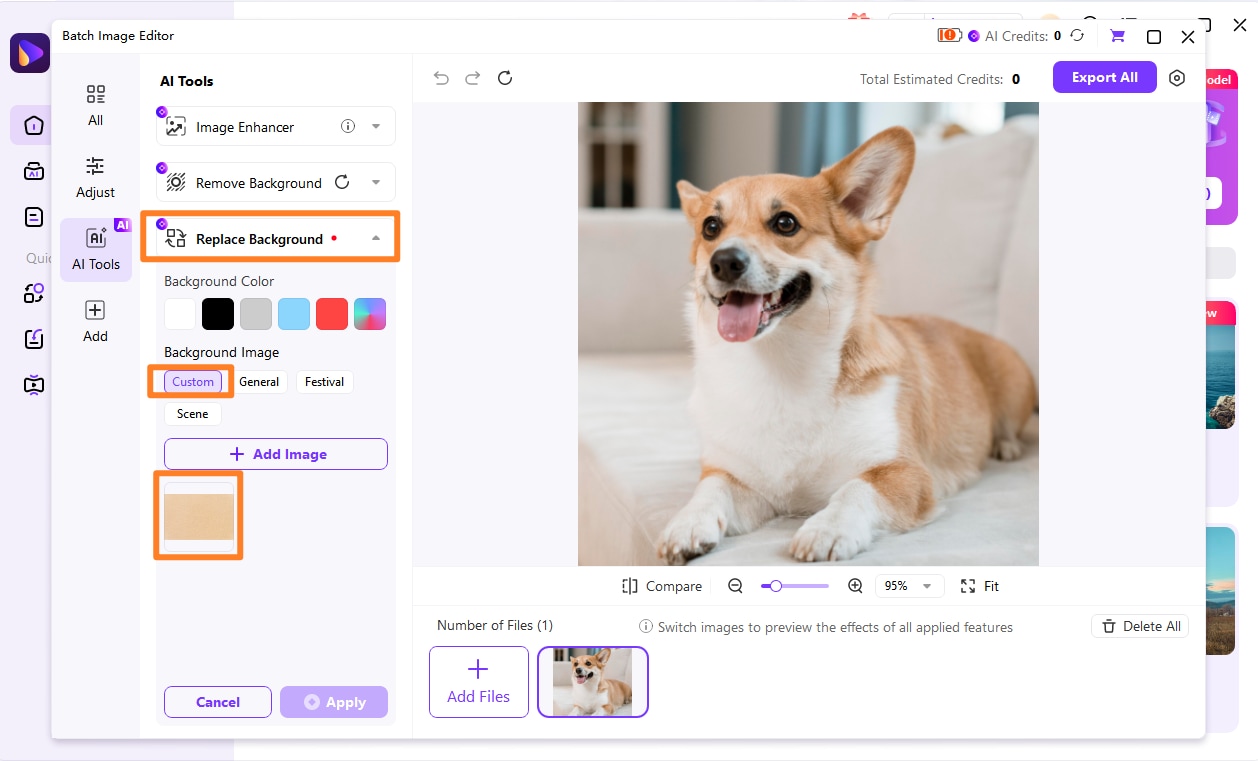
Step 2: Upload the Images
Next, I simply drag and drop the images I want to process into the designated area. UniConverter also allows me to browse and select files from my computer, which is convenient when I have images scattered across different folders.
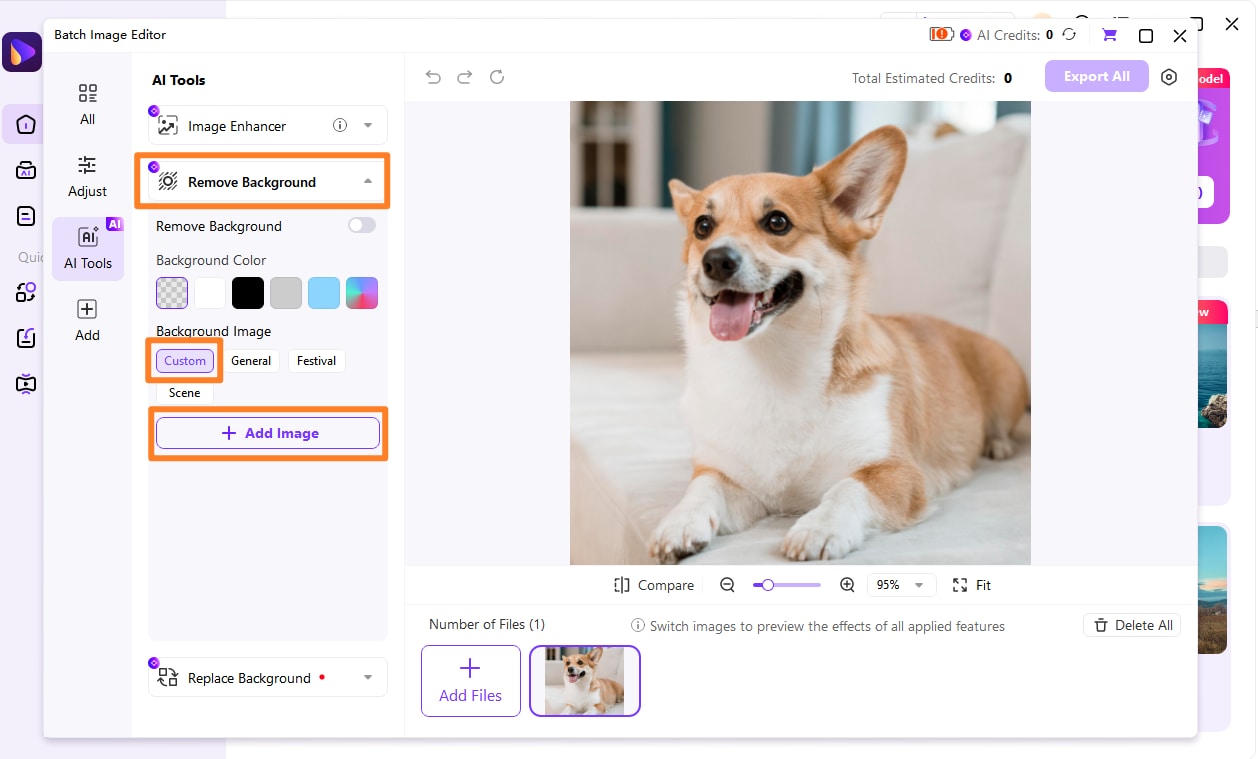
Step 3: Click to Preview Images
After uploading, UniConverter automatically processes the images. I then click on each image to preview the background replacement. This step is crucial for me to ensure the AI has accurately identified and removed the background.
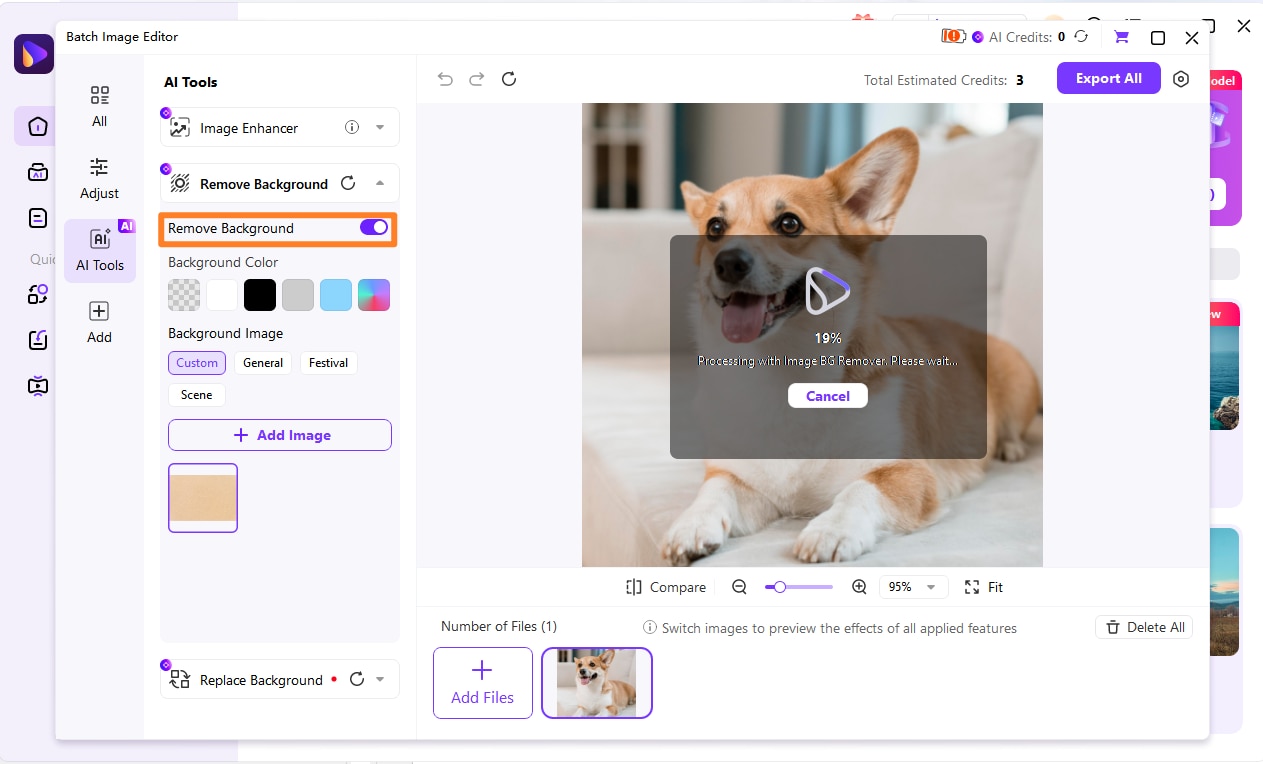
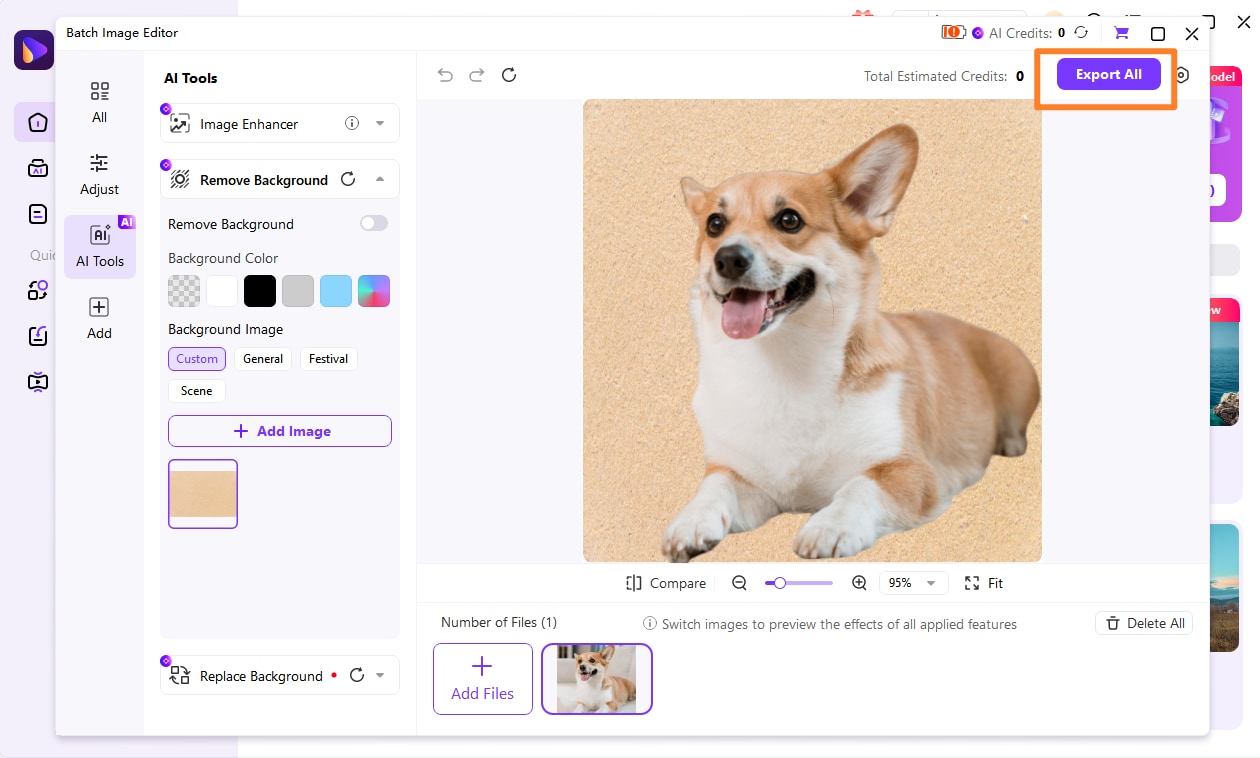
Step 4: Preview and Export Images
Once I'm satisfied with the preview, I can choose my desired output format and destination folder. Then, I hit the "Export" button, and UniConverter quickly saves all my enhanced images with their new backgrounds.

Seeking an iMyFone MagicPic Alternative?
Part 7: Conclusion
After spending considerable time with iMyFone MagicPic review and comparing it with its alternatives, I’ve come to a clear understanding of its place in the market. For casual users and beginners who are looking for an intuitive, AI-powered tool to quickly enhance photos, restore old memories, or perform basic edits without a steep learning curve, iMyFone MagicPic is a fantastic starting point. Its ease of use and effective AI algorithms make it a compelling choice for personal projects and digital archiving. However, for professionals and advanced users who require granular control, extensive manual adjustment options, and support for complex workflows, I would strongly recommend considering alternatives like Topaz Photo AI or Luminar Neo, which offer the depth and precision needed for professional-grade work. For budget-conscious users, it's always wise to explore free options or tools with one-time purchase models to avoid recurring subscription costs. Finally, for all users, I cannot stress enough the importance of prioritizing data privacy, especially with cloud-based services, and thoroughly understanding the terms of any subscription to avoid hidden costs. UniConverter also stands out as a versatile alternative, especially for those who value local processing and robust batch capabilities across various media tasks.
Part 8: FAQs
-
1. Is iMyFone MagicPic free to use?
iMyFone MagicPic offers a free trial version with limited features or usage. To access its full capabilities and remove watermarks, you'll need to subscribe to one of their paid plans.
-
2. Can iMyFone MagicPic restore severely damaged photos?
While iMyFone MagicPic's AI is quite capable of restoring faded colors, removing minor scratches, and sharpening blurry images, severely damaged photos with large missing sections or extreme degradation might still require more advanced manual retouching or specialized software for optimal results.
-
3. How does iMyFone MagicPic compare to Photoshop for photo enhancement?
iMyFone MagicPic is designed for quick, AI-driven enhancements with ease of use in mind, making it great for beginners. Photoshop, on the other hand, is a professional-grade tool offering unparalleled manual control, layers, and advanced editing capabilities. MagicPic simplifies tasks that would be complex in Photoshop, but it lacks Photoshop's depth and precision for professional-level work.
-
4. What operating systems does iMyFone MagicPic support?
iMyFone MagicPic typically supports both Windows and macOS operating systems. It's always best to check their official website for the most up-to-date system requirements and compatibility details.
-
5. Is my data safe when using iMyFone MagicPic?
iMyFone states that they prioritize user data privacy. However, as with any cloud-based service, your images are uploaded to their servers for processing. If data privacy is a major concern for you, it's crucial to review their privacy policy thoroughly and consider tools that offer local processing for sensitive images.
