
- AutoClipping Value: AI-powered background removal excels for e-commerce, saving time on product photos.
- Comparison Insight: AutoClipping is fast for bulk tasks, but UniConverter offers more versatile, high-quality, offline processing.
- Decision Factor: Choose AutoClipping for quick, high-volume background removal; UniConverter for comprehensive media editing and security.
- Risk Awareness: Be mindful of AutoClipping's subscription costs, data privacy, and limitations for intricate details or advanced editing.
In this article
- Part 1: What is AutoClipping?
- Part 2: AutoClipping: Core Features, Pros, and Cons
- Part 3: AutoClipping: Ideal Users and Use Cases
- Part 4: AutoClipping and Alternatives Comparison
- Part 5: Risks and Pitfalls to Consider
- Part 6: How to Use UniConverter for Efficient Background Replacement
- Part 7: Final Verdict and Recommendations
- Part 8: FAQs
When I first started dabbling in e-commerce, one of the biggest headaches was getting product photos just right. Specifically, removing backgrounds cleanly and efficiently felt like a monumental task. That's where tools like AutoClipping come in, promising AI-powered solutions to simplify this often tedious process. In this AutoClipping review, I'll share my firsthand experience, comparing it with other popular options and highlighting its strengths and weaknesses. My goal is to help you decide if AutoClipping is the right tool for your specific needs, whether you're a small business owner, a content creator, or just someone looking to clean up their photos.
Part 1: What is AutoClipping?
AutoClipping is an online tool designed to automatically remove backgrounds from images using artificial intelligence. It's built to streamline a task that traditionally required meticulous manual effort in photo editing software. When I first heard about it, I was skeptical – could AI really handle complex edges like hair or intricate product details? My main question was whether it could deliver professional-grade results without me spending hours tweaking. This review aims to answer that, diving deep into its capabilities and comparing it with alternatives to help you make an informed decision.
The Rise of AI-Powered Image Editing
The demand for quick, high-quality image editing has skyrocketed, driven by:
* The explosion of e-commerce: Businesses need thousands of product images with clean backgrounds.
* Social media content creation: Influencers and marketers constantly need eye-catching visuals.
* Accessibility for non-designers: Not everyone has Photoshop skills, but everyone needs good images.
Part 2: AutoClipping: Core Features, Pros, and Cons
AutoClipping's core strength lies in its AI-driven background removal. It’s designed to be a one-trick pony, but it does that trick quite well. I’ve found its ability to distinguish foreground from background, even with tricky elements, to be surprisingly robust. It handles transparent objects and fine details better than many other automated tools I’ve tried.
Core Features:
* AI-powered automatic background removal
* Support for various image formats (JPG, PNG, WebP)
* Batch processing capabilities
* Basic background color/image replacement
* Download options for different resolutions
Pros
* AI-Powered Precision for Complex Edges: I was genuinely impressed by how well it handled hair and fur, which are usually a nightmare for automated tools.
* Batch Processing for Efficiency: For someone like me, dealing with multiple product shots, this is a lifesaver. Uploading a folder and letting it process everything in one go saves so much time.
* User-Friendly Interface for Quick Edits: The interface is super clean and intuitive. I didn't need any tutorials; I just uploaded my image and it did its magic.
Cons
* Limited Advanced Editing Tools Beyond Background Removal: If you need to do anything more than just remove the background, you'll have to export and use another tool. It’s not an all-in-one editor.
* Subscription Model for High-Resolution Outputs: While you can try it for free, getting high-resolution, watermark-free images quickly pushes you into a subscription, which can add up.
Part 3: AutoClipping: Ideal Users and Use Cases
From my experience, AutoClipping shines brightest for specific user groups and scenarios. If you’re constantly battling with image backgrounds, this tool could be a game-changer for your workflow. However, it’s not a universal solution for all design needs.
Best Use Case: E-commerce Product Photography
This is where AutoClipping truly excels. For online store owners, dropshippers, or anyone managing a product catalog, the sheer volume of images requiring clean backgrounds can be overwhelming. I’ve used it extensively for product shots, and its ability to quickly and accurately isolate products from their original backgrounds has saved me countless hours. It ensures consistency across my product listings, which is crucial for a professional look.
Limited Use Case: Professional Graphic Design Requiring Fine-Grained Control
If you're a professional graphic designer, especially one who needs pixel-perfect precision, intricate masking, or complex compositing, AutoClipping will likely fall short. While its AI is good, it’s not a substitute for the manual control offered by tools like Photoshop. There are times when the AI makes a slight error, and without the ability to manually refine the mask within AutoClipping, you're left with an imperfect cut-out or forced to move to another software for touch-ups. For highly creative or detailed design projects, I find myself needing more granular control than AutoClipping provides.
Part 4: AutoClipping and Alternatives Comparison
When I started looking for background removal tools, I quickly realized there were quite a few options out there. Here's how AutoClipping stacks up against some of the major players I've tried.
| Feature/Competitor | AutoClipping | Remove.bg | Adobe Express | UniConverter |
| Core Function | AI Background Removal | AI Background Removal | All-in-One Design | Video/Image Converter & Editor |
| Batch Processing | Yes | Yes | Limited | Yes |
| Output Quality | High | High | Variable | Very High (Lossless) |
| Pricing Model | Subscription | Freemium/Subscription | Freemium/Subscription | One-time Purchase/Subscription |
| Advanced Editing | Basic | Basic | Extensive | Moderate (Image Editor) |
| Processing Speed | Fast | Fast | Moderate | Very Fast (GPU Accelerated) |
| Ease of Use | Very High | Very High | High | High |
| Customer Support | Email/FAQ | Extensive | 24/7 Live Chat/Email | |
| Security | Standard | Standard | High | High (Offline Processing) |
Key Differentiators: Speed vs. Versatility
From my perspective, AutoClipping and Remove.bg are neck and neck in terms of pure background removal speed and accuracy. They are fantastic for quick, high-volume tasks. However, if you need more than just background removal, Adobe Express offers a broader suite of design tools, making it more versatile for general content creation. UniConverter, on the other hand, stands out for its offline processing, superior output quality, and GPU acceleration, which is a huge plus for speed and security, especially when dealing with sensitive images or large batches. While AutoClipping is great for its specific niche, UniConverter provides a more comprehensive solution if you're looking for an all-in-one tool that handles various media tasks beyond just background removal.
Part 5: Risks and Pitfalls to Consider
While AutoClipping is a convenient tool, it's not without its potential downsides. When I first started using these AI tools, I learned a few things the hard way, and I want to share those insights so you don't make the same mistakes.
Data Privacy Concerns
Since AutoClipping is a cloud-based service, you're uploading your images to their servers. For most casual users, this isn't a huge deal, but if you're working with sensitive product designs, client images under NDA, or personal photos you'd rather not have floating around on third-party servers, this is a significant consideration. I always think twice before uploading anything proprietary to an online tool.
Output Quality for Intricate Details
While the AI is impressive, it's not perfect. I've encountered instances where intricate details, like wisps of hair, fine jewelry chains, or complex product textures, weren't perfectly clipped. Sometimes the edges can be a bit too soft, or conversely, too jagged. This means that for high-stakes projects or images requiring absolute perfection, you might still need to do manual touch-ups in another editor, which defeats some of the time-saving benefits.
Hidden Costs in Subscription Tiers
The free tier is great for testing, but it often comes with limitations like lower resolution outputs or watermarks. To get usable, high-quality images, you'll inevitably need to subscribe. I’ve noticed that the pricing models can sometimes be a bit opaque, with different tiers offering varying numbers of credits or features. It's crucial to carefully read what each tier offers to avoid unexpected costs or limitations down the line. Don't just look at the monthly fee; consider the cost per image if you have high volume.
Integration Limitations with Other Software
AutoClipping is primarily a standalone web application. This means if your workflow involves other design software like Photoshop, Illustrator, or even a simple photo organizer, you'll be constantly downloading and re-uploading files. There's no direct plugin or seamless integration that I've found, which can break the flow of a more complex design process. For me, this often means an extra step of saving, opening, and then re-saving, which can become tedious.
Part 6: How to Use UniConverter for Efficient Background Replacement
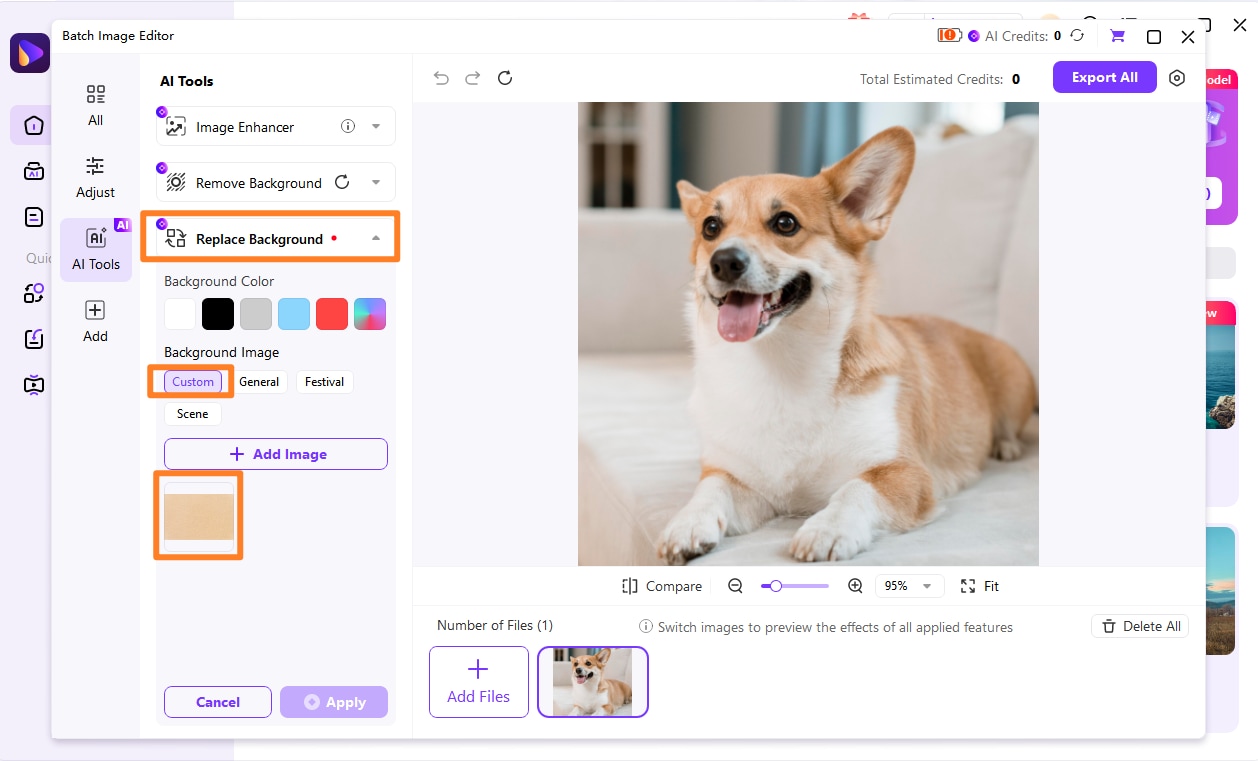
Sometimes, you encounter situations where online tools just don't cut it – maybe they don't support batch processing, the exported image quality is inconsistent, or the background replacement leaves fuzzy or overly sharp edges. In such cases, I've found UniConverter to be an incredibly reliable alternative. It’s not just a video converter; it’s a robust toolkit that includes a powerful image background replacer. What I love about UniConverter is its stability, lossless quality, GPU acceleration for speed, and the absence of annoying ads or watermarks. It’s truly an all-in-one solution for various media needs.
Step 1: Open UniConverter and Choose Background Replacer
First, launch UniConverter on your desktop. On the left-hand sidebar, navigate to the "Toolbox" section. Within the Toolbox, you'll find the "Background Replacer" option. Click on it to open the dedicated background removal interface.
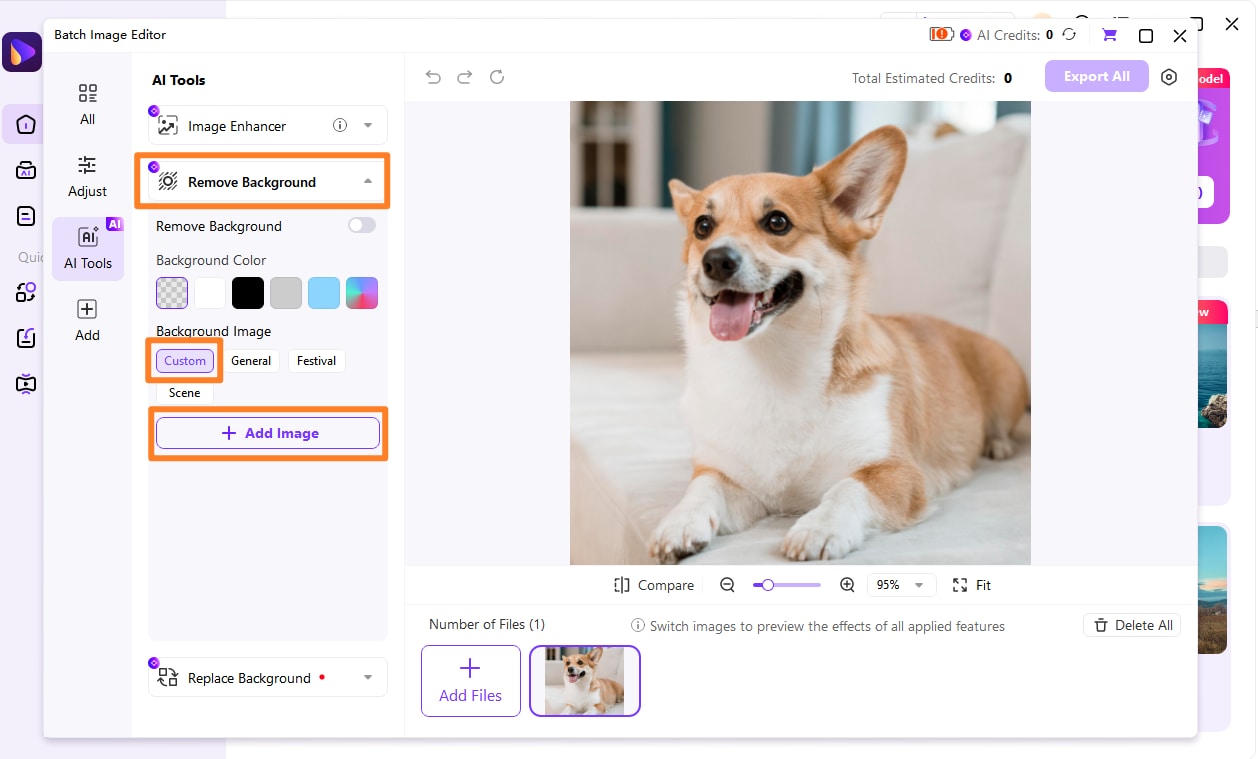
Step 2: Upload the Images
Once the Background Replacer window is open, you can easily add your images. Either drag and drop your desired image files directly into the interface, or click the "Add Files" button to browse and select them from your computer. UniConverter supports various image formats, making it versatile for different projects.
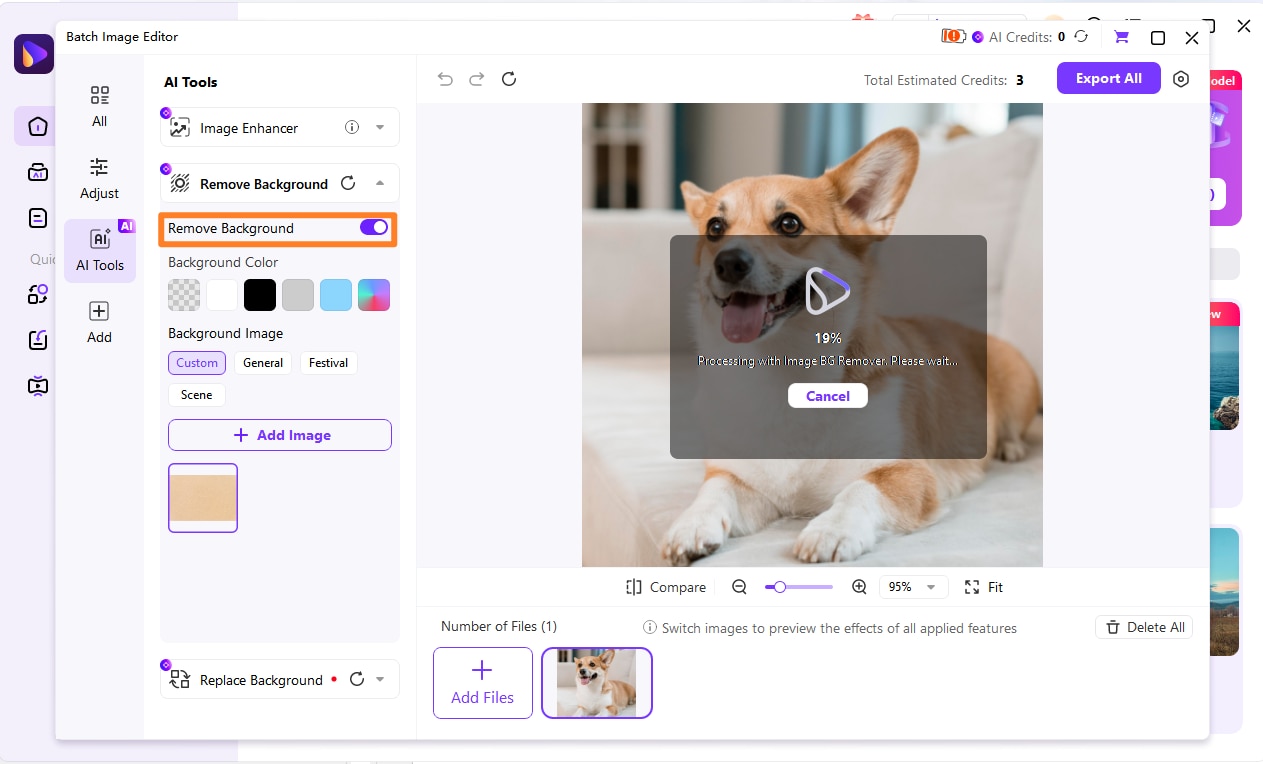
Step 3: Adjust and Refine (Optional)
After uploading, UniConverter will automatically process the images and remove their backgrounds using its AI. While the AI is highly accurate, you might want to make minor adjustments. You can preview each image and, if necessary, use the built-in editing tools to refine the edges or make other modifications to ensure a perfect cutout.
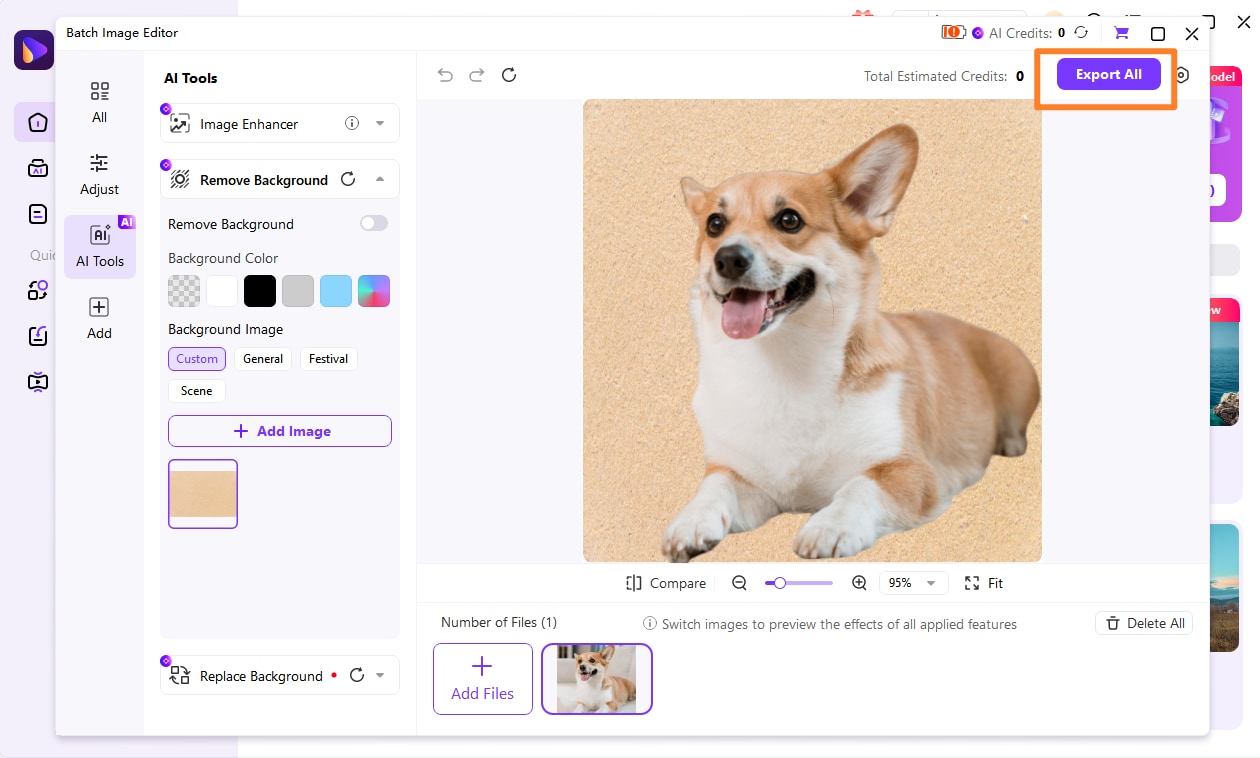
Step 4: Export Your Edited Images
Once you're satisfied with the background removal, choose your desired output format and destination folder. Click the "Export" button, and UniConverter will quickly save your edited images with transparent backgrounds to your specified location, maintaining high quality without any loss.

Seeking an AutoClipping Alternative for Video Editing?
Part 7: Final Verdict and Recommendations
After extensively using AutoClipping and comparing it with its competitors, my AutoClipping review concludes that it's a solid tool, but its suitability largely depends on your specific needs. It excels in its niche, offering fast and generally accurate AI-powered background removal, especially for complex edges. However, its limitations in advanced editing and reliance on a subscription model for high-quality outputs are important considerations.
For e-commerce businesses and small creators who primarily need to remove backgrounds from a large volume of product photos quickly and efficiently, AutoClipping is an excellent choice. Its batch processing and user-friendly interface will save you significant time. For professional designers and agencies who require pixel-perfect control, intricate masking, or a broader suite of editing tools, AutoClipping will likely serve as a preliminary step, with the need for further refinement in more comprehensive software like Photoshop. For casual users needing quick edits, the free tier might suffice for occasional use, but for consistent, high-quality results, the subscription becomes necessary. Ultimately, if background removal is your main pain point and you value speed and simplicity, AutoClipping is a strong contender, but be aware of its boundaries.
Part 8: FAQs
-
1. Is AutoClipping free to use?
AutoClipping offers a free trial or a limited free tier, but for high-resolution, watermark-free images and batch processing, you'll need to subscribe to one of their paid plans.
-
2. How accurate is AutoClipping's AI?
From my experience, AutoClipping's AI is quite accurate, especially with complex edges like hair or intricate objects. However, like all AI tools, it's not 100% perfect and might require minor manual touch-ups for extremely detailed or challenging images.
-
3. Can I use AutoClipping for videos?
No, AutoClipping is specifically designed for image background removal. If you need to remove backgrounds from videos, you'll need to look for dedicated video editing software with green screen or rotoscoping capabilities.
-
4. What file formats does AutoClipping support?
AutoClipping typically supports common image formats such as JPG, PNG, and WebP for both input and output. Always check their official website for the most up-to-date list of supported formats.
-
5. How does AutoClipping compare to Photoshop for background removal?
AutoClipping offers a much faster, automated solution for background removal, ideal for high-volume tasks and users without advanced editing skills. Photoshop, on the other hand, provides unparalleled manual control and precision, making it superior for professional graphic designers who need pixel-perfect results and complex masking capabilities, though it requires more time and expertise.
