
- Ashampoo Review: Ashampoo Background Remover offers simplicity and speed for basic background removal tasks.
- Core Features: Automatic detection, basic refinement, and batch processing are its strengths.
- Limitations: Lacks advanced editing, making it unsuitable for professional, pixel-perfect design work.
- Ideal Use: Perfect for e-commerce and social media for quick, clean product or subject cutouts.
- Comparative Value: UniConverter often surpasses Ashampoo with superior output quality and GPU-accelerated processing.
- Decision Factor: Choose Ashampoo for ease and speed; opt for UniConverter for quality, control, and efficiency.
- Consider Risks: Be aware of potential image quality degradation and subscription costs.
- UniConverter Advantage: Offers a robust, ad-free, lossless solution with extensive format support and GPU acceleration.
In this article
- Part 1: What is Ashampoo Background Remover?
- Part 2: Ashampoo Background Remover: Core Features, Pros, and Cons
- Part 3: Ashampoo Background Remover: Ideal Use Cases and Limitations
- Part 4: Ashampoo Background Remover and Alternatives: A Comparative Analysis
- Part 5: Risks and Pitfalls to Consider
- Part 6: How to Use UniConverter to Efficiently Replace Image Backgrounds
- Part 7: Final Verdict and Recommendations
- Part 8: FAQs
When I first started dabbling in digital content creation, one of the most tedious tasks was always background removal. It felt like an endless cycle of painstaking selections and frustrating edge refinements. That's where tools like Ashampoo Background Remover come into play. This review aims to cut through the marketing fluff and give you a real-world perspective on its capabilities. We'll explore its features, weigh its pros and cons, and put it head-to-head with some of its competitors, including UniConverter, to help you decide if it's the right fit for your workflow. My goal is to provide a comprehensive analysis that addresses common pain points and guides you toward an informed decision.
Part 1: What is Ashampoo Background Remover?
Ashampoo Background Remover is a dedicated software solution designed to simplify the often-complex task of isolating subjects from their backgrounds in images. Coming from Ashampoo, a company known for its user-friendly utility software, my initial expectation was a straightforward tool that prioritizes ease of use. And largely, it delivers on that front. It's positioned as a quick and efficient way to achieve clean cutouts, particularly for users who might not have the time or expertise to master more complex photo editing suites. This review will delve into its core functionalities, assess its performance in various scenarios, and ultimately help you understand if it truly solves the background removal dilemma.
The Market Landscape of Background Removal Tools
The demand for efficient background removal has surged, driven by several key factors:
* E-commerce Boom: Online sellers constantly need clean product images for their listings, free from distracting backgrounds.
* Social Media Content Creation: Influencers and marketers require eye-catching visuals with transparent backgrounds for overlays and creative compositions.
* Accessibility for Non-Designers: Many users lack professional design software skills but still need high-quality image manipulation.
Part 2: Ashampoo Background Remover: Core Features, Pros, and Cons
From my experience, Ashampoo Background Remover focuses on delivering a streamlined background removal process. Its core ability lies in its automatic detection algorithms, which attempt to identify the foreground subject and separate it from the background with minimal user intervention. It also offers some basic refinement tools, allowing you to fine-tune the edges if the automatic detection isn't perfect. For anyone who's struggled with the lasso tool in Photoshop, this automatic approach is a breath of fresh air.
Here are some of its core capabilities:
* Automatic Subject Detection: Automatically identifies and isolates the main subject.
* Manual Refinement Brushes: Tools to add or remove parts of the selection.
* Background Replacement Options: Allows swapping the removed background with a solid color or another image.
* Batch Processing: Processes multiple images simultaneously.
* Support for Common Image Formats: Handles popular formats like JPG, PNG, and BMP.
Pros:
* Intuitive User Interface for Quick Edits: I found it incredibly easy to pick up and start using immediately. No steep learning curve here.
* High-Quality Automatic Background Detection: For many images, especially those with clear subject-background separation, the automatic removal was surprisingly accurate.
* Batch Processing Capability for Efficiency: This was a huge time-saver for me when dealing with multiple product photos.
Cons:
* Limited Advanced Editing Options: If you need to do more than just remove a background, you’ll quickly hit its limitations. Don't expect Photoshop-level control.
* Subscription Model for Full Functionality: While there might be a trial, getting the most out of it often means committing to a subscription, which can add up.
Part 3: Ashampoo Background Remover: Ideal Use Cases and Limitations
Ashampoo Background Remover truly shines in specific scenarios where speed and simplicity are paramount. For someone like me, who often needs quick, clean cutouts without diving into complex software, it's a valuable tool. However, it's important to understand where its capabilities end.
Scenario 1: E-commerce Product Photography Enhancement
This is where Ashampoo Background Remover really excels. Imagine you're an online seller with dozens of product photos that need a clean white or transparent background. I used it for exactly this purpose, and the batch processing feature combined with its accurate automatic detection made light work of what would otherwise be a tedious task. It's perfect for quickly preparing images for Shopify, Etsy, or Amazon.
Scenario 2: Quick Social Media Content Creation
For creating engaging social media posts, having subjects isolated from their backgrounds is incredibly useful for overlays and creative compositions. I found it great for quickly cutting out a person or object to place on a new, vibrant background for an Instagram story or a Facebook ad. It saves a lot of time compared to manual selection in more complex editors.
Scenario 3: Professional Graphic Design Projects (Limitations)
While it's fantastic for quick tasks, I wouldn't recommend Ashampoo Background Remover for professional graphic design projects that demand pixel-perfect precision or intricate detail work. For images with complex hair, furry textures, or highly detailed edges, I often found myself needing to jump into Photoshop for manual refinements. Its automatic algorithms, while good, aren't always perfect, and the limited manual editing tools mean you can't always achieve the flawless results a professional might require. If you're a designer, this is more of a quick-fix tool than a primary one.
Part 4: Ashampoo Background Remover and Alternatives: A Comparative Analysis
When it comes to background removal, Ashampoo Background Remover is just one player in a crowded field. I've tried several, and each has its strengths. Let's see how Ashampoo stacks up against some notable alternatives like UniConverter, Remove.bg, and Adobe Express.
| Feature/Criteria | Ashampoo Background Remover | UniConverter | Remove.bg | Adobe Express |
| Ease of Use | Excellent | Excellent | Excellent | Good |
| Accuracy of Removal | High | High | High | Moderate |
| Advanced Editing | Limited | Moderate | Limited | Moderate |
| Batch Processing | Yes | Yes | Yes | No |
| Pricing Model | Subscription | One-time purchase/Subscription | Freemium/Subscription | Freemium/Subscription |
| Output Quality | Good (up to source resolution) | Excellent (lossless) | Good (limited free resolution) | Good (limited free resolution) |
| Processing Speed | Fast | Very Fast (GPU accelerated) | Fast | Moderate |
Key Differentiators: Ashampoo vs. The Rest
From my perspective, Ashampoo Background Remover offers a good balance of ease of use and decent accuracy, especially for its desktop application. However, UniConverter truly stands out with its exceptional output quality and GPU-accelerated processing, making it incredibly fast for batch jobs without compromising detail. Remove.bg is fantastic for quick, web-based removals but often limits resolution for free users. Adobe Express is a more comprehensive design tool with background removal as one feature, but its dedicated removal accuracy isn't always as precise as the others. If you're looking for a desktop solution with robust batch processing and high-quality output, UniConverter often edges out Ashampoo, especially for those who prefer a one-time purchase model.
Part 5: Risks and Pitfalls to Consider
While tools like Ashampoo Background Remover promise convenience, it's crucial to be aware of potential downsides, especially if you're relying on them for important work. I've encountered a few issues that are worth highlighting.
Potential Data Privacy Concerns
When using online background removal tools, or even some desktop applications that might send data to the cloud for processing, there's always a question of data privacy. Are your images being stored? How are they being used? While Ashampoo is a reputable company, it's always wise to review their privacy policy, especially if you're working with sensitive or proprietary images. For me, the peace of mind of processing locally is often a deciding factor.
Impact on Image Quality After Removal
I've noticed that sometimes, after background removal, the subject's edges can appear slightly pixelated or unnaturally sharp, especially if the original image resolution wasn't very high. This isn't always the fault of the software, but it's a common outcome. If you're aiming for pristine quality, you might find yourself needing to do some post-processing to smooth out those edges. It's a subtle degradation that can make a big difference in professional contexts.
Hidden Costs and Subscription Traps
Many tools, including Ashampoo, operate on a subscription model or have tiered pricing. What might seem like an affordable solution initially can quickly become a recurring expense. I've seen situations where the free version is too limited, pushing you towards a paid plan, and then you discover that the "full functionality" still has limitations or requires a higher tier. Always read the fine print and understand what you're truly getting for your money.
Compatibility Issues with Specific File Formats
While most tools support common formats like JPG and PNG, I've occasionally run into issues with less common formats or images with specific metadata. If your workflow involves a variety of image types, it's essential to check if the software fully supports them. There's nothing more frustrating than having to convert files before you can even start the background removal process.
Over-reliance on AI for Complex Images
AI-powered background removal is impressive, but it's not magic. For images with intricate details, similar colors between foreground and background, or transparent elements (like glass or fine hair), the AI can struggle. I've often found myself needing to manually correct selections that the AI got wrong, which defeats the purpose of an "automatic" tool. Don't assume AI will solve all your complex image problems; sometimes, manual intervention is still necessary.
Part 6: How to Use UniConverter to Efficiently Replace Image Backgrounds
Sometimes, you encounter tools that just don't cut it – they might not support batch processing, export blurry images, or leave you with jagged edges. That's where I found UniConverter to be a game-changer. It's an all-in-one solution that handles background removal with impressive accuracy and speed, especially for those needing to process multiple images without compromising quality. UniConverter stands out with its ad-free experience, extensive format support, GPU acceleration for lightning-fast processing, and stable, lossless output. It’s my go-to for a truly seamless background replacement experience.
Step 1: Open UniConverter and Choose Background Replacer
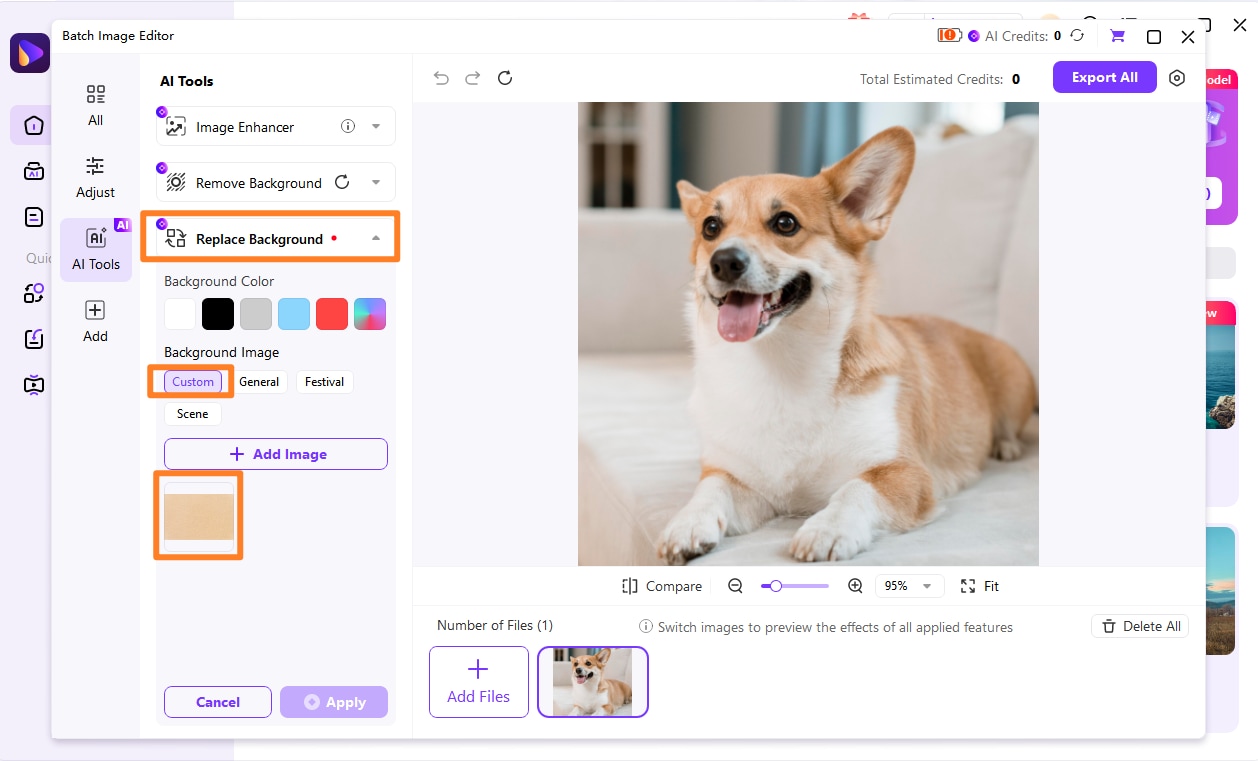
Launch UniConverter on your computer. On the main interface, navigate to the "Toolbox" section. Here, you'll find the "Background Replacer" option. Click on it to open the dedicated background removal module.
Step 2: Upload the Images
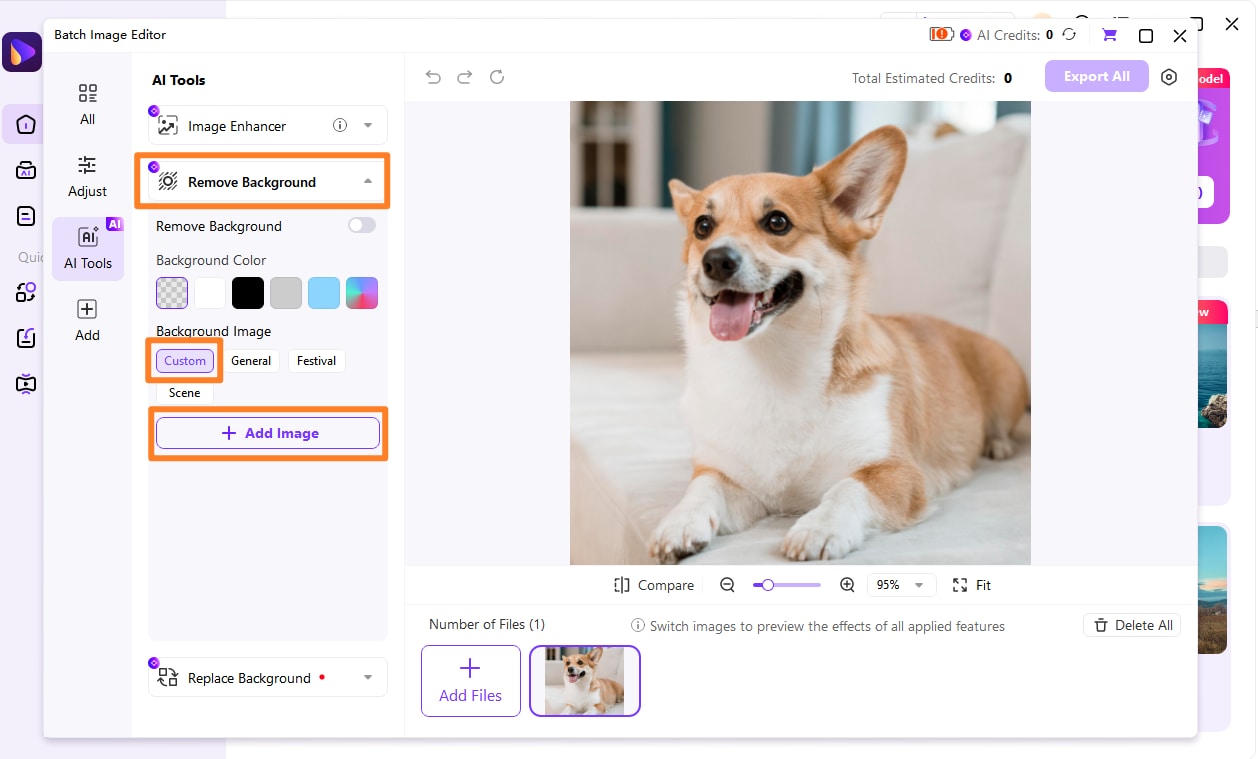
Once the Background Replacer window is open, you can easily add your images. Click the "Add Files" button or simply drag and drop the images you want to process into the designated area. UniConverter supports various image formats, making it versatile for different needs.
Step 3: Automatic Background Removal
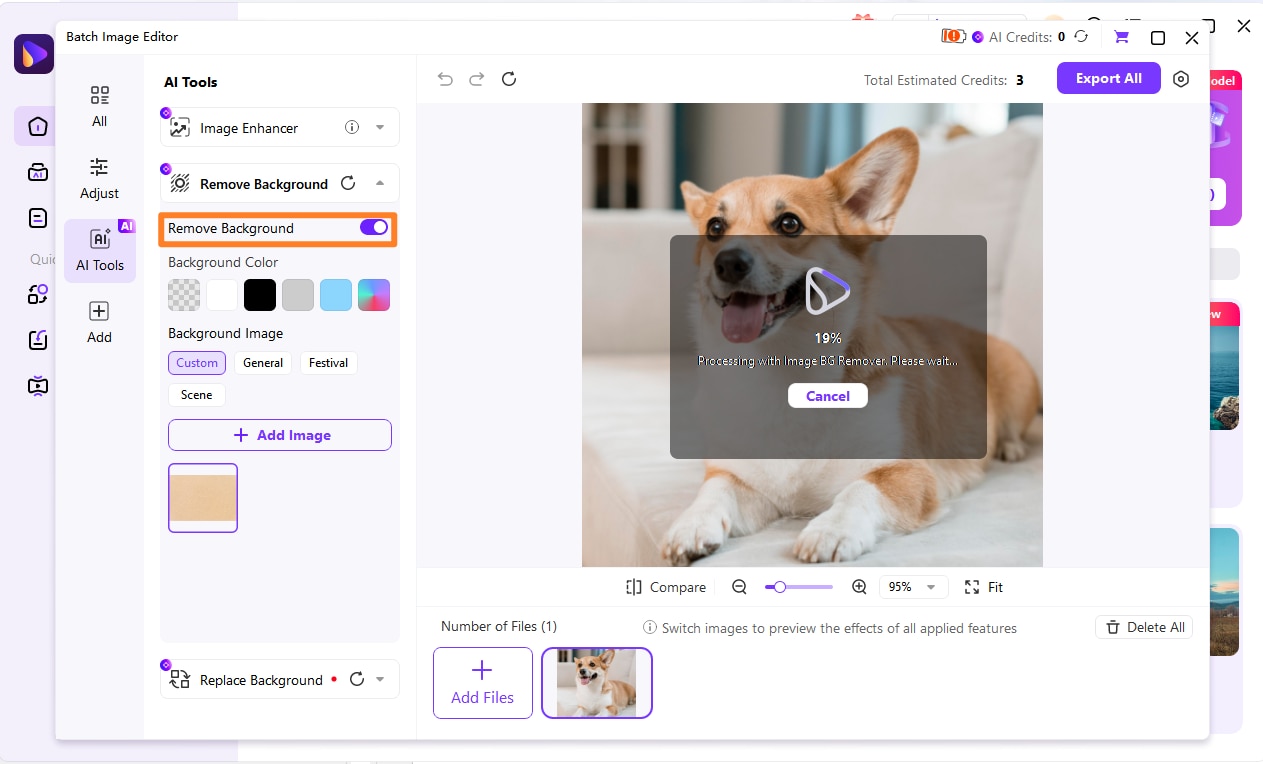
After uploading, UniConverter's intelligent AI will automatically detect the subject and remove the background. You'll see a preview of the removed background image. If needed, you can use the built-in editing tools to refine the edges or replace the background with a solid color or a custom image.
Step 4: Preview and Export Images
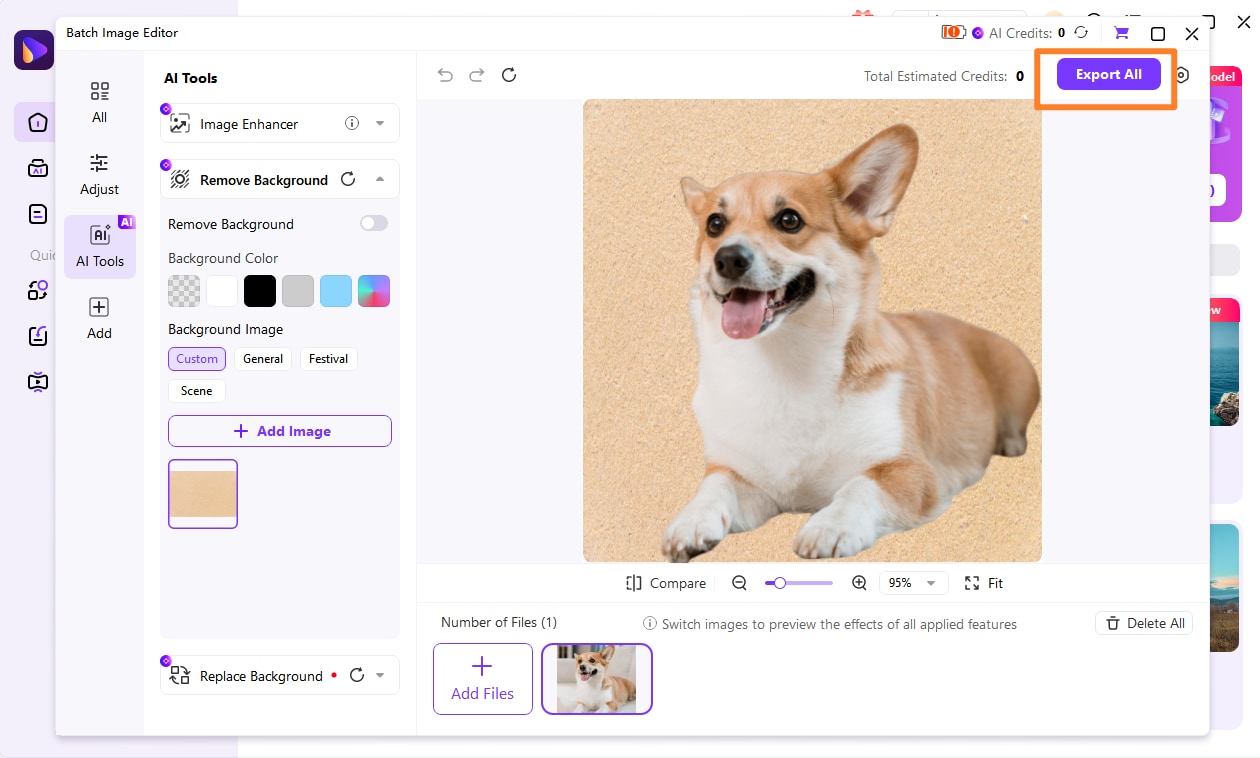
Once you're satisfied with the result, preview the final image. You can then choose your desired output format and destination folder. Click the "Export" button, and UniConverter will quickly process and save your images with their new backgrounds.

Seeking an Ashampoo Background Remover Alternative?
Part 7: Final Verdict and Recommendations
After spending considerable time with Ashampoo Background Remover and its alternatives, my review concludes that it's a solid tool for specific users. It excels in simplicity and speed for straightforward tasks, making it a valuable asset for those who prioritize efficiency over intricate control. However, its limitations in advanced editing and its subscription model are important considerations.
For casual users and small businesses, Ashampoo Background Remover is a strong contender. If your primary need is to quickly remove backgrounds from product photos or social media content without a steep learning curve, it will serve you well. Its batch processing is a definite plus for these scenarios.
For professional photographers and designers, I'd suggest looking elsewhere or using Ashampoo as a preliminary step. While it can handle basic cutouts, the lack of granular control for complex images means you'll likely need more robust software like Photoshop or UniConverter for truly professional-grade results. You'll find yourself hitting its ceiling quickly when precision is paramount.
For budget-conscious users, the subscription model might be a deterrent. While convenient, recurring costs can add up. Exploring freemium options like Remove.bg for occasional use, or considering a one-time purchase solution like UniConverter, might offer better long-term value if you need more consistent, high-quality results without ongoing fees. Ultimately, Ashampoo Background Remover is a good tool, but its suitability depends entirely on your specific needs and workflow.
Part 8: FAQs
-
1. Is Ashampoo Background Remover free to use?
Ashampoo Background Remover typically offers a free trial version with limited functionality or a time limit. Full access to all features usually requires a paid subscription.
-
2. How accurate is Ashampoo Background Remover?
Its accuracy is generally high for images with clear subject-background separation. However, for complex images with fine details or similar colors, manual refinement might be necessary.
-
3. Can I use Ashampoo Background Remover for batch processing?
Yes, one of its notable features is the ability to process multiple images at once, which is a significant time-saver for tasks like e-commerce product photography.
-
4. What file formats does Ashampoo Background Remover support?
It supports common image formats such as JPG, PNG, and BMP for both input and output. Always check the official specifications for a complete list.
-
5. How does Ashampoo Background Remover compare to Photoshop?
Ashampoo Background Remover is a specialized, simpler tool focused solely on background removal, prioritizing ease of use. Photoshop is a comprehensive professional image editor with vastly more advanced features, offering much greater control and precision, but with a steeper learning curve.
