
- Value: Adobe Express simplifies design for quick, professional visuals, ideal for social media and small businesses.
- Comparison: It excels over complex tools for speed, but lacks advanced features of Photoshop or Illustrator.
- Decision: Choose Express for template-driven, fast content; avoid for intricate, high-resolution professional design.
- Consideration: Free tier is limited; full potential requires subscription. Cloud-based means no offline access.
- Alternative: UniConverter complements Express for robust media processing, like batch background removal and video conversion.
In this article
- Part 1: What is Adobe Express?
- Part 2: Adobe Express: Core Features, Pros, and Cons
- Part 3: Who Should Use Adobe Express? (And When Not To)
- Part 4: Adobe Express and Alternatives Comparison
- Part 5: Potential Pitfalls and Considerations
- Part 6: How to Use UniConverter for Comprehensive Media Needs
- Part 7: Final Verdict and Recommendations
- Part 8: Frequently Asked Questions (FAQs)
When I first started exploring creative tools for my small business, I was overwhelmed by the sheer number of options. Everyone seemed to be talking about Adobe products, but the full Creative Suite felt like overkill. That's when I stumbled upon Adobe Express review, a simplified online design platform. This review aims to cut through the noise and provide a clear picture of whether Adobe Express is the right fit for your creative endeavors. I'll share my personal experiences, highlight its strengths and weaknesses, and compare it to other popular tools, so you can make an informed decision.
Part 1: What is Adobe Express?
Adobe Express, formerly known as Adobe Spark, is Adobe's answer to the growing demand for accessible, user-friendly design tools. It's designed to empower individuals and small businesses to create stunning visual content without needing extensive graphic design experience. Think of it as a streamlined version of Adobe's powerful creative software, but with a focus on speed and simplicity. My initial impression was that it was just another online editor, but I quickly realized it had the Adobe ecosystem's backing, which intrigued me. This review will delve into its capabilities, helping you determine if it aligns with your creative workflow.
The Rise of Simplified Creative Tools
The digital landscape has dramatically shifted, making visual content creation a necessity for almost everyone. This surge has led to:
* Increased demand for quick, professional-looking designs: Social media, marketing, and personal branding all require a constant stream of fresh visuals.
* A gap in the market for accessible design software: Traditional tools like Photoshop have a steep learning curve, leaving many users feeling intimidated.
* The need for cross-platform compatibility: Creators want to design on their desktop, tablet, or phone seamlessly.
* Emphasis on template-driven creation: Starting from scratch can be daunting, so pre-designed templates have become invaluable.
Part 2: Adobe Express: Core Features, Pros, and Cons
From my experience, Adobe Express excels at providing a quick and easy way to create various visual assets. Its core capabilities revolve around template-based design, image editing, and text manipulation. I found myself using it most for social media posts and quick flyers.
* Template-driven design: A vast library of professionally designed templates for almost any occasion.
* Basic image editing: Cropping, resizing, applying filters, and removing backgrounds (premium feature).
* Text and font customization: A wide selection of fonts and text effects to make your message pop.
* Brand kit integration: Upload your logos, colors, and fonts for consistent branding across projects.
* Content scheduling: Directly schedule social media posts from within the platform.
Pros
* Intuitive User Interface for Quick Designs: I was genuinely surprised by how easy it was to pick up and start designing. The drag-and-drop interface is incredibly user-friendly.
* Extensive Template Library for Various Projects: Whether I needed an Instagram story, a presentation, or a business card, I almost always found a suitable template to start with. This saved me a lot of time.
* Seamless Integration with Adobe Ecosystem: As someone who occasionally uses Photoshop, the ability to import assets from Creative Cloud libraries was a huge plus.
Cons
* Limited Advanced Editing Capabilities: While great for quick edits, I quickly hit its limitations when I needed more nuanced control over images or complex layering. It's not a Photoshop replacement.
* Subscription-Based Model for Full Features: The free tier is good, but many of the really useful features, like background removal and premium templates, are locked behind a subscription.
Part 3: Who Should Use Adobe Express? (And When Not To)
I've found Adobe Express to be a fantastic tool for specific scenarios, but it's definitely not a one-size-fits-all solution. My personal take is that it shines for those who need speed and simplicity over deep customization.
Best Use Case: Social Media Content Creation for Small Businesses
For small business owners like myself, who wear many hats, Adobe Express is a lifesaver for social media. I can quickly whip up engaging posts, stories, and ads without spending hours learning complex software. The templates are perfect for maintaining a consistent brand aesthetic, and the scheduling feature is a huge time-saver. If you're constantly churning out content for Instagram, Facebook, or Pinterest, this is where Adobe Express truly excels.
Limited Use Case: Professional Graphic Design for Large Agencies
If you're a professional graphic designer working for a large agency, I honestly don't think Adobe Express will meet your needs. It lacks the precision, advanced tools, and granular control required for high-end branding, complex illustrations, or print-ready designs with specific color profiles and resolutions. For those tasks, you'll still need the full power of Adobe Illustrator, Photoshop, or InDesign. I tried to push its limits for a more intricate project once and quickly realized it wasn't built for that level of detail.
Part 4: Adobe Express and Alternatives Comparison
When I was first looking into design tools, I naturally compared Adobe Express with its closest rivals. Here's how I see it stacking up against some popular alternatives, including UniConverter for specific media needs.
| Feature/Tool | Adobe Express | Canva | PicMonkey | Crello | UniConverter |
| Ease of Use | High | High | Medium | High | High |
| Template Variety | Excellent | Excellent | Good | Very Good | N/A (Media Converter) |
| Advanced Editing | Limited | Moderate | Moderate | Moderate | Excellent (Video/Image Editing) |
| Price (Free Tier) | Yes | Yes | No | Yes | Yes (Free Trial) |
| Integration | Adobe Suite | Limited | Limited | Limited | Standalone (Local Processing) |
| Processing Speed | Fast | Fast | Moderate | Fast | Very Fast (GPU Accelerated) |
| Output Quality | Good (Web) | Good | Good | Good | Excellent (Lossless) |
| Customer Support | Good | Good | Moderate | Good | Excellent |
| Security | Adobe Standard | Good | Good | Good | High (Local Processing) |
My take is that Adobe Express and Canva are neck and neck for general social media and marketing content, with Adobe Express having an edge if you're already in the Adobe ecosystem. Canva often feels a bit more intuitive for absolute beginners, though. PicMonkey and Crello offer similar functionality but didn't quite capture my attention as much. Where UniConverter stands out is not as a direct design competitor, but as a robust media processing tool. If I need to convert video formats, compress files, or even do some advanced image background removal with high precision and speed, UniConverter is my go-to. It's a different beast entirely, focusing on media utility rather than pure design.
Part 5: Potential Pitfalls and Considerations
While I generally enjoy using Adobe Express, I've learned there are a few things to watch out for, especially if you're relying on it for critical projects. It's important to understand these limitations before diving in.
Data Privacy and Security Concerns
Like any cloud-based service, I've always had a nagging thought about data privacy. While Adobe is a reputable company, uploading all my brand assets and project files to their servers means trusting them with my intellectual property. I always make sure not to upload anything overly sensitive and keep local backups of my most important designs.
Understanding Subscription Tiers and Hidden Costs
The "free" aspect of Adobe Express can be a bit misleading. I quickly found that many of the features I wanted – like background removal, access to premium templates, and specific stock photos – were locked behind the paid subscription. It's not a "hidden" cost per se, but it's easy to get drawn in by the free version only to realize you need to pay to unlock its full potential. I recommend checking the pricing plans thoroughly before committing.
Output Quality Limitations for Print Media
I once tried to design a high-resolution flyer for print using Adobe Express, and the results were a bit disappointing. While it's fantastic for web and digital use, the output quality for professional print media can be lacking. The resolution and color profiles aren't always optimized for printing, leading to pixelation or color shifts. If you're designing for print, I'd suggest using a more robust tool or at least double-checking the final output carefully.
Dependence on Cloud Connectivity
Since Adobe Express is entirely cloud-based, a stable internet connection is non-negotiable. I've been in situations where my internet was spotty, and it completely halted my workflow. There's no offline mode, which can be a significant drawback if you often work on the go or in areas with unreliable connectivity. This is a trade-off for its accessibility, but it's something to be aware of.
Part 6: How to Use UniConverter for Comprehensive Media Needs
Sometimes, when I hit the limits of design tools like Adobe Express – especially when it comes to specific media processing tasks like batch background removal, precise image conversion, or video editing – I turn to UniConverter. It's not a design tool in the same vein, but it's an incredibly powerful all-in-one media solution that fills those gaps perfectly. If you're struggling with tools that don't support batch processing, produce blurry images, or have inconsistent background replacement quality, UniConverter is a fantastic alternative. It offers a clean, ad-free experience, supports a vast array of formats, leverages GPU acceleration for speed, and ensures lossless quality, making it an ultimate solution for comprehensive media needs.
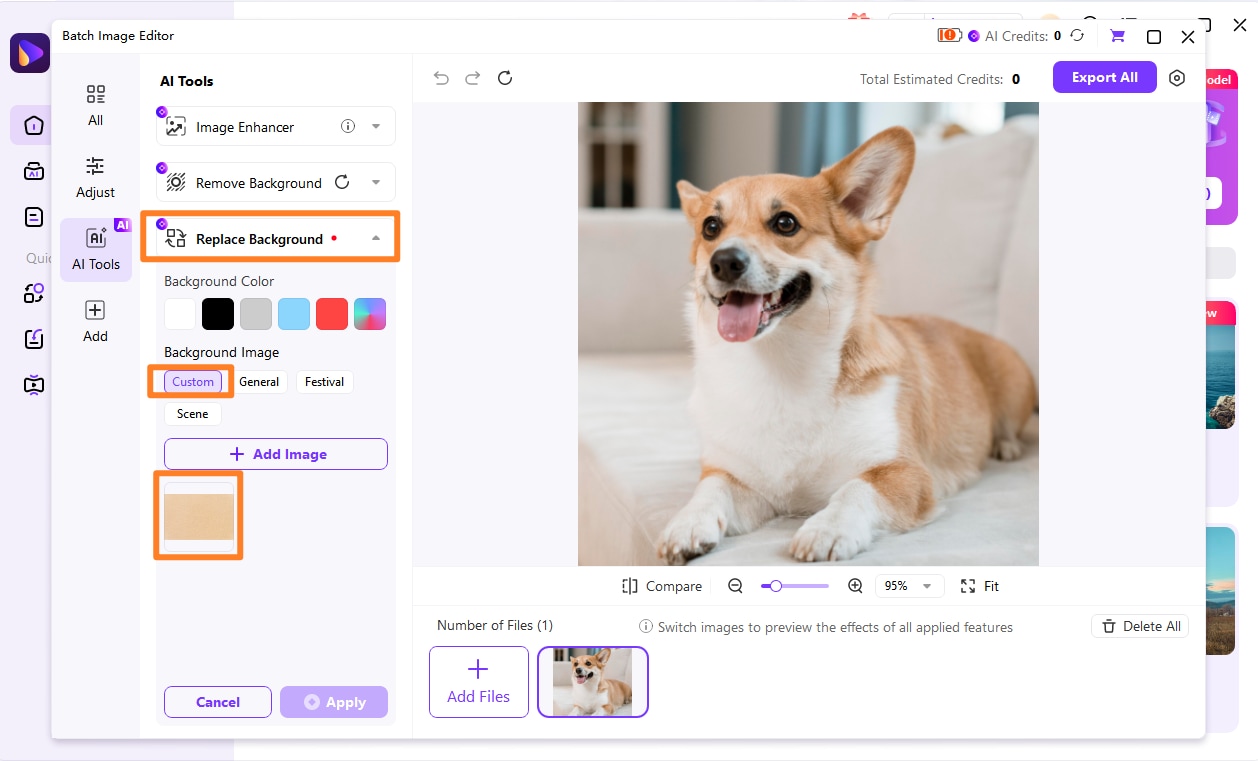
Step 1: Open UniConverter and Choose Background Replacer
Launch UniConverter on your computer. On the main interface, navigate to the "AI Lab" section and select the "Background Replacer" tool.
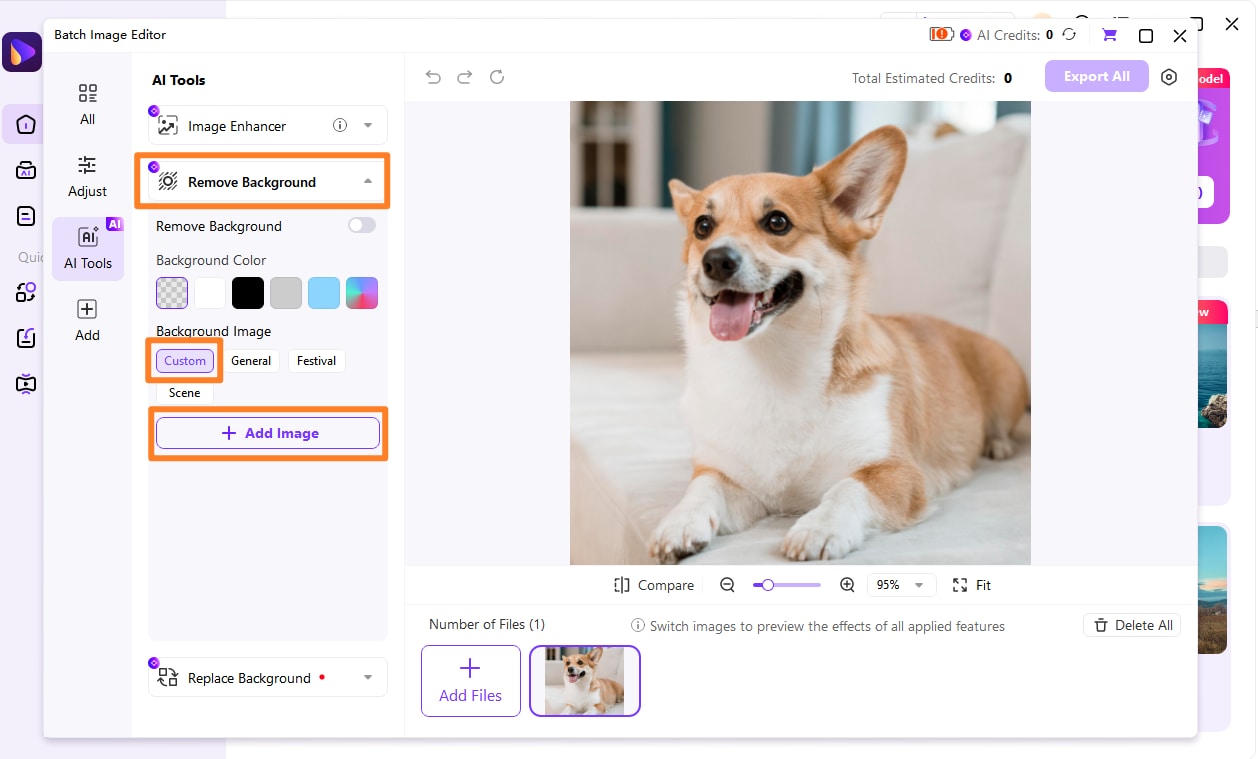
Step 2: Upload the Images
Click the "Add Files" button or drag and drop the images you want to process into the designated area. You can add multiple images for batch processing.
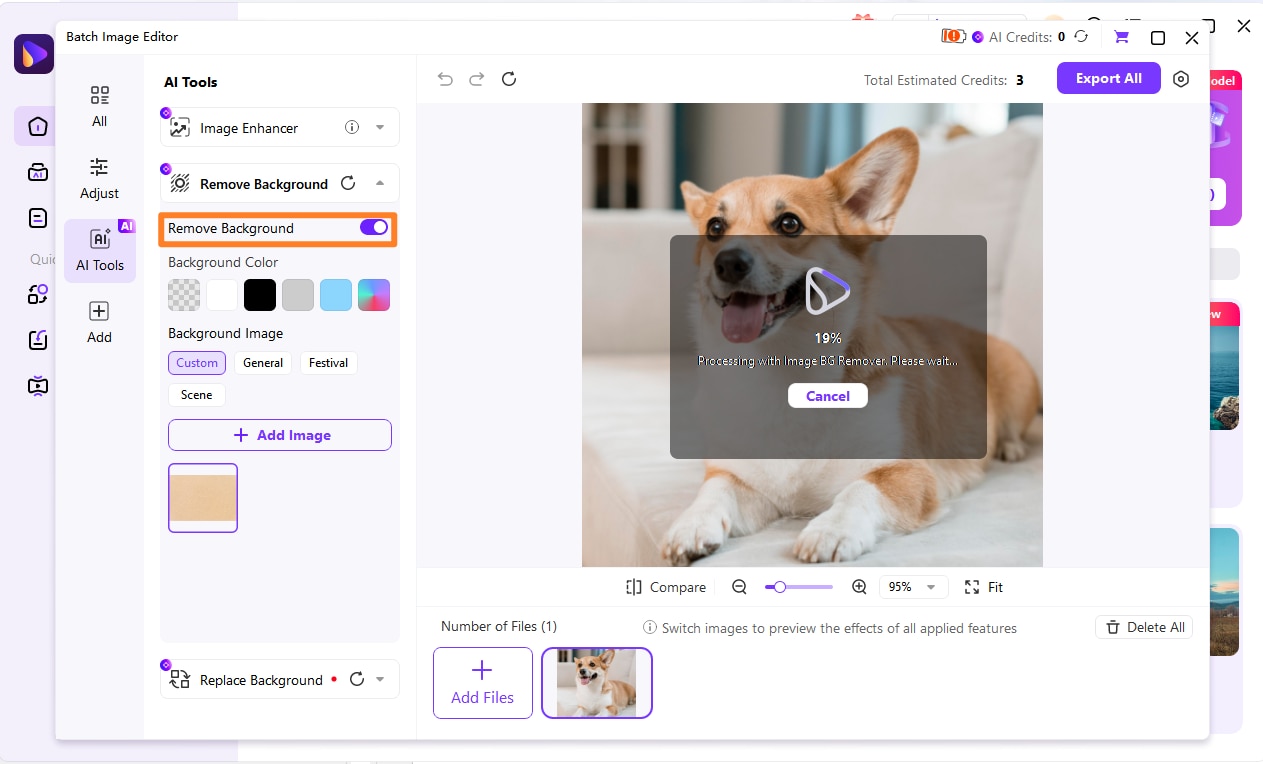
Step 3: Preview and Export Images
Once the images are processed, you can preview the results. UniConverter automatically removes the background. You can then choose your desired output folder and click "Export" to save the images.
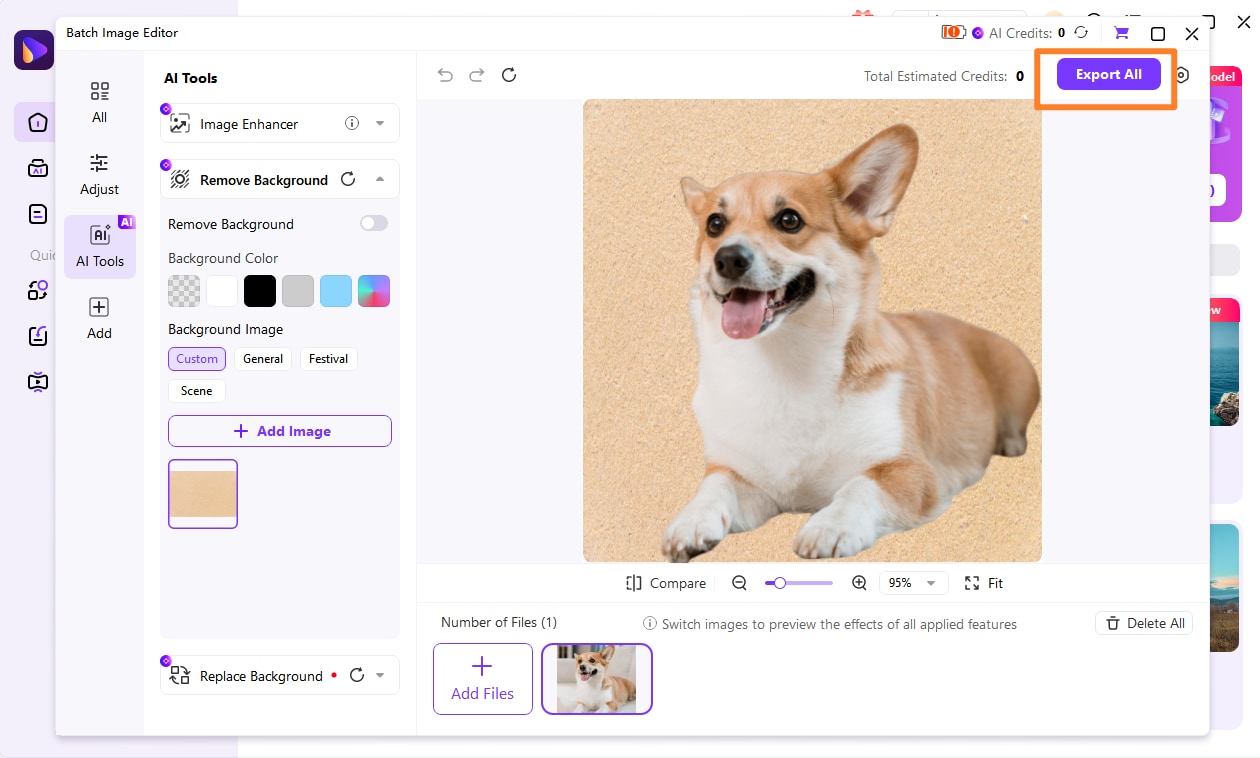
Step 4: Customize and Save
Before exporting, you can choose to add a new background color or image if needed. After making your selections, click "Export" to save your images with their new backgrounds.

Seeking an Adobe Express Alternative?
Part 7: Final Verdict and Recommendations
After spending considerable time with Adobe Express review and its competitors, I've formed a clear picture of its place in the creative toolkit. For casual creators and social media managers, Adobe Express is an excellent choice. Its intuitive interface and vast template library make quick work of daily content creation, and its integration with the Adobe ecosystem is a bonus if you're already invested there. For budget-conscious users, the free tier offers a decent starting point, but be prepared for limitations and consider the subscription if you need advanced features like background removal. Professionals needing advanced features for print or complex graphic design will find it too restrictive; for those tasks, dedicated software like Photoshop or Illustrator remains indispensable. However, for users seeking all-in-one media solutions beyond pure design, UniConverter stands out as a powerful complementary tool, especially for tasks like batch background removal, video conversion, and compression, offering speed and quality that design-focused tools often lack.
Part 8: Frequently Asked Questions (FAQs)
-
1. Is Adobe Express truly free?
While Adobe Express offers a free tier, many advanced features, premium templates, and stock assets are locked behind a paid subscription. The free version is good for basic tasks, but for full functionality, you'll need to upgrade.
-
2. Can I use Adobe Express for video editing?
Yes, Adobe Express includes basic video editing capabilities, allowing you to trim clips, add music, text, and apply simple effects. However, it's designed for short, social-media-friendly videos, not complex, multi-track video projects.
-
3. How does Adobe Express compare to Canva for social media?
Both Adobe Express and Canva are excellent for social media content. Adobe Express often feels more integrated if you're already using other Adobe products, while Canva is sometimes perceived as slightly more intuitive for absolute beginners. Both offer extensive templates and similar features, so personal preference often plays a role.
-
4. What are the best alternatives to Adobe Express for professional use?
For professional graphic design, Adobe Photoshop, Adobe Illustrator, and Adobe InDesign are the industry standards. For video editing, Adobe Premiere Pro or DaVinci Resolve are much more powerful. These tools offer far greater control and advanced features.
-
5. Is my data safe with Adobe Express?
Adobe is a reputable company with established security protocols. Your data is stored on their cloud servers. While generally safe, it's always wise to exercise caution with sensitive information and maintain local backups of your most important creative assets.
